

Political Analysis Desk
The ADC 2027 ambition has rapidly become one of the most talked-about developments in Nigerian politics.
The African Democratic Congress has assembled an impressive coalition of political heavyweights. Former Vice-President Atiku Abubakar has emerged as the party’s presidential candidate. Former Rivers State Governor Rotimi Amaechi remains a key figure within the coalition. Several influential politicians from both the APC and PDP have also found a new political home within the party.
On paper, the coalition appears formidable.
However, beneath the optimism lie serious challenges. Questions about the party’s primary election, leadership structure, internal unity, and future direction continue to cast a shadow over its preparations for 2027.
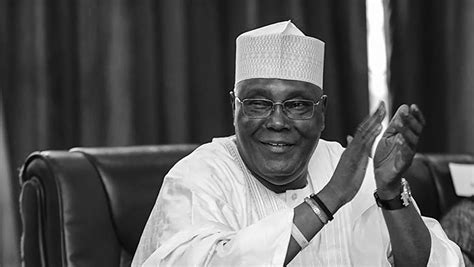
Controversy Surrounds the ADC Presidential Primary
The first major challenge confronting the ADC 2027 ambition stems from the party’s presidential primary.
Atiku Abubakar secured a decisive victory during the May 25, 2026 primary election. He polled 1,846,370 votes to defeat Rotimi Amaechi, who received 504,117 votes, and Mohammed Hayatu-Deen, who secured 177,120 votes.
The margin was substantial.
Yet the aftermath generated immediate controversy.
Before the final announcement of results, Hayatu-Deen publicly distanced himself from the collation process. He raised concerns about alleged irregularities and questioned the integrity of the exercise.
Soon afterward, Amaechi declined to publicly congratulate Atiku. His silence became a major talking point within political circles.
The situation escalated further when former Secretary to the Government of the Federation, Babachir Lawal, resigned from the party.
Lawal described the primary as heavily compromised and accused party leaders of manipulating the process.
Atiku’s camp strongly rejected the allegations. His supporters argued that critics had failed to provide evidence supporting their claims.
Nevertheless, perception often matters more than facts in politics.
The controversy has created lingering doubts among some party members and observers.
Allegations of Financial Influence Raise Fresh Questions
Beyond accusations of irregularities, another issue has complicated the party’s image.
Babachir Lawal alleged that attempts were made to influence the presidential ticket through financial inducement.
Although specific individuals were not identified, the allegation generated significant public attention.
Atiku’s supporters dismissed the claims and accused critics of acting out of disappointment.
Yet the controversy presents a public relations challenge.
The ADC hopes to position itself as a credible alternative to the ruling APC. Allegations involving money and influence risk undermining that message before the general election campaign even begins.
For many voters, the distinction between established parties and emerging alternatives depends heavily on credibility.
Any suggestion that old political habits remain intact could weaken the ADC’s appeal.
Leadership Disputes Continue to Threaten Stability
The ADC 2027 ambition also faces a structural challenge that extends beyond the presidential primary.
The party remains divided by an ongoing leadership dispute.
One faction is aligned with former Senate President David Mark. Another is led by Nafiu Bala-Gombe.
The disagreement has already reached Nigeria’s judicial system.
A Supreme Court ruling restored recognition of David Mark’s leadership while directing the substantive dispute back to the Federal High Court for further proceedings.
Today, the David Mark ADC National Working Committee, staged a protest at the Federal High court. The group urged the judiciary to resist being used as a tool to stifle opposition parties in the country.
Although that decision provided temporary clarity, it did not completely resolve the conflict.
Important questions remain unanswered.
Who ultimately controls the party structure? Which faction has final authority over candidate nominations? Who manages party resources?
These uncertainties create political risks.
Nigerian electoral history contains several examples of opposition parties weakened by prolonged internal disputes.
The ADC will need a definitive resolution if it hopes to project stability ahead of 2027.
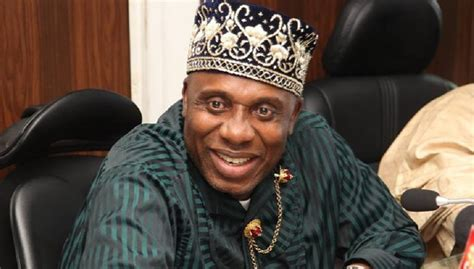
Atiku and Amaechi Continue Delicate Negotiations
Perhaps the most important political relationship within the ADC today is that between Atiku Abubakar and Rotimi Amaechi.
Since the primary election, both men have held several meetings aimed at strengthening party unity.
Speculation continues that Amaechi could emerge as Atiku’s running mate.
Strategically, such a ticket offers several advantages.
Amaechi brings significant political experience, national visibility, and influence across parts of the South-South region. His record as a former governor and cabinet minister also enhances his profile.
However, questions remain.
Amaechi has not publicly endorsed the primary outcome. Nor has he openly celebrated Atiku’s victory.
As a result, many observers view ongoing discussions as negotiations rather than reconciliation.
The distinction matters.
A vice-presidential candidate who joins a ticket reluctantly may struggle to inspire supporters. Likewise, supporters who feel their preferred candidate was unfairly treated may remain disengaged during the campaign.
The ADC cannot afford such divisions.
Hayatu-Deen Offers Restraint but Not Enthusiasm
Unlike some critics, Mohammed Hayatu-Deen has chosen not to challenge the primary result in court.
His decision removes one potential obstacle to party preparations.
Hayatu-Deen has also acknowledged the importance of building a strong opposition platform capable of competing nationally.
However, restraint should not be mistaken for full endorsement.
The economist has stopped short of becoming an active campaign advocate for Atiku.
That distinction is important.
Political parties rarely succeed with passive allies. They require energetic supporters who can mobilise voters, shape narratives, and defend the ticket.
The ADC still has work to do in that regard.
The Persistent Question About Atiku’s Electoral History
Another challenge facing the ADC 2027 ambition involves public perception of Atiku’s electoral record.
Political observers continue to highlight his previous presidential campaigns and unsuccessful bids for Nigeria’s highest office.
Critics argue that repeated defeats create doubts about his ability to win a national election.
Supporters reject that narrative.
They point to his national experience, extensive political network, and ability to attract support across different regions.
Regardless of which argument prevails, the debate remains politically significant.
Opposition parties depend heavily on momentum. Any narrative that portrays a candidate as unelectable can become a strategic disadvantage.
The ADC must therefore build a convincing case for why 2027 should produce a different outcome.
Coalition Politics Brings Opportunities and Risks
Coalition-building remains central to the ADC’s strategy.
The party has attracted politicians from various backgrounds and ideological traditions.
That diversity offers advantages.
It broadens the party’s reach and expands its support base.
However, coalition politics also introduces complexity.
Many members arrive with different ambitions, loyalties, and expectations.
Without strong internal management, those differences can quickly evolve into conflicts.
For that reason, unity remains the party’s most important political asset.
It is also its greatest challenge.
Conclusion
The ADC 2027 ambition reflects growing public demand for a credible political alternative ahead of the next presidential election.
The party has assembled influential figures and generated significant national attention. Yet major obstacles remain.
Questions surrounding the presidential primary, allegations of irregularities, leadership disputes, and unresolved internal tensions continue to threaten party cohesion.
The relationship between Atiku Abubakar and Rotimi Amaechi will be particularly important in determining the coalition’s future.
For now, the ADC possesses potential but not certainty.
Winning public confidence will require more than attracting prominent politicians. It will require transparency, unity, internal democracy, and a clear vision that distinguishes the party from its rivals.
Without those ingredients, the coalition risks becoming another promising political project undone by its own internal contradictions.
And in a highly competitive 2027 election cycle, that could prove decisive.









Leave a comment