

By Chibuzor Alli
Nigeria does not lack capital, but faces a shortage of investable and bankable opportunities capable of attracting and absorbing available funds, experts at the 2026 Chief Executive Officer Forum of the UN Global Compact Network Nigeria have said.
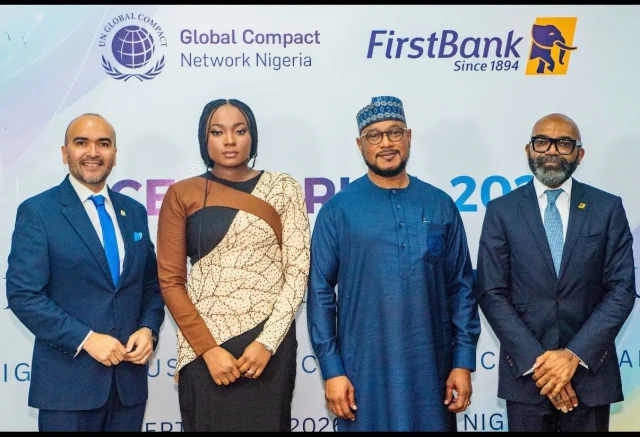
The closed-door forum, held in Lagos under the theme, “Financing a Dignified Future: Aligning Capital, Policy and Business Action,” brought together chief executives, policymakers, financiers and development partners to examine how capital, policy and businesses can drive economic productivity.
In her opening address, the CEO and Executive Director of the UN Global Compact Network Nigeria, Naomi Nwokolo, urged business leaders to shift their focus from longstanding constraints to immediate and actionable solutions that can promote competitiveness, living wages and sustainable growth.
The Director-General of the Northwest Governors Forum, Maryam Musa Yahaya, said state governments must actively engage investors to address structural bottlenecks, including power, regulatory challenges and security concerns.
Zamfara State Governor Dauda Lawal highlighted his administration’s 10-year development plan as an example of efforts to improve the investment environment.
He said the plan was designed to improve policy predictability, strengthen geophysical data and increase internally generated revenue from N90m to about N45bn monthly.
Small businesses face financing challenges
The Deputy Managing Director of First Bank of Nigeria, Ini Ebong, said financial inclusion should be treated as critical infrastructure rather than corporate social responsibility.
He said a major challenge was the ability of small businesses to become financeable through proper record-keeping and corporate governance.
The Group Chief Operating Officer of Custodian Investment, Adeniyi Falade, said a shortage of properly structured and bankable projects was limiting the deployment of institutional capital.
According to him, less than three per cent of the pension industry’s N32tn asset pool is allocated to infrastructure because of the scarcity of projects capable of attracting such funding.
The Managing Director of Sahara Power Group, Anthony Youdeowei, said addressing Nigeria’s energy deficit would require substantial investment in distribution infrastructure.
He also stressed the need for clear tariff frameworks to provide investors with visibility over potential returns.
Global investors seek bankable projects
The Deputy High Commissioner of Canada to Nigeria, Carlos Rojas-Arbulú, said global capital was increasingly selective and that market potential alone was not sufficient to attract investment.
He said investors prioritised transparent data and bankable feasibility studies when assessing opportunities.
His comments came as bilateral merchandise trade between Canada and Nigeria surpassed $3bn, according to the forum.
The discussions focused on the need to improve the quality of investment opportunities, strengthen policy frameworks and address infrastructure and regulatory constraints to enable available capital to flow into productive sectors.




Leave a comment