

By Political Analysis Desk
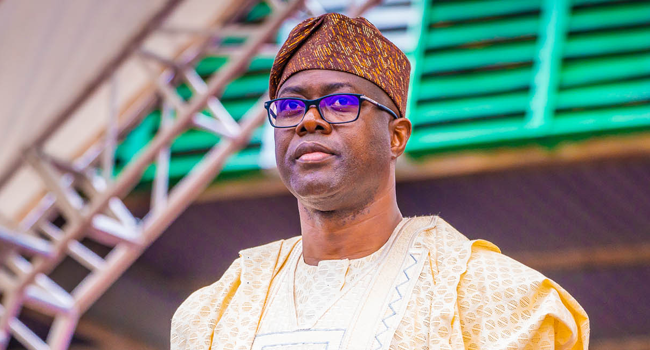
In the calculated world of Nigerian presidential politics, few moves have generated as much debate and derision as Governor Seyi Makinde’s decision to abandon the Peoples Democratic Party’s internal battlefield and pitch his presidential tent under the Allied Peoples Movement. It is a gamble that pits the engineer-governor’s technocratic record against the formidable machinery of an incumbent president, and the outcome will test whether Nigerian voters are ready to reward competence over structure.
Makinde’s declaration at Mapo Hall in Ibadan was more than a campaign launch; it was a strategic retreat from a PDP that had become inhospitable to his ambition. The governor, who has spent nearly eight years building a reputation as one of Nigeria’s most pragmatic and transparent state executives, chose to lead the Taminu Turaki-aligned faction of the PDP into an alliance with the APM rather than remain in a party where internal crises and unresolved legal challenges threatened to derail his national aspirations. All candidates from his faction, senatorial, House of Representatives, and State House of Assembly, will now contest on the APM ticket, effectively creating a parallel political structure in Oyo State.
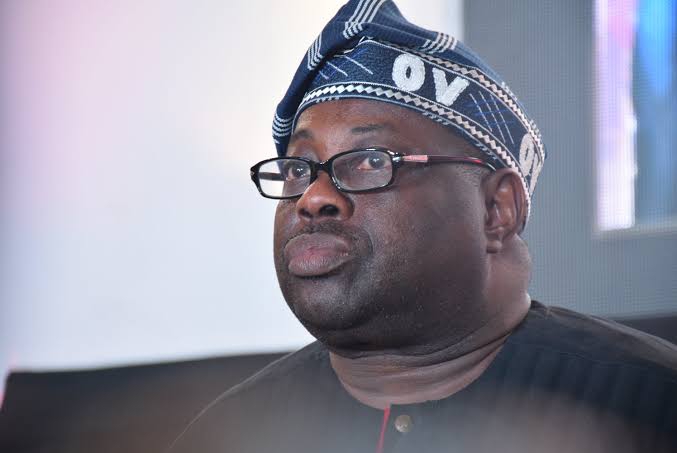
The response from the PDP establishment was swift and dismissive. Nyesom Wike, the Minister of the Federal Capital Territory and leader of a rival PDP faction, wasted no time in declaring Makinde’s ambition “dead on arrival.” “What you have is Makinde joining APM to be able to actualise his presidential ambition, which is already dead-on arrival,” Wike said, dismissing the Ibadan rally as a personal project rather than a genuine party movement. The statement reflects the depth of the rift within the PDP, but it also raises a fundamental question: is Wike right?
The Makinde Record: A Foundation for National Appeal
To dismiss Makinde’s candidacy outright is to ignore the substance of his governance record. Since assuming office in 2019, the Oyo State governor has reportedly repositioned his state as a model for effective governance, earning recognition from The Sun Board of Editors as Political Personality of the Year for 2025. His administration’s achievements are measurable; over 100,000 out-of-school children reintegrated into the school system, 21,000 teachers recruited, 600 education projects executed, 200 primary healthcare centres rehabilitated, 335 kilometres of roads constructed, and an unprecedented 295 percent increase in internally generated revenue.
The 2025 Phillips Consulting State Performance Index ranked Oyo State as the most liveable in Nigeria, citing infrastructure quality, safety, environmental cleanliness, governance, and service delivery. Traditional rulers in Ibarapaland, acknowledging his contributions to security, peacebuilding, and infrastructural development, conferred on him the chieftaincy title Aare Asoludero; the stabiliser. In a political climate often defined by noise and division, Makinde’s leadership style has been characterised as calm, analytical, and inclusive.
This record forms the bedrock of his “Reset Nigeria” agenda, which he unveiled at the commissioning of the APM presidential campaign headquarters in Abuja. The agenda centres on transparency in governance, accountability in resource management, and a fundamental restructuring of the petroleum sector to ensure Nigerians derive measurable benefits from crude oil produced on their soil. Makinde has been careful to clarify that he does not advocate a return to the old fuel subsidy regime, but rather insists that crude oil supplied to Nigerian refineries should not be priced as though it were imported. “Why should crude oil supplied to Nigerian refineries be priced as though Nigeria does not produce crude oil?” he asked, arguing that the benefit should be built into the system from the beginning rather than through opaque interventions at the petrol pump.
The campaign has attracted notable endorsements including Peter Obi, the presidential candidate of the Nigeria Democratic Congress. Obi attended the campaign headquarters commissioning and declared Makinde qualified to serve as Nigeria’s president, praising his record in Oyo State and his experience in the private sector and oil and gas industry.
The Brickwalls: Perceptions, Controversies, and the Weight of Criticism
Yet for all his achievements, Makinde’s path to the presidency is strewn with obstacles that go beyond the structural disadvantages of his party. These are the brickwalls, some built from credible concerns, others from the mortar of political propaganda. This could define his candidacy in the public imagination.
The Surveillance Aircraft Controversy
The acquisition of two DA 42 MNG surveillance aircraft, valued at nearly ₦8 billion, has become a lightning rod for criticism. While the government framed the purchase as a strategic investment in security infrastructure, a decision that the governor insisted predated the May 2026 abduction of 39 students and seven teachers from schools in Orire Local Government Area, critics have questioned the wisdom of such expenditure amidst competing developmental priorities. The Oyo State government has since defended the acquisition as “the best response to propaganda,” with the governor’s commissioner insisting that the aircraft would enhance intelligence gathering and security surveillance across the state.
Apero Mekunu, a public commentator, described the acquisition as “wasteful, insensitive and reckless,” arguing that the state would not only bear the cost of acquiring the aircraft but would also continue to spend significant amounts on their operation and maintenance. The commentator contended that investing in modern surveillance drones would have been a more effective and cost-efficient option, noting that advanced drones can carry out intelligence-gathering and security operations more discreetly. Political parties, the African Action Congress and the All-Progressives Congress have followed suit stating that Makinde continues to plunge the state into huge debts.
The criticism echoes a broader concern about fiscal priorities. Former Ekiti State Governor Ayo Fayose, now a vocal adversary of Makinde, has weaponised the issue, alleging that the kidnapping of pupils and teachers in Orire Local Government Area might have been orchestrated to blackmail President Tinubu, an allegation he has refused to withdraw despite widespread condemnation.
The Ibadan Circular Road Land Controversy
Perhaps the most persistent criticism of Makinde’s administration concerns the Ibadan Circular Road project, which has been dogged by allegations of land-grabbing. The African Action Congress in Oyo State had threatened a seven-day mass protest, accusing the governor of a “massive and deceitful land-grabbing campaign” targeting residents along the road corridor.
The AAC alleged that Makinde initially promised to limit the road corridor to 150 meters and assured residents that no homes would be demolished, but later backtracked, demanding an additional 500 meters, a move the party described as “deceitful and despicable.” The party further accused the government of dispossessing residents of their ancestral lands under the guise of road expansion, only to sell the seized property to political cronies and wealthy associates.
Makinde has denied these allegations, maintaining that he is “not a land grabber” and that the road project is essential for the state’s development. His commissioner for information has described the criticism as “propaganda” and insisted that the government’s actions are lawful. With twelve mechanics detained in December 2024 for protesting against what they described as the takeover of their property, a detention that the AAC condemned as “dictatorial.” Unfortunately, the controversy has taken on a life of its own, leading to a loss of loyalty and love among indigenes, residents and real estate investors in the state.
The Fayose Vendetta
The deteriorating relationship between Makinde and Fayose has become a significant political subplot. Fayose, who once claimed credit for Makinde’s emergence as governor, has vowed to “work against” his successor’s future political ambitions. The former Ekiti governor has accused Makinde of destroying the PDP structure in the South-West and of disrespecting him despite their shared political history.
Fayose’s animosity appears rooted in a combination of personal grievance and political calculation. He has alleged that Makinde’s penchant for criticising the Tinubu administration stems from a “cold shoulder” the governor received during a visit to the Presidential Villa. “The emergency opposition mouthpiece Makinde is trying albeit unsuccessfully to turn himself to is an aftermath of the response he got from the President last week,” Fayose stated.
The Fayose vendetta, while rooted in personal grievance, has the potential to undermine Makinde’s standing in the South-West, where political allegiances are often fiercely contested. Yet it also reveals the deep fractures within the PDP that Makinde has chosen to escape by moving to the APM.








Leave a comment