

The Federal Government has set a target for Nigeria health facilities electrification, aiming to provide reliable electricity to 30 per cent of the country’s health facilities by the end of 2027.
The initiative seeks to improve healthcare delivery and reduce hospitals’ dependence on diesel generators.
The government approved a new institutional and financing framework to accelerate Nigeria health facilities electrification across the country.
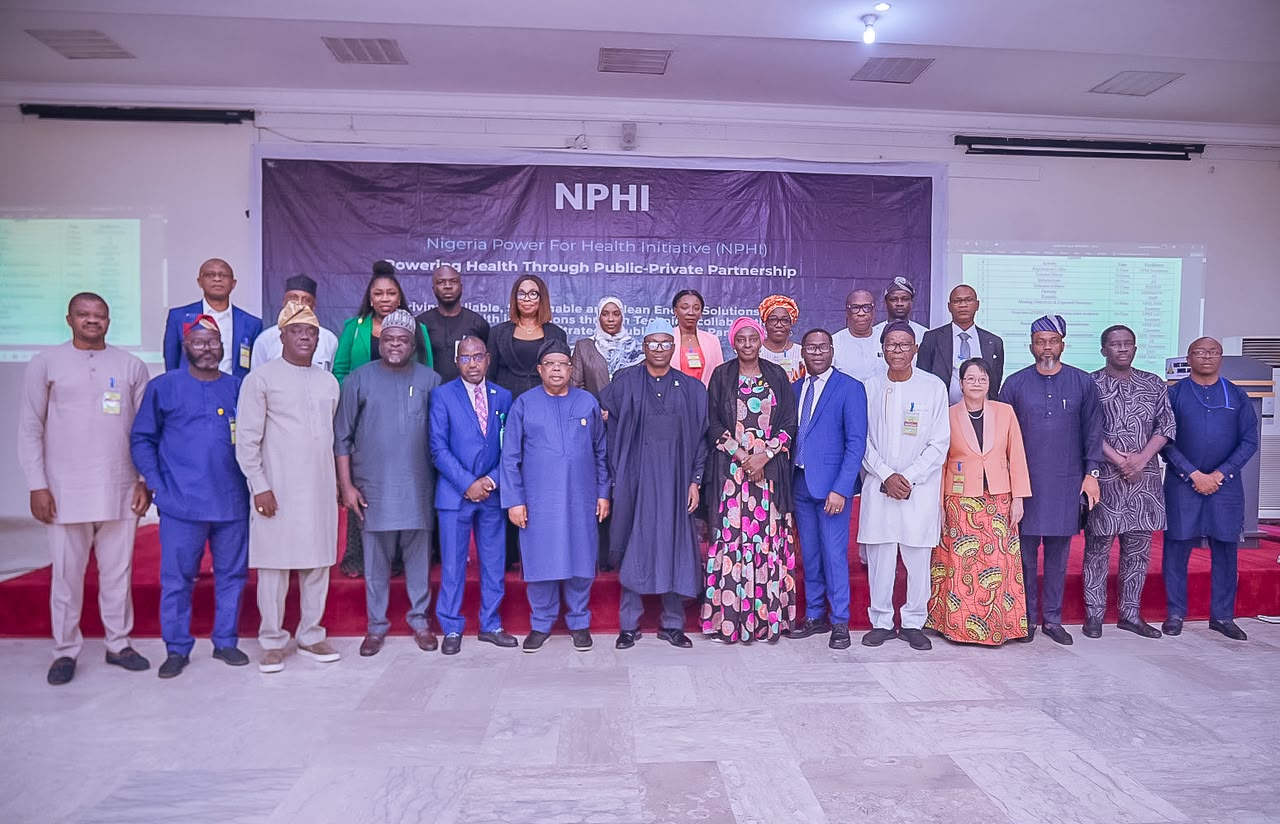
The decision followed the third meeting of the Inter-Ministerial Steering Committee (IMSC) of the Nigeria Power for Health Initiative (NPHI).
The Federal Ministries of Power and Health and Social Welfare jointly coordinate the presidential initiative. Its main goal is to improve electricity supply to hospitals and other healthcare facilities nationwide.
Minister of State for Health and Social Welfare, Dr. Iziaq Salako, chaired the meeting. Minister of Power, Mr. Joseph Tegbe, served as co-chair.
Senior government officials, development partners and members of the Inter-Agency Technical Committee (IATC) also attended the meeting.
Tegbe said the programme must now move beyond policy announcements. He urged officials to focus on completed projects that can directly improve healthcare services.
The minister described the Nigeria Power for Health Initiative as a flagship programme of the Bola Tinubu administration.
He also called for greater attention to teaching hospitals, state hospitals and primary healthcare centres.
According to Tegbe, the Rural Electrification Agency (REA) has already connected five federal teaching hospitals and several other healthcare facilities to electricity.
Reliable power can reduce hospitals’ dependence on diesel generators. It can also improve patient care and support critical medical equipment.
The Ministry of Power, Tegbe added, will continue to prioritise funding for the programme while ensuring that projects deliver value for money.
Meanwhile, Salako said the Steering Committee had approved a financing framework to attract investment into healthcare electrification.
The committee also adopted a facility energy management framework. The framework will require participating hospitals to create sustainable systems for managing their energy infrastructure.
Salako said the committee had approved eight private-sector proposals for further engagement.
The proposals came from about 70 submissions received during the National Healthcare Electrification Investor Matchmaking Week in Lagos.
Energy Management Teams now operate in federal tertiary hospitals. The government also wants state governments to establish similar teams.
These structures will help hospitals manage their energy systems more effectively. They will also encourage state governments to provide dedicated funding for healthcare electrification.
The government plans to support the initiative through a full-time Project Coordination Unit.
Permanent Secretary of the Federal Ministry of Power, Mr. Mahmud Mamman, described reliable electricity as essential to modern healthcare.
He said hospitals need dependable power to operate medical equipment, preserve vaccines and support laboratories.
Reliable electricity can also strengthen emergency response systems and improve healthcare quality.
Beyond healthcare, Nigeria is seeking international partnerships to modernise its wider power sector.
The Nigerian Independent System Operator (NISO) and the Canadian High Commission have identified several areas for cooperation.
Their discussions covered technology transfer, capacity development, renewable energy integration and digital transformation.
They also discussed investment in critical power infrastructure.
The talks took place during a visit by Canadian High Commissioner to Nigeria, Mr. David Sproule, to the NISO headquarters in Abuja.
NISO Managing Director and Chief Executive Officer, Engr. Abdu Bello Mohammed, received the Canadian envoy alongside members of the organisation’s management team.
Mohammed said the meeting could strengthen cooperation between Nigeria and Canada in the electricity sector.
He explained that the Electricity Act 2023 established NISO to oversee system operations, market operations and system planning.
The organisation also enforces electricity market rules and grid codes.
Mohammed said NISO was using new technologies to modernise Nigeria’s electricity market.
These technologies include Supervisory Control and Data Acquisition (SCADA) systems and Energy Management Systems.
NISO is also deploying advanced electricity market trading platforms, telemetry and Advanced Metering Infrastructure.
The organisation plans to expand the national grid and increase renewable energy integration.
It also wants to attract more private investment through public-private partnerships.
Sproule congratulated NISO on its establishment and pledged Canada’s support for Nigeria’s energy transition.
He said Canadian expertise could help Nigeria improve electricity market operations, renewable energy integration and energy storage.
Canada could also support Nigeria in areas such as cybersecurity and digital grid management.
In another development, the Transmission Company of Nigeria (TCN) has praised the Omelu Community Vigilante for protecting critical power infrastructure.
The vigilante group arrested a suspected vandal who allegedly attempted to damage a transmission tower on the Benin-Onitsha 330kV transmission line.
TCN identified the suspect as 34-year-old Humphry Analafrom from Auchi, Edo State.
According to the company, members of the vigilante group arrested him during a routine patrol at about 2:30 a.m. on August 2.
The group allegedly caught him attempting to loosen components at the base of the transmission tower.
Officials later handed the suspect over to the Nigeria Security and Civil Defence Corps (NSCDC) for investigation and possible prosecution.
TCN said preliminary findings showed that the community had previously arrested the suspect over a similar alleged offence.
However, authorities released him after he pleaded for leniency.
TCN commended the Omelu Community Vigilante and the NSCDC for helping to protect national power infrastructure.
The company also urged communities and members of the public to remain vigilant.
It asked Nigerians to report suspicious activities around transmission towers and other electricity installations.
The Nigeria health facilities electrification target comes as the country continues to face major power challenges.
Hospitals need stable electricity to run medical equipment, preserve medicines and provide emergency services.
Therefore, expanding reliable power to health facilities could improve healthcare delivery while reducing the cost of running diesel generators.
The Federal Government’s 2027 target will depend on effective funding, strong project delivery and cooperation between government agencies and private investors.
If the programme reaches more facilities as planned, it could provide a major boost to Nigeria’s healthcare system and reduce the burden of unreliable electricity on hospitals.









Leave a comment