

Nigeria climate adaptation efforts are set to receive a stronger private-sector push as the Federal Government seeks more investment and partnerships to tackle the country’s growing climate risks.
The government says public funding alone cannot meet the scale of the challenge. It wants businesses, financial institutions and development partners to help build stronger communities, infrastructure and economic systems.
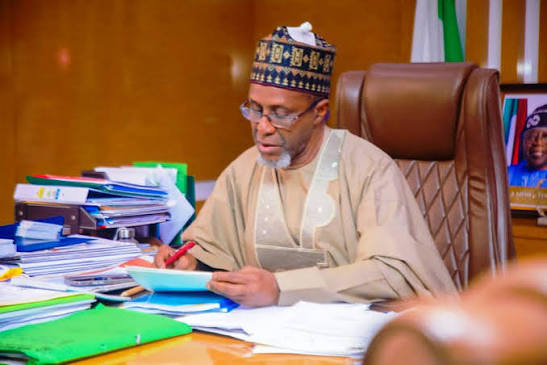
Minister of Environment Balarabe Lawal made the call in Abuja during a stakeholders’ engagement on Nigeria’s National Adaptation Plan (NAP).
The meeting focused on attracting partnerships and investment for climate-resilient development. It brought together representatives from government, business, finance, academia, civil society and international organisations.
Representing the minister, Permanent Secretary Dr. Salihu Usman said Nigeria remained committed to global climate action while pursuing its development goals.
He said the government had introduced several policies to support a low-carbon and climate-resilient economy.
These include the Climate Change Act, Nationally Determined Contribution (NDC 3.0), National Adaptation Plan and Energy Transition Plan. The government has also introduced the National Clean Cooking Policy and National Carbon Market Activation Framework.
According to Lawal, the National Adaptation Plan provides a framework for managing the country’s climate risks.
The plan identifies areas of vulnerability and outlines measures to strengthen resilience. It also seeks to make climate adaptation part of development planning at national, state and local levels.
Several key sectors feature in the plan. They include agriculture, water, health, infrastructure, energy, biodiversity, forestry and human settlements.
However, Lawal said implementing the plan would require far more than government action.
“Adaptation requires us to mainstream climate risk into every aspect of development planning and decision-making,” he said.
The minister called for new financing models, technology transfer and stronger institutions. He also urged stakeholders to develop practical projects that can attract private investment.
Nigeria needs substantial funding to prepare for the effects of climate change. These effects include extreme weather, flooding, pressure on food systems and damage to infrastructure.
As a result, the government wants private companies to see climate adaptation as both a responsibility and an investment opportunity.
Lawal said development partners had already played an important role in Nigeria’s climate efforts.
Their support has helped strengthen institutions and improve technical capacity. It has also supported better climate data systems and increased access to international climate finance.
The minister said the government would continue working to create a better environment for climate-related investment.
He pointed to policy reforms, stronger coordination and partnerships as important tools for reducing investment risks.
The government also wants stakeholders to move quickly from planning to implementation.
Lawal urged participants to develop bankable adaptation projects and create partnerships that can deliver measurable results.
“Together, let us build a future where every investment strengthens resilience, every partnership accelerates progress, and every Nigerian has the opportunity to thrive despite the challenges of a changing climate,” he said.
Permanent Secretary Usman also stressed the importance of broad collaboration.
He said government agencies cannot implement the National Adaptation Plan alone. Instead, success will depend on cooperation among development partners, businesses, banks, researchers, civil society groups and local communities.
The private sector, he added, has a particularly important role to play.
Businesses can provide capital, develop new technologies and strengthen climate-resilient supply chains. They can also expand climate insurance and finance infrastructure that can withstand climate-related risks.
“Adaptation is no longer solely a public policy issue; it is increasingly a business imperative and an investment opportunity that can deliver economic, social and environmental returns,” Usman said.
Director of Climate Change Dr. Iniagbon Abiola-Awe said the stakeholder meeting would help turn the National Adaptation Plan into practical programmes.
She said the event provided an opportunity to explain the plan’s priorities and identify areas where investors and partners could contribute.
Abiola-Awe also called for stronger coordination among stakeholders. She said collaboration would help mobilise the resources needed to protect communities, ecosystems and the wider economy.
Meanwhile, the International Organisation for Migration (IOM) reaffirmed its support for Nigeria’s adaptation efforts.
IOM Chief of Mission Sharon Dimanche said climate action should help create safer and more resilient communities.
She was represented at the event by Hajara Jalo.
Dimanche said the meeting offered an opportunity to strengthen collaboration and identify new ways to support the implementation of the National Adaptation Plan.
Other organisations represented at the engagement included the World Health Organisation (WHO) and United Nations Industrial Development Organisation (UNIDO).
Financial institutions, civil society organisations, researchers and private-sector representatives also attended.
The Federal Government now faces the challenge of turning the National Adaptation Plan into projects that can attract long-term financing.
For Nigeria climate adaptation efforts to succeed, stakeholders will need to combine public policy with private capital, technical expertise and community action.
The government believes that approach can strengthen resilience while creating new economic opportunities.
More importantly, stronger climate adaptation could help Nigeria protect its people, infrastructure and economy as climate risks continue to grow.











Leave a comment