

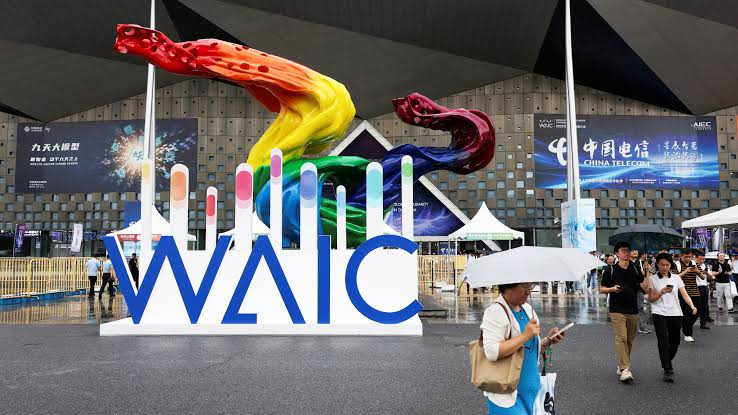
China has announced 5,000 artificial intelligence (AI) training and seminar opportunities for developing countries. The programme will run over the next five years. The initiative supports stronger global cooperation. It also aims to ensure AI benefits countries at every stage of development.
Chinese President Xi Jinping unveiled the programme at the 2026 World AI Conference in Shanghai. He made the announcement during the High-Level Meeting on Global AI Governance. According to Xi, countries must work together. He said AI should not widen the gap between developed and developing nations.
Xi described artificial intelligence as a major driver of innovation and economic growth. However, he also warned about growing concerns over ethics, security, human oversight, and equal access to advanced technology. Therefore, he urged governments to work together to address these challenges.
He said AI development should not become the responsibility of one country alone. Instead, every nation should have an opportunity to benefit from technological progress. He added that no country should be left behind as AI continues to transform economies and societies.
China will also establish AI cooperation centres with several international organisations. These include the African Union (AU), the Association of Southeast Asian Nations (ASEAN), BRICS, the League of Arab States, the Shanghai Cooperation Organisation, and the Community of Latin American and Caribbean States. The centres will promote knowledge sharing, research collaboration, and technology exchange among member countries.
In addition, China announced plans to expand access to MAZU, an AI-powered meteorological warning system. The country will make the platform available to 30 nations. The technology will strengthen early warning systems for extreme weather events and climate-related disasters. As a result, vulnerable communities could improve their disaster preparedness.
Xi said the programme reflects China’s commitment to shared prosperity. He stressed that AI should become a tool for global development instead of a source of inequality. He also encouraged governments to adopt a people-centred approach to artificial intelligence.
Furthermore, Xi called for international rules that encourage innovation and responsible AI use. He outlined four priorities for global AI governance. These include stronger international cooperation, improved risk management, greater inclusiveness, and deeper multilateral collaboration.
He also urged governments to create laws and regulations for artificial intelligence. In addition, he called for monitoring systems, early warning mechanisms, and emergency response frameworks. According to him, these measures will reduce the risks associated with AI while preventing its misuse.
Xi also warned against turning artificial intelligence into another area of geopolitical rivalry. Instead, he encouraged countries to strengthen trust and cooperation. He argued that lasting progress depends on shared responsibility rather than competition.
The Chinese leader placed special emphasis on developing countries. He said the Global South must play a greater role in shaping the future of artificial intelligence. Without greater participation, he warned, the world could face a new form of technological inequality.
China also reaffirmed its support for international cooperation through the United Nations. Xi noted that Beijing has consistently supported global AI capacity-building initiatives. He also confirmed the establishment of the World Artificial Intelligence Cooperation Organization (WAICO) in Shanghai. According to him, the organisation will give developing countries a stronger voice in global AI governance.
The announcement comes as many African countries increase investment in artificial intelligence and digital infrastructure. Nigeria is among the countries expanding its digital economy. Governments across the continent are exploring AI applications in education, healthcare, agriculture, security, and public administration. They believe the technology can improve public services while supporting economic growth.
Xi concluded by reaffirming China’s commitment to international cooperation. He said the country is ready to work with partners around the world. Together, they can maximise the benefits of AI while addressing its risks. He added that artificial intelligence should improve human well-being and advance global development.
The 2026 World AI Conference comes at a time when governments and technology companies are developing new rules for artificial intelligence. Discussions continue around misinformation, cybersecurity, privacy, automation, job displacement, and digital inclusion. Consequently, China’s latest initiative highlights the growing importance of global cooperation in shaping the future of AI.












Leave a comment