

Today, September 22, 2026, King Sunny Adé turns 80.
Born Sunday Adéníyì Adégẹyè on the 22nd of September 1946, King Sunny Adé, aka KSA or simply “Sunny” became a jùjú singer, songwriter, and multi-instrumentalist who is regarded as one of the first African pop musicians to gain international success and has been called one of the most influential musicians of all time.
Most of what gets written about him in the next 24 hours will follow a familiar shape, a life story: the Green Spots, the name changes, the African Beats, Juju Music, the Grammy nomination that made him the first Nigerian artist to be so recognised in 1984. It’s a good story, and it deserves telling. But it’s also the easy version.The more useful story is the one about what KSA achieved beyond the applause.
Before the labels came to him, he built his own
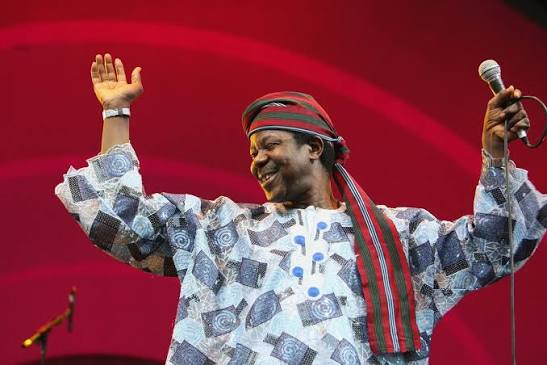
Long before major label deals were a realistic option for Nigerian musicians, Adé had already set up his own independent label. This wasn’t a footnote to his career; it was a structural decision that shaped everything after it. When Island Records signed him in 1982, in the wake of Bob Marley’s death, he wasn’t a raw talent being discovered, he was an operator who understood distribution, ownership, and leverage before the industry gave him permission to.
That distinction matters more now than it did then. A generation of Nigerian and African artists is currently relearning, in real time, the lessons of masters, publishing rights, and who actually owns a catalogue once the streaming numbers come in. KSA’s independent label wasn’t just early, it was a hedge against exactly the kind of exploitation that has defined so much of the continent’s music business since.
The Grammy nomination was a door. What happened to KSA at the door is the real story.
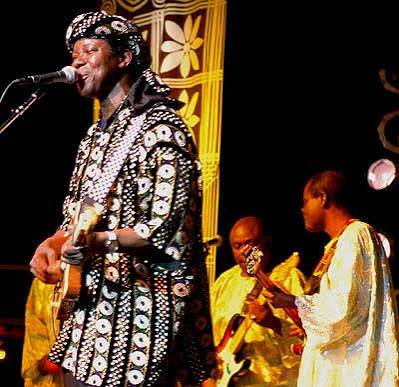
Synchro System earned KSA a Grammy nomination in 1984, a first for any Nigerian artist. His 1998 album Odu would earn him a second nomination in 1999. These are usually cited as career highlights, and they are. But the more interesting question is what that first nomination actually opened for the artists who came after him. At a level it changed how Western labels negotiated with African musicians and what Africans could expect from those negotiations.
Even Four decades on, with Nigerian artists now regularly nominated and winning the Grammy Awards, even getting a special Africa category created in the process it’s still worth how much of that pipeline runs through infrastructure KSA helped lay.
The unglamorous work: royalties, governance, institution-building
This is the part of Sunny’s career that rarely makes the birthday tributes: his years as board chairman of the Musical Copyright Society of Nigeria, and his later appointment as the society’s honorary president in recognition of that leadership. Royalty collection in Nigeria has historically been one of the industry’s most broken systems, chronically underfunded, poorly enforced, and often ignored by artists who assume there’s nothing worth fighting for.
KSA fought for it anyway, from inside the machinery rather than from the stage. That kind of work doesn’t produce a viral moment or a tribute video. It produces marginal, compounding improvements to how songwriters and performers get paid, improvements that outlast any individual hit record. If Nigerian music’s export boom is going to be sustainable rather than extractive, it will be because people did unglamorous governance work like this, not because another song went viral on TikTok.
Eighty years, and the infrastructure is still catching up
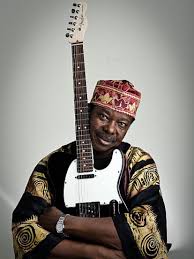
There’s a temptation, writing about an 80-year-old cultural icon, to reach for the language of legacy and timelessness. KSA’s music will likely outlive most of what’s charting today, that part is is not in doubt. But framing him only as a sound, a catalogue, or a nostalgia act undersells what he actually did with his career: he treated the business side of Nigerian music as seriously as the art, at a time when almost nobody else was positioned to.
Nigeria’s music industry is still, in 2026, building the infrastructure Adé started assembling in the 1970s. Stuff like rights management systems, cross-border distribution, artist-owned labels, collective bargaining through bodies like the one he helped lead.
The industry hasn’t caught up to him so much as it’s still walking the path he cleared.Eighty years in, the man is a legend. The more durable achievement is that he built things that don’t need him personally to keep working.








Leave a comment