

By Political Analysis DeskGood

The Obi Kwankwaso OK Movement was supposed to be the coalition that would finally unite Nigeria’s fragmented opposition into a single, formidable force capable of challenging President Bola Tinubu in 2027. Instead, it has become a case study in how political movements collapse under the weight of their own contradictions.
In the space of one week, the OK Movement has clashed publicly with the Nigeria Democratic Congress leadership over the composition of a 59-member Presidential Campaign Council, exchanged accusations of intimidation and defamation, and exposed a fundamental disconnect between the movement’s grassroots energy and the party’s institutional authority . Meanwhile, Rabiu Kwankwaso has opened a reconciliation door to Kano Governor Abba Kabir Yusuf, a man who defected to the APC and whose absence from the campaign may sabotage the very votes Kwankwaso brings to the ticket .
The question that now hangs over the coalition is uncomfortable but unavoidable: Is OK actually OK?
The Obi Kwankwaso OK Movement: A Coalition at War with Itself
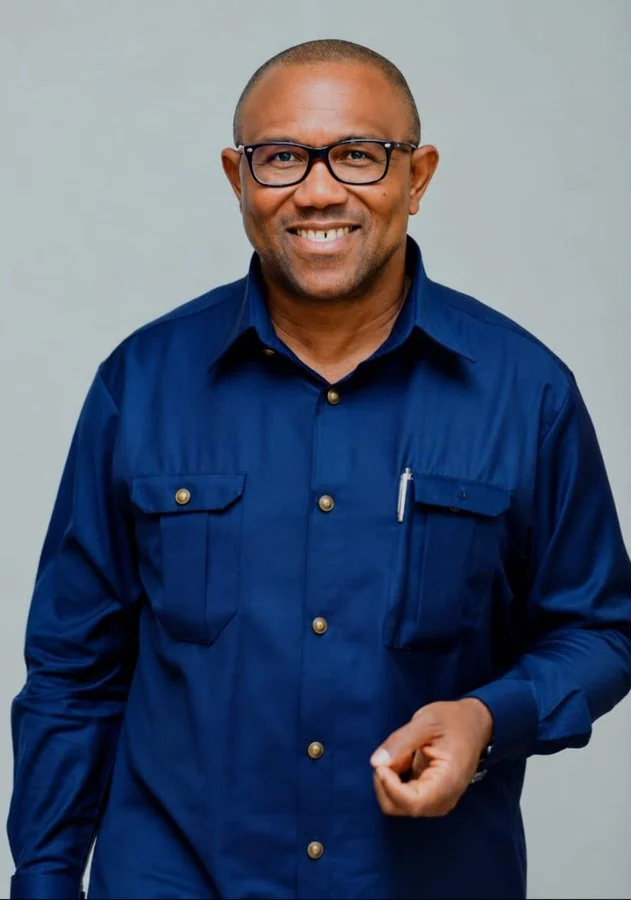
The crisis erupted on September 18, when the OK Movement announced a 59-member Presidential Campaign Council comprising zonal and state coordinators, directors for mobilisation, women affairs, strategy, security, and legal affairs . The council was headed by John Ughulu as Director-General. The movement presented it as a necessary step to take its message to Nigerians across the 36 states and the Federal Capital Territory.
The NDC leadership’s response was swift and brutal. National Chairman Senator Moses Cleopas issued a statement titled “Re: Purported OK Movement PCC Announcement,” declaring that the council “did not emanate from the party and should be disregarded by the public and the media” . Cleopas warned that no individual, candidate, or support group was authorised to constitute or announce a campaign structure in the party’s name without prior approval from the National Working Committee. He accused Ughulu of “excesses” during the Lagos State primary and “repeated disregard for party authority,” referring him to the party’s disciplinary organ .
The OK Movement’s response was equally defiant. National Secretary Saadatu Sani described Cleopas’s position as “unfortunate” and reflecting a “misunderstanding of the movement’s character and independence” . She urged the NDC chairman to “familiarise himself with the party’s constitution before making pronouncements on the rights and responsibilities of support groups.” The movement demanded an immediate apology and insisted it would not be “dragged into a politics of personal insults, intimidation or defamatory exchanges” .
Sani’s statement revealed the scale of the movement’s ambitions—and its sense of its own importance. She claimed the OK Movement has approximately 2.5 million registered members and coordinators in its database, describing it as “not a temporary support group created solely for the 2027 elections but a political movement with a long-term vision” .
This is the crux of the conflict. The OK Movement sees itself as an independent political force, not a subordinate organ of the NDC. The NDC sees the movement as a support group that must operate within the party’s constitutional framework. Neither side appears willing to concede.
Kwankwaso’s Kano Dilemma: The Governor Who Left
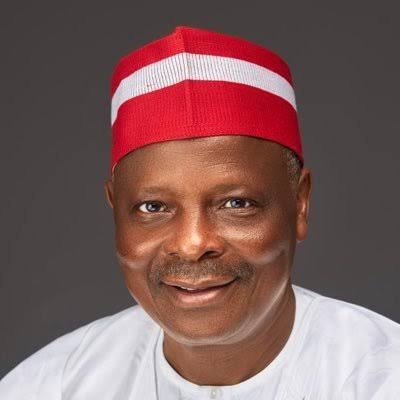
The infighting over campaign coordinators is damaging enough. But a deeper structural vulnerability threatens the OK Movement’s electoral viability: Rabiu Kwankwaso’s broken relationship with Kano Governor Abba Kabir Yusuf.
Yusuf won the 2023 Kano governorship election on the NNPP platform with Kwankwaso’s backing, polling 1,019,602 votes . He was a staunch adherent of the Kwankwasiyya Movement, a political structure that Kwankwaso had built over decades. But on January 26, 2026, Yusuf defected to the APC alongside 22 members of the Kano State House of Assembly and nine members of the House of Representatives . The NNPP described the defection as a betrayal of the movement that brought him to power.
Kwankwaso’s response, delivered in an interview with BBC Hausa Service on September 19, was characteristically conciliatory. “I never abandoned him. I never asked him to leave, and I never expelled him. I still love him,” Kwankwaso said . He described himself as a forgiving person, citing his reconciliation with former Governor Abdullahi Ganduje despite their political differences.
But forgiveness and political reconciliation are not the same thing. Yusuf remains in the APC, a party that will field a presidential candidate against Kwankwaso’s ticket. His presence in the APC means that Kano’s governorship machinery—the structures that delivered over a million votes for Kwankwaso in 2023—are now controlled by the ruling party.
This is the Kano dilemma. Kwankwaso’s electoral strength is concentrated overwhelmingly in Kano. In the 2023 presidential election, he polled 1,496,687 votes nationally, with 997,279 of those votes coming from Kano alone—58.59 per cent of the state’s total . Outside Kano, his performance was negligible. He did not secure 25 per cent of the votes in any other northern state, according to APC chieftain Goriola Yakub . He secured 1.2 million or 19 per cent of the total votes in the North West, his geopolitical zone, and almost nothing in other regions .
Kwankwaso’s entire electoral value to the Obi ticket rests on his ability to deliver Kano. Without the governor’s support, without the Kwankwasiyya machinery that Yusuf once commanded, that delivery is far from guaranteed. The reconciliation door Kwankwaso has opened may be too late to close the gap.
The Silent Vice President and the Vociferous Obidients
Beyond the institutional clashes and the Kano dilemma, the OK Movement suffers from a deeper cultural and strategic disconnect that is visible to anyone who observes the two camps on social media.
The Obidients—Peter Obi’s grassroots army—are a formidable digital force. They dominate X (formerly Twitter), Facebook, and Instagram with a vociferousness that has no parallel in Nigerian politics. They are quick to mobilise, quick to defend, and quick to attack. Their energy powered Obi’s stunning 2023 performance, including his victory in Lagos, where he secured 582,454 votes to Tinubu’s 572,606 .
Kwankwaso’s Kwankwasiyya Movement, by contrast, operates in a different register entirely. It is built on physical rallies, community mobilisation, and the personal charisma of its leader in Kano and the wider North-West. On social media, Kwankwaso’s presence is muted. His supporters do not trend on X. They do not swarm comment sections. They do not produce the relentless content that defines the Obidient ecosystem.
The result is a coalition that feels like two campaigns running in silos rather than one united force. The Obidients campaign for Obi. The Kwankwasiyya campaign for Kwankwaso. The OK Movement’s 2.5 million members are a database, not a fighting force. And the vice-presidential candidate, the man who is supposed to deliver the North, is largely invisible in the national conversation.
This is a problem of synchronisation. The Obidients must understand that Kwankwaso is not a junior partner or a convenient Northern appendage. He is the game-changer for Obi. Obi’s 2023 performance demonstrated his strength in the South-East, the South-South, and parts of the North-Central. He won overwhelmingly in Enugu (93.91 per cent), Ebonyi (79.83 per cent), and Imo (77.13 per cent) . He won Delta, Edo, and Cross River. He secured over a million votes in the Christian areas of Plateau, Benue, and Nasarawa .
But he struggled in the Muslim North. The Africa Report noted that Obi “failed to make inroads into the Muslim majority states in the north,” and that this “undermined the possibility of Obi emerging as the winner” . Kwankwaso’s North-West base is not a luxury; it is a necessity. Without it, Obi cannot assemble the national coalition required to defeat an incumbent president.
The Road Ahead: Unity or Fragmentation?
The OK Movement faces a choice. It can continue to fight the NDC over protocol and prerogative, alienating the party structure that will ultimately be responsible for getting its candidates on the ballot. Or it can recognise that the movement and the party need each other—the movement brings grassroots energy and membership, the party brings legal recognition and institutional authority.
Kwankwaso faces a similar choice. He can continue to hope that Kano Governor Yusuf will return, or he can build a new mobilisation structure that does not depend on the governor’s cooperation. The 2023 election showed that Kwankwaso’s personal appeal in Kano is formidable. But a presidential campaign is not a solo performance. It requires thousands of coordinators, polling unit agents, and mobilisers. Without the governor’s machinery, those structures are harder to build.
And the Obidients face their own choice. They can treat Kwankwaso as a necessary but uncomfortable ally, or they can embrace him as a genuine partner whose regional strength is essential to their candidate’s success. The social media dominance that defines the Obidient movement is a powerful tool, but it is not a substitute for the kind of physical, ward-level mobilisation that Kwankwaso commands in the North.
The OK Movement is not dead. But it is not OK either. It is a coalition of two powerful but disparate forces, struggling to find a common language and a shared strategy. The infighting over campaign coordinators is a symptom of a deeper problem: the movement has not yet decided what it wants to be.
If it can resolve that question, it may yet become the formidable opposition force that Peter Obi and Rabiu Kwankwaso promised. If it cannot, it will be remembered as another chapter in the long history of Nigerian opposition politics—a promising alliance that collapsed under the weight of its own contradictions.





Leave a comment