

By Political Analysis Desk
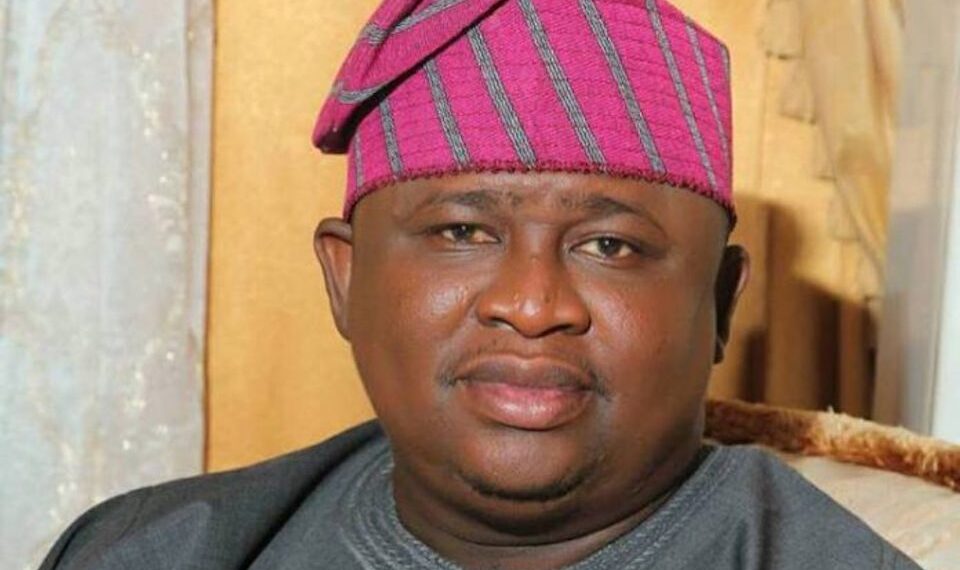
In the annals of Ogun State’s political history, few questions have proven as persistent, as emotionally charged, and as divisive as the question of zoning. Since the state’s creation in 1976, the governorship has rotated between Ogun East (Ijebu and Remo) and Ogun Central (Egba), leaving Ogun West—the Yewa and Awori heartland—perpetually on the sidelines . As the 2027 elections approach, that question has returned with a vengeance, and at its centre stands Senator Solomon Olamilekan Adeola, popularly known as Yayi, whose candidacy has ignited a firestorm of debate over indigeneity, belonging, and the very meaning of political inclusion .
The Yayi Question: Son of the Soil or Imported Senator?
Yayi’s political biography is as impressive as it is controversial. He currently represents Ogun West Senatorial District in the National Assembly, but before that, he represented Lagos West, making him one of the few Nigerian politicians with legislative experience across two states . He served eight years in the Lagos State House of Assembly, represented Alimosho Federal Constituency in the House of Representatives, and spent two terms in the Senate for Lagos West before relocating his political structure to Ogun .
But it is precisely this Lagos pedigree that has become a weapon in the hands of his opponents. Critics have argued that Yayi built his career in Lagos and only “returned home” recently, questioning whether he possesses the local roots and community ties necessary to govern Ogun State . The debate around “son of the soil” versus “adopted son” dominated APC meetings for months, with the opposition questioning his ancestry and urging residents to reject the imposition of governorship candidates from outside the state .
The APC has mounted a vigorous defence. Wale Bello, the Governor’s Liaison Officer in Abeokuta North, dismissed the indigeneity questions with characteristic bluntness, telling the opposition to “shut up your mouth” and arguing that similar allegations were made against former governors Olusegun Osoba and Otunba Gbenga Daniel before they eventually gained public acceptance as bona fide indigenes . “All the monarchs in Yewaland unanimously declared that Senator Yayi is one of them. Who are we to dispute that?” Bello asked .
The League of Yewa-Awori Media Practitioners has also rallied to Yayi’s defence, insisting that his status as a bona fide indigene of Ilaro, from the Pahayi family, had long been established and accepted . They described the renewed controversy as “unnecessary, politically motivated and a diversion from the critical issues of governance, leadership and development confronting Ogun State” .
Yet the opposition has not relented. A political group in Ogun West Senatorial District, known as Ogun West Concerned Stakeholders, has faulted Yayi’s candidacy, describing him as an “imported Senator” and alleging that he had not been faithful to the course of Yewa in past elections . “In 2011, when the late Olurin was actually contesting for the governorship in Ogun State, we did not see Senator Olamilekan Yayi around. He was never in our history, nor in our story,” said Hakeem Adetunji, speaking for the group . “The same thing in 2015, when GNI was actually contesting as Ogun State governor, we did not see the record or the activities of Senator Yayi” .
The Ijebu-Remo Debate: A History of Neglect?
The zoning question is not merely about Yayi’s origins; it is about the broader pattern of political exclusion that has shaped Ogun State’s development. Since the beginning of the Fourth Republic, the governorship has largely rotated between the Egba and Remo axis. Olusegun Osoba, an Egba indigene, governed from 1999 to 2003. He was succeeded by Gbenga Daniel from Remo, who served from 2003 to 2011. Another Egba son, Ibikunle Amosun, occupied Oke-Mosan from 2011 to 2019, before Dapo Abiodun, from Iperu-Remo, assumed office in 2019 and is expected to complete his second term in 2027 .
This pattern has fuelled persistent complaints from both Ijebu and Yewa that they have remained spectators while the state’s highest political office alternates between two blocs . What differentiates the agitation of the Ijebus from that of the Yewas, however, is that Ijebu is part of Ogun East Senatorial District, which has produced three governors—first Olabisi Onabanjo during the Second Republic, followed by Daniel and Abiodun under the Fourth Republic, although both are from the Remo axis of the district. By contrast, Ogun West has never produced a governor since the state was created in 1976 .
This historical injustice has become the foundation of the Yewa agitation. Senator Daniel, reflecting on his tenure as governor, acknowledged that Ogun West had been systematically marginalised. “Fair is fair,” Daniel told reporters, lamenting that up to now, the district is yet to produce a governor twenty-seven years after stable civil rule . He attributed why the slot eluded the Egbado/Yewa Division to disunity, noting that “Ogun West lacks unity. It is not homogeneous. Egba used to agree. In the East District, when it is critical, they come together whether it is Ijebu or Remo. That doesn’t happen in the West” .
The Adebutu Challenge: The Persistent Opponent
If Yayi represents the power of incumbency and federal might, Hon. Oladipupo Adebutu represents persistence and name recognition. The son of billionaire philanthropist Sir Kensington Adebutu, Ladi Adebutu has been in the trenches of Ogun politics for over fifteen years, serving two terms in the House of Representatives and contesting the governorship twice . The 2023 election was his closest shot; he lost to Governor Abiodun by a margin of less than 14,000 votes, one of the tightest races in Ogun’s history .
That near-miss has become the foundation of his 2027 strategy. His camp believes the PDP’s vote base is intact and can be expanded with better mobilisation . In May 2026, Adebutu emerged again as the PDP governorship candidate through a consensus and affirmation process across the state, with party leaders presenting it as proof of unity after years of internal crisis . “This is a collective victory for the PDP family in Ogun State,” Adebutu declared, promising an administration anchored on transparency, accountability, and inclusive development .
Adebutu has not been content to rest on his laurels. He has actively sought to exploit the Yayi indigeneity question, questioning the APC candidate’s local roots and urging voters to reject the imposition of candidates from outside the state . He has also challenged Governor Abiodun over the continued suspension of the selection process for a new Awujale of Ijebuland, questioning whether the people would have to wait another twenty years before the vacant traditional stool is filled . “What I am saying is, why will some people, because they are in power, block us from having our rightful royal fathers installed and still seek the votes of the people?” Adebutu asked .
The PDP candidate has also received defections from the APC, ADC, Yayi Door-to-Door Movement, and other political groups, with more than 4,500 members reportedly joining the PDP across Abeokuta and the surrounding Egba communities . The Chairman of the Egba Agenda Forum and Convener of the Ogun Rescue Movement described the defection as a reflection of growing public dissatisfaction with the current administration .
The Abiodun Legacy: Performance Amidst Controversy
Governor Dapo Abiodun, who will complete his second term in 2027, has not been a passive observer in this unfolding drama. He has secured the APC ticket for the Ogun East Senatorial District, positioning himself for a return to the National Assembly . Throughout his tenure, Abiodun has outlined his performance with characteristic confidence, commissioning roads and housing projects while dismissing his critics.
His relationship with his predecessors, however, has been anything but cordial. At the commissioning of the Iworo-Ogbogbo-Igbeba Road, Abiodun made headlines with a provocative declaration: he would reduce former governors Gbenga Daniel and Ibikunle Amosun to “refugee status” by flaunting his achievements . “For those who have been sponsoring social media attacks or sponsoring litigation, I want to tell you that you will all end up in IDP camps. None of you constructed all roads in eight years—not even in your combined sixteen years,” Abiodun declared .
The governor’s relationship with Amosun has been particularly fraught. Amosun, who was never in support of Abiodun’s candidacy in both his first and second terms, has nevertheless endorsed Yayi as the APC governorship candidate, announcing his support after hosting Adeola at his residence in Abeokuta . “We are now one united family,” Amosun declared, a statement that has done little to soothe the internal tensions within the party .
Internal Opposition: The Hunye Factor
Yet the most significant challenge to Yayi’s candidacy has come from within his own party. Abayomi Hunye, a governorship aspirant who paid N50 million for the party’s nomination form and was cleared to contest, has challenged the process that produced Yayi as the APC candidate . Hunye alleged that some party leaders had pressured him to abandon his ambition because of an alleged decision to make Adeola the sole candidate, and claimed that he was left out of a meeting involving former governors and was warned against proceeding with his governorship bid .
The APC has rejected Hunye’s position, maintaining that Yayi is the party’s recognised candidate and that Hunye had ceased to be a member in good standing after his suspension by his ward on April 7, 2026, following allegations of anti-party activities . The party has also petitioned the Inspector General of Police, asking for an investigation into allegations of impersonation . But the very existence of this dispute underscores the fragility of the consensus that produced Yayi.
The Other Candidates: A Fragmented Opposition
Beyond the two major contenders, a host of other candidates have thrown their hats into the ring. Dr. Bolaji Odusina, a United States-based Nigerian, has secured the governorship ticket of the Nigeria Democratic Congress (NDC) . A medical practitioner, Odusina decamped from the ADC over internal crisis and has presented a twelve-point agenda including quality education, accessible healthcare, clean water, upgraded hospitals, insurance, job creation, modern infrastructure, agricultural revolution, security, transparent governance, improved power supply, and road network . She has pledged to use her understanding of US governance to bring people-oriented projects to develop Ogun State to international standards .
The Labour Party and the ADC, while present in the field, have been overshadowed by the dominance of the APC and PDP. The fragmentation of the opposition vote remains a significant hurdle for any challenger. In 2023, Adebutu’s near-miss was achieved despite the presence of multiple candidates; in 2027, the challenge will be to consolidate the anti-APC vote.
The Yewa Awakening and the Road Construction Question
Yayi’s supporters argue that his candidacy represents the best opportunity for Ogun West to finally produce a governor . His campaign has leveraged his record of constituency projects—boreholes, classroom blocks, health centres, road interventions, and large-scale empowerment programmes—to build a statewide footprint . From Ipokia to Ijebu-Ode, his name has become synonymous with federal presence .
In the Simawa-Ojigio area, ongoing road construction has bought hearts, even if cynics dismiss it as a pre-election gimmick. The question of whether the road will be completed, whether it is a federal project requiring federal attention, and whether Yayi can deliver on his promises once in office remains an open question. His supporters argue that his record as senator demonstrates capacity and commitment; his critics insist that the road construction is merely a political manoeuvre designed to woo voters.
The Awori monarchs, led by the Olota of Ota, Oba Adeyemi Obalanlege, have thrown their weight behind Yayi, rejecting Adebutu’s overtures during the PDP candidate’s visit to the palace . This support from traditional rulers in Ogun West is a significant boost for Yayi’s campaign.
Regional Calculations and the Deputy Ticket
Yayi’s choice of running mate, Kudirat Adegunwa-Balogun, an accomplished accountant from Ijebu Central and daughter of industrialist Alhaji Adebola Adegunwa, has been described as a masterstroke . Political analysts believe the decision was carefully designed to reduce Ijebu resistance by giving the influential ethnic bloc a stake in the ticket . It is a recognition that any winning coalition in Ogun must balance the competing interests of the four divisions.
Adebutu, for his part, has chosen Alhaja Yemi Sowunmi-Kolapo as his deputy governorship candidate, a choice that reflects the PDP’s attempt to appeal to the female electorate and maintain its base in Ogun East .
Conclusion: A State at a Crossroads
Ogun State stands at a crossroads. The 2027 election represents more than a contest between two men; it is a referendum on the state’s political culture, a test of whether the unwritten understanding of rotation can finally be honoured for Ogun West, or whether the Egba and Ijebu-Remo blocs will continue to dominate. The indigeneity debate, however distasteful to those who champion issue-based campaigns, reflects a deeper longing among the Yewa people for inclusion and recognition. The compensation of Ogun West, if it finally happens, would be a historic milestone. But as Senator Daniel noted, it requires unity among the Yewa themselves—a condition that has proven elusive in the past .
Yayi enters the race with enormous advantages. The APC controls the Presidency, the Ogun State Government, and all the state’s local governments, while also enjoying a formidable grassroots structure . He is believed to enjoy the confidence of influential leaders within the ruling party, including President Tinubu, Governor Abiodun, and former Governor Amosun . His internal opposition, while vocal, appears to have been contained, at least for now.
Yet the lessons of history are not on his side. Ogun West’s inability to produce a governor has been a product of both external exclusion and internal disunity . If the Yewa can unite, if Yayi can overcome the indigeneity question, if the APC can maintain its internal cohesion, then 2027 may finally be Yewa’s moment. But those are significant “ifs.” As one political analyst noted, “Yayi has shown capacity to deliver. He has brought federal presence to every local government. He understands governance and he understands the people” . Whether that capacity, that presence, and that understanding will translate into votes—and whether Ogun West will finally get its turn—remains to be seen.








Leave a comment