

By Chibuzor Alli
The Federal Government has won a nearly nine-year international arbitration battle against Sunrise Power and Transmission Company Limited over the long-delayed Mambilla Hydroelectric Power Project, defeating claims that could have exposed Nigeria to more than $3.38bn.
The International Arbitration Tribunal under the auspices of the International Chamber of Commerce in Paris, France, issued its final award in Nigeria’s favour on 17 September 2026, rejecting claims brought by Sunrise over the development of the project in Taraba State.
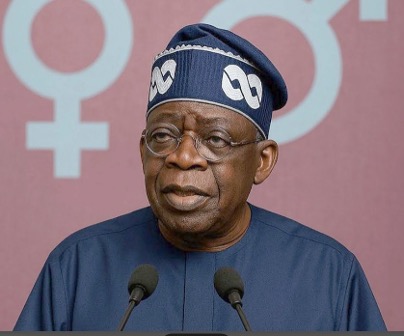
President Bola Tinubu said the ruling had removed a major legal obstacle to the multibillion-dollar project, which has remained stalled for years.
“Today’s ICC ruling clears the single biggest legal hurdle that has paralysed the Mambilla hydro power project for years,” the President said.
The dispute dates back to 10 October 2017, when Sunrise commenced proceedings against Nigeria at the ICC International Court of Arbitration over an alleged breach of a 2003 agreement concerning the development of the Mambilla project.
Nigeria defeats $3.38bn Mambilla claims
According to the Presidency, Sunrise demanded $680m as a settlement sum and interest in the latest arbitration, relating to another case in which it is claiming more than $2.7bn in compensation and interest over disputes associated with the project.
The two related claims put Nigeria’s potential exposure at more than $3.38bn.
Details of the award earlier reported by TheCable showed that the three-member tribunal dismissed Sunrise’s claim for a declaration that Nigeria breached its contractual obligations under a settlement agreement and an addendum entered into by the parties.
The tribunal also rejected the company’s request for an order compelling Nigeria to pay $400m, comprising a settlement sum of $200m and another $200m claimed as a default payment.
The tribunal further declared that Sunrise promoter, Leno Adesanya, was bound by the arbitration agreement with Nigeria under the settlement agreement and addendum.
It consequently held that it had jurisdiction over Nigeria’s counterclaim against Adesanya and Sunrise.
The tribunal also ordered Sunrise and Adesanya to reimburse Nigeria for 75 per cent of the legal fees and expenses incurred by the country in defending the arbitration.
Nigeria’s legal fees were put at $11.82m, of which $2.5m is expected to be covered directly from funds held in escrow by the ICC and released upon notification of the final award.
Sunrise and Adesanya were ordered to pay the outstanding $9.32m, alongside interest at an annual rate of 10 per cent, compounded annually from the date of notification of the final award until the amount is fully paid.
The arbitration costs were fixed at $1.66m, with Sunrise and Adesanya expected to bear 75 per cent while Nigeria would shoulder the remaining 25 per cent.
Mambilla project capacity cut to 1,500MW
The Mambilla project was originally conceived as a 3,050MW hydroelectric plant in Taraba State.
The Federal Government later reduced the planned capacity by about 50 per cent to 1,525MW before subsequently rescoping it to about 1,500MW to make the project financially viable and “bankable” for lenders.
In 2016, then Minister of Power, Works and Housing, Babatunde Fashola, described the project as one that would generate about 3,000MW.
However, in February 2021, then Minister of Power, Saleh Mamman, announced that the Federal Government had revised the planned capacity downward by 50 per cent, from 3,050MW to about 1,525MW.
The stated reason was to reduce the project cost by about $1bn and make it more financially viable.
In July 2021, Mamman told the Senate Committee on Power that the project had subsequently been rescoped to 1,500MW to make it “bankable” and acceptable to lenders.
He said the original 3,050MW capacity was not considered financially viable under prevailing market conditions.
The original project was estimated at about $5bn–$5.8bn, while the rescoped project was reported at roughly 1,500–1,525MW and about $4bn.
Mambilla project faces two-decade delay
The dispute has its roots in an agreement reached more than two decades ago over the proposed development of the Mambilla power project.
The 2003 contract provided for the construction of a 3,050MW hydroelectric plant in Taraba State under a build-operate-transfer model.
The parties subsequently attempted to resolve the dispute through a settlement agreement in 2020.
However, disagreement over the implementation of that settlement led to further arbitration, with Sunrise seeking payment from the Federal Government for allegedly failing to honour the agreement.
The Mambilla project has remained largely on the drawing board despite successive administrations identifying it as a major component of efforts to increase Nigeria’s electricity generation capacity.
The project has suffered repeated setbacks arising from legal disputes, financing challenges and changes to its implementation arrangements.
A Federal Ministry of Power implementation document had identified the arbitration, completion of financing arrangements with the Export-Import Bank of China and the need to re-scope the project among the challenges affecting its execution.
Tinubu praises Nigeria’s legal team
Tinubu commended the Attorney-General of the Federation and Minister of Justice, Lateef Fagbemi, alongside officials of the Federal Ministry of Justice, for their handling of the dispute.
He also praised the country’s legal team for what he described as its professional defence of Nigeria’s interests.
“This latest decision affirms the Nigerian State’s determination not to succumb to predatory and exploitative claims by corrupt local and international entities and their enablers and funders,” Tinubu said.
The President also hailed former President Olusegun Obasanjo and the late former President Muhammadu Buhari, who testified in Nigeria’s defence during the arbitration proceedings.
“I commend the patriotism and support of former President Olusegun Obasanjo, GCFR, and late President Muhammadu Buhari, GCFR, who testified in the case, which dated back to an illegal 2003 contract to build a 3,050-megawatt hydroelectric plant in Taraba State under a build-operate-transfer model. The Federal Executive Council never authorised the contract,” he said.
Tinubu also acknowledged former ministers, Babatunde Fashola and Suleiman Adamu, who participated as witnesses in the case, as well as experts involved in Nigeria’s defence.
He further commended the National Security Adviser for supporting the government’s case and the Economic and Financial Crimes Commission for its investigation into the dispute.
Mambilla project still faces financing challenges
The arbitration victory removes a major legal obstacle, but the project has also faced financing and implementation challenges.
The Federal Ministry of Power had identified the completion of financing arrangements with the Export-Import Bank of China and the need to re-scope the project among the issues affecting its execution.
Tinubu said the government would continue to honour legitimate contractual obligations and work with genuine investors while defending the country against claims it considered unjustified.
“I want to assure you that while our country remains committed to partnering with genuine investors and honouring its legal obligations, it will continue to defend all opportunistic claims instituted against our commonwealth strongly,” the President said.
The arbitration victory comes against the backdrop of Nigeria’s efforts to defend itself against multibillion-dollar international claims arising from disputed government contracts.
In 2023, Nigeria recorded another major legal victory when a United Kingdom court set aside an $11bn arbitration award obtained by Process & Industrial Developments Limited over a failed gas processing agreement.
The PUNCH earlier reported that Justice James Omotosho of the Federal High Court sentenced former Minister of Power, Saleh Mamman, to 75 years’ imprisonment in absentia over a N33.8bn money laundering and fraud case instituted by the Economic and Financial Crimes Commission.
Omotosho further directed Mamman to refund the outstanding balance from the N22bn the prosecution established was diverted from funds meant for the Mambilla and Zungeru hydroelectric power projects.
Former Minister of Power, Prof. Barth Nnaji, recently made an assessment of Nigeria’s power sector, blaming over a decade of stalled investment on policy inconsistency, weak infrastructure development, and the abrupt discontinuation of a financing framework that had begun attracting global capital into electricity generation projects.
Nnaji spoke in Lagos at the 2026 conference of the Nigerian Association for Energy Economics, where he addressed participants on the future of Nigeria’s energy mix, the role of natural gas in powering the economy, the financing bottlenecks facing major projects, and the long-standing delays around strategic assets such as the Mambilla hydropower project.
Nnaji regretted that Nigeria has gone 11 years without financing any new major power plant, a situation he traced directly to the dismantling of a government-backed financing support mechanism introduced during his tenure as minister.
Expanding beyond the financing challenge, Nnaji argued that Nigeria must take a realistic and pragmatic view of energy transition, especially in light of recent global events.








Leave a comment