

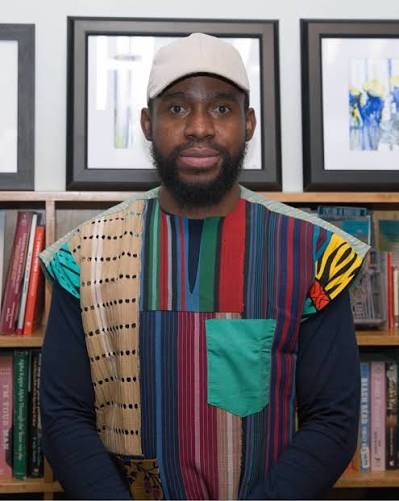
By Jane Muse-Orire
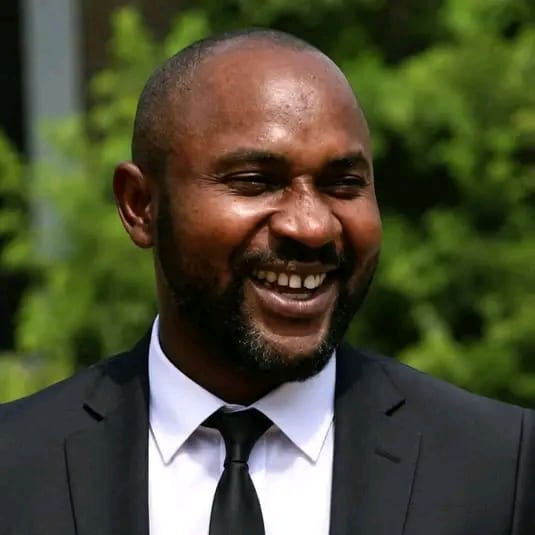
Recently Longlisted for the Nigeria Prize for Literature, poet and scholar, Paul Akpomuje speaks about migration from the lenses of his provocative debut collection, The Black Passport
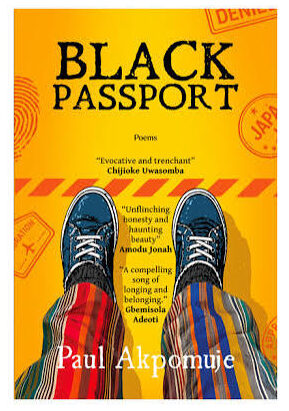
Your collection Black Passport carries a provocative title. What does it signify to you, and why did you choose it?
The title, Black Passport emerged from a deep engagement with the experiences of African migrants navigating the global immigration system. The passport, in its material form, represents citizenship, identity, and the right to movement. But when that passport is black, both literally and symbolically, it carries different weight. It signifies the extra scrutiny, the suspicion, the bureaucratic hurdles, and the racialised assumptions that accompany African travellers.
For me, Black Passport is about documenting these experiences, not just the successes of migration but the behind-the-scenes struggles, the disorientation, the violence, the racism, and the resistance practices that occur before the shining light of success. It’s about visibilising what often remains hidden in migration narratives: the processing, the paperwork, the immigration scrutiny, the neoliberal structures that determine who can move and who cannot.
You extend the notion of “narrative” beyond traditional prose to include poetry. How does poetry capture the immigrant experience differently than prose?
Poetry offers a distinct entry point into migration stories. Poetry is laconic, concise, and succinct, features that make it accessible while also sometimes causing it to be perceived as “unserious business.” However, this concision is precisely what makes poetry powerful for migration narratives.
Poetry invites readers into the story more easily and accessibly, allowing them to enter and feel the emotions without wading through volumes of pages. Although poets can transition into Prose—like Juliana Okot P’ Bitek who has won laurels for her debut novel, poetry can blur boundaries and open uncharted vistas with genuine poetic quality. It would reach the audience in an enjoyable way while also giving them the time to reflect on it.
The creative process for writing poetry about migration is difficult, I ensured that stories didn’t repeat themselves across poems. I used my poetry to fragment complex narratives into different poems. This difficulty also mirrors the complexity of migration itself.
What does the “visa story” reveal about power, race, and belonging that other forms of storytelling might miss?
What does “home” mean to you, and how does that meaning shift across the poems in this collection?
Home, as I explore in Black Passport, is not static—it is fluid and dynamic, constantly changing. Nothing in particular defines where or what home is. We would be doing injustice to the idea of home if we attempt to define it.
We can highlight practices of home, factors that remind us of home, symbols of home, food, music, cultural nuances, political tensions, familial interactions. All of these could be symbols of home, but we cannot pin down home to any of these.
Home is geographic, cultural, political, aesthetic, and linguistic. It is about naming. The idea of home is fluid; that’s the essence. In Black Passport, I embrace the idea of home from these lands, inviting readers to think about what home means to them personally. Someone can pick up the poem “Country Pebbles” or any other poem and feel nostalgia of home. It depends on the feelings and emotions that come to you when you think about home.
Importantly, you can be anywhere and recreate home. People perform home wherever they are—religiously, spiritually, culturally, through food and music. In my house, for example, we largely eat Nigerian food because we are trying to create home. Home is not exclusively geographic, it is all of these pieces together.
I also address this in a poem titled “Erasure,” which discusses how migration often results in an erasure of home. The system in diaspora is designed to erase home from you, your language, your culture, your naming. You have to be intentional to preserve it.
The judges of the Nigeria Prize for Literature described the longlisted works as demonstrating “lyrical intensity, symbolic depth, and artistic innovation.” How does your work embody these qualities?
This is a good question, but I think it’s largely for literary critics like Mr. Morgan and others to provide these analyses and interpretations. For me, I was just writing.
The creative process was very rigorous and enriching. Working with editors and mentors to get the work out was itself rigorous. The lyricism of Black Passport—I would say—emerges from the editorial work. When I first produced the original manuscript, it was very academic and had a lot of righteous anger and righteous rage. While that rage is valid, if creative work is overshadowed by it, it can be problematic.
The lyricism emerges from allowing yourself as a poet to go through the process where the poem’s lyricism emerges naturally. By taking away diverse forms of rage—righteous rage—it helps the work to bloom. The credit for this longlisting goes to the creative process I engaged in, allowing that lyrical wealth to show up.
I took a step back as a scholar, as an experiencer who experienced those forms of violence and racism, as someone who experienced immigration scrutiny and paperwork. I took all of those identities, personalities, and personas away so I could allow the poet to step in. When the poet steps in, that’s when the lyricism shows up.
Being longlisted for the Nigeria Prize for Literature with your debut collection is extraordinary. What does this recognition mean to you?
This means a lot to me—it’s humongous. When I was writing the book, I was just documenting experiences that I was having and experiences that my friends and colleagues shared with me. I think of myself as a poet, as a knowledge keeper, as a steward—someone people entrust their stories to, and I document those stories through poetry.
Being longlisted is a big privilege—to document my experiences and the experiences of people who entrusted their stories to me. But what is more important for me is that when I was working on the manuscript, I experienced a lot of pushback and discouragement from diverse spaces.
I remember asking someone to give me a blurb for the manuscript. The person said, “Sorry, I can’t give a blurb because I’ve read through your manuscript and it doesn’t meet my standard.” This person is a published poet, a big poet, and someone I respect a lot. They told me I would have to rewrite the entire collection. This was someone I was very close with, more like a mentor.
I could have just folded in. I could have said, “Okay, I’m done. I can’t do this anymore.” I could have written myself off as a poet at that point. There were all these forms of pushback and discouragement. At some point, as a poet or writer, you begin to have impostor syndrome—wondering if you’re really worth it, if it’s even worth writing.
The longlist validates the real motives in writing and doing the work. For me, that’s a huge accomplishment. Given the kind of work I do—my research is grounded in poetic and storytelling pedagogies, my teaching at the university is anchored in these—the longlisting also validates that research and teaching trajectory.
In many other ways, the longlisting has enlivened me and pushed me to start working on my next collection. There is possibility. There is hope. Your stories, your poetry, your art is being recognized. It means it’s impacting others and shaping how they think about the world.
You were among the 11 longlisted poets for the Nigeria Prize for Literature, your work was chosen from 223 entries. How does it feel to be selected alongside established poets like Tanure Ojaide and Ogaga Ifowodo?
To be honest, when I saw the longlist, I tweeted on my X account that I was drawing from Paul the apostle in the Bible, who says, “I am the least of them all.” Because my name is also Paul, I tweeted that I am like just like the other Paul—the least of them all.
On the day the longlist came out, I had three classes to teach. I was going for my first class when I received a text from my publisher: “Hey bro, today is the longlist.” I said, “Oh, okay. All the best to those who will make it.” I didn’t put myself on the list.
When I finished teaching my first class and was ready for my next class, I saw a message saying “You made it.” I said, “Made what?” Then I got a call from my publisher and from one of my mentors, Dr. Uche Umezurike. They told me, “You made it to the NLNG Nigeria Prize for Literature longlist. That’s a big deal.”
When I started going on Instagram and Twitter, I saw there was a huge hype about it. That was when it dawned on me: okay, you’ve just made it to something really big.
Looking at the list—Professor Tanure Ojaide is someone I respect so much. We chat on WhatsApp occasionally. He calls me, I call him. He’s someone from my community in Nigeria, someone I respect like a father figure. I was texting with him and I said, “Prof, I don’t have to be there.” He said, “No, you deserve to be there.”
I received messages from others too, Robin Rogers and others, saying, “You deserve to be there.”
For me, I was using epistemic humility and cultural humility to receive this. Even if I didn’t make it to the longlist, I would have been fine as a writer. I would have found my way to encourage myself to do the work. But making it to the longlist brought a lot of creative humility to me and to the work I do. That’s why I don’t take it for granted.
When friends say, “Don’t worry, you’re going to make it to the shortlist,” I say, “Please don’t put me for talk. I’m good where I am.” If I make it to the next phase, good. If I don’t, good. That’s my approach.
Professor Ojaide, Ogaga Ifowodo, and others are big poets whose works I’ve been reading for a long time. To be on the same list with them, and with friends on the list like Rozak Malik and others, it is something I don’t take for granted. It speaks to creative maturity and creative growth that I’ve embraced.
Migration is one of the defining narratives of our time. What responsibility do you feel as a poet documenting this experience?
As I said earlier, as a poet and writer, I am a knowledge keeper and a steward of knowledge of people’s experiences and my own experience. This is my debut poetry collection and it’s themed on migration. It was a difficult work to do because I had to make sure these stories were not repeating in every poem. I had to fragment complex stories into different poems.
Migration itself is tough and complex. The complexity of migration stories generally showed up in the work.
Migration has always been part of human existence, people moving from one place to another. But in contemporary times, there is a rise in neoliberalism, the monetization of migration. In the past, migration wasn’t so much of a big deal or a problem.
I describe this as the “immigration industrial complex”, a term I’ve coined in my research. It’s a multi-billion-dollar sector or business. The architecture of every aspect of immigration is money-oriented and capitalist. If people go to VFS in Nigeria for a biometric scan, they don’t come home smiling. The photocopy person beside the VFS office charges 1000 Naira for a one-page photocopy. The courier charges. Every aspect is money-oriented.
It’s a survival of the fittest, that’s the idea of neoliberalism. This has made migration an interesting site of engagement, research, and writing.
You have to be a person of means to migrate, even to go to Ghana from Nigeria. There is that emphasis on money and finance at the center of immigration. My responsibility as a writer is to document these experiences and visibilise them. But beyond visibilising traumatic experiences, I’m also interested in resistance and survival—how people negotiate, navigate, survive, and resist violence in the process.
Migration narratives are often about success—”I got my Canadian PR,” “I got my US green card.” Those stories are important, but what’s more important is the behind-the-scenes. The journey is tortuous, unsettling, disheartening, violent, difficult, dislocating. Someone didn’t just become a green card holder overnight. The processing to get there is an important aspect to document.
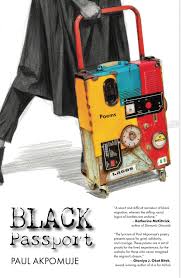
That’s where Black Passport comes in—to bring out and visibilise the behind-the-scenes. From trauma and disorientation to violence and racism, to power negotiations, to resistance practices and survival before the shining light of success.
The Advisory Board noted that the longlisted works “interrogate dominant historical narratives.” How does Black Passport interrogate narratives about migration?
Black Passport interrogates migration narratives in a very unique way. Oftentimes people shy away from talking about experiences of racism. The scent of Black Passport is the idea of racism and racialisation of migrants—from the airport to the embassy, immigration offices, consulates, to the streets of Europe, America, Canada, and elsewhere, to corporate spaces. All these sites where the migrant is rendered invisible, where the African migrant is rendered ontologically and dehumanised.
At the heart of this dehumanization and “thingification” is racism—and racism is over 3,000 years old. Racism is the core of historical narrative in the migrant life.
Racism has led to many Nigerians running away from Nigeria. There are global forms of racism occurring right now as we speak. For example, the police violence—the End SARS violence of 2020—that architecture of police brutality is actually a product of the British police system, the imperialist police system handed over to the Nigeria Police Force. The idea of brute force in Nigeria’s policing system comes from Britain, America, and other parts of the world where policing reproduces violence against underrepresented people.
How many people left Nigeria during the End SARS protest of 2020? I haven’t done the research, but from cursory observation, a whole lot of people left post-2020 because of the violence.
Neoliberalism and neocolonialism are products of racism. People’s salaries are not being paid. I was a university lecturer in Nigeria and I was not paid salary in the whole of 2020. I was not paid salary in 2022 because ASUU was on strike. Why? Because the government wanted to use IPPIS to pay ASUU, and ASUU said don’t use IPPIS because it’s foreign. That idea—that the Nigerian system cannot think for itself, that Europe, the World Bank, and America must impose systems—that is global racism.
Black Passport is not just documenting racialization of migrant life in the North American perspective, but also in the Nigerian context. Many people travel out of Nigeria because of colonial ruination—”imperial debris” to borrow from Sola.
The education system in Nigeria is racist, anchored on British colonial racial education structures. We learn about Britain, America, and the US—we are forced to study their systems, their history, their philosophy. But if you ask someone living in Canada or the US about Nigeria or Africa, they’ll say “no.” African history was even removed from the curriculum.
These are diverse forms of racialisation we don’t see or know. They are diverse forms of colonial representations of knowledge that are entrenched.
What Black Passport does is invite us to begin to rethink systems of oppression, systems of colonialism, systems of racism that are tied to migration in different ways. That’s an important aspect of what it brings to the conversation about historical narratives.
What is your opinion on the circumstances that happened before the death of Professor Jason Arday. Would you say that it was simply a matter of a fraudulent career or a deeply ingrained and intense racist hounding?
As a matter of fact, the last question you asked, I was going to allude to this Professor Arday experience. I have to join millions of people around the world to sympathize with the family of Dr. Jason Ade and offer my condolences.
What happened to Professor Arday is very unfortunate. There is huge black male disposability in academia in the West. It’s a very difficult experience to be a black person in academia in the West—both black men, black women, black people of diverse gender identities.
From my own positionality as a black man, the level of disposability you experience is humongous. There are certain things you can’t touch. There are certain lines you can’t cross. If you do race-based research, you have to do it with lots of allies and partners on the other side of the table. Your partners and allies have to show up and stand up for you when the chips are down.
The question is: was it a pure academic issue or a racial issue? Race is the central organising principle of black life—drawing from Katherine McKittrick. Whether in academia, shopping malls, supermarkets, or communities, race organises black life. We cannot separate academic space from the question of race. There’s nothing as a purely academic issue. Race and racism and racialisation are at the center of it.
The experience that Professor Arday had that led to his demise—he was hounded to death. Western media has never represented Africa and black people productively. When people say, “I wanted to go to Nigeria for a conference, but I’ve been told it’s not safe,” I tell them Lagos is safer than Toronto, safer than New York. Most cities in Nigeria are safer than most parts of America and Canada. But because of racist media representation, you only see negative aspects of Nigeria.
What happened to Dr. Arday was another media campaign targeted to bring down blackness and stereotype and misrepresent blackness. Reports show that lots of white folks have been trapped in plagiarism sagas, but they didn’t make it to the front pages. Is it different strokes for different folks? Race and racism is at the heart of that experience.
The question of whether he would have been better off if he had come home, you need to read Saidiya Hartman’s Lose Your Mother. She went to Ghana looking for her maternal ancestry and left heartbroken because she found a whole lot of racial calculus and colonial calculus that shocked her. If Professor Arday had gone to Ghana, he would have realized another level of resocialization.
It’s not about where you are or where you go. It’s the kinds of historical and racial baggage that follow you, that the media attaches to you. What matters is how we support black people in the diaspora. Through narratives, through social media, more can be done.
What are you closing words on this robust conversation?
I want to thank Fairchild and Brave very deeply for this interview and opportunity. I don’t take it for granted. I see all the work you’re doing, and I also congratulate your publishing for making it to the longlist.
My final word is that the work we do is overwhelming. There is emotional labor in the kind of work we do as writers. I want to verbalise that holding space for the community, holding space for the nation, holding space for the diaspora, this is lots of emotional labor. We have to recognize that. It’s not just writing and having fun. We’re holding space, documenting, archiving, making sure these stories don’t go extinct.
That process of holding space is overwhelming but also joyful, also hopeful. On that note of hope and joy, if we stay a little bit longer doing the work of writing and reporting, hopefully we’ll be able to have victory. Thank you.





Leave a comment