

The evening began with a memory.
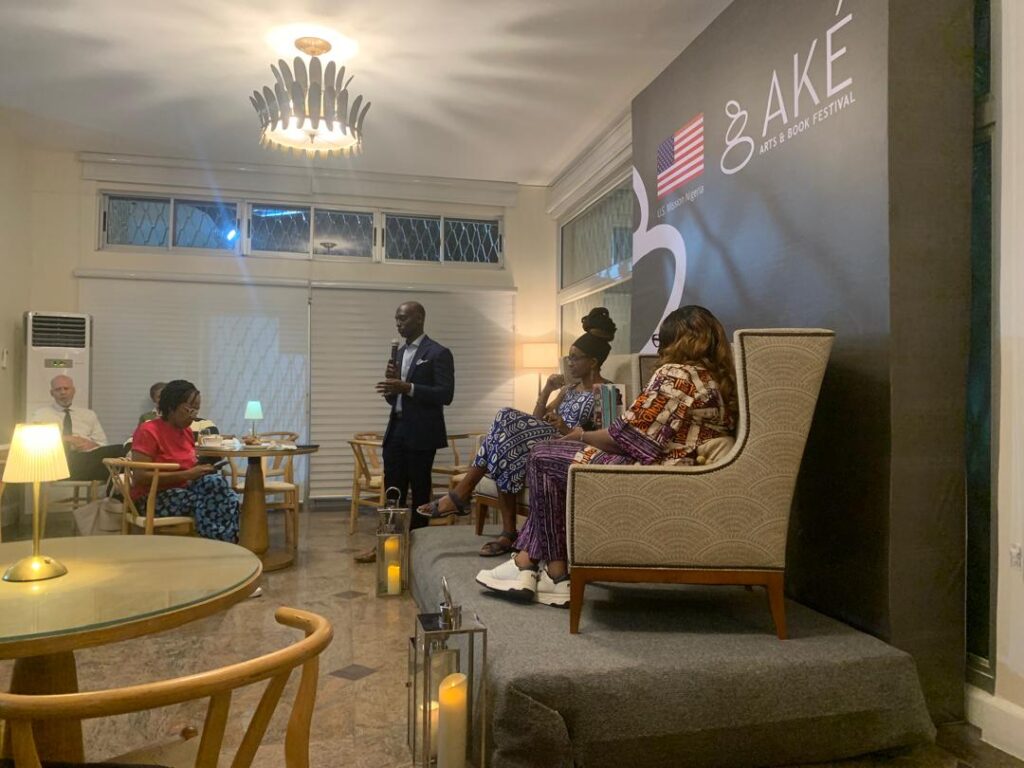
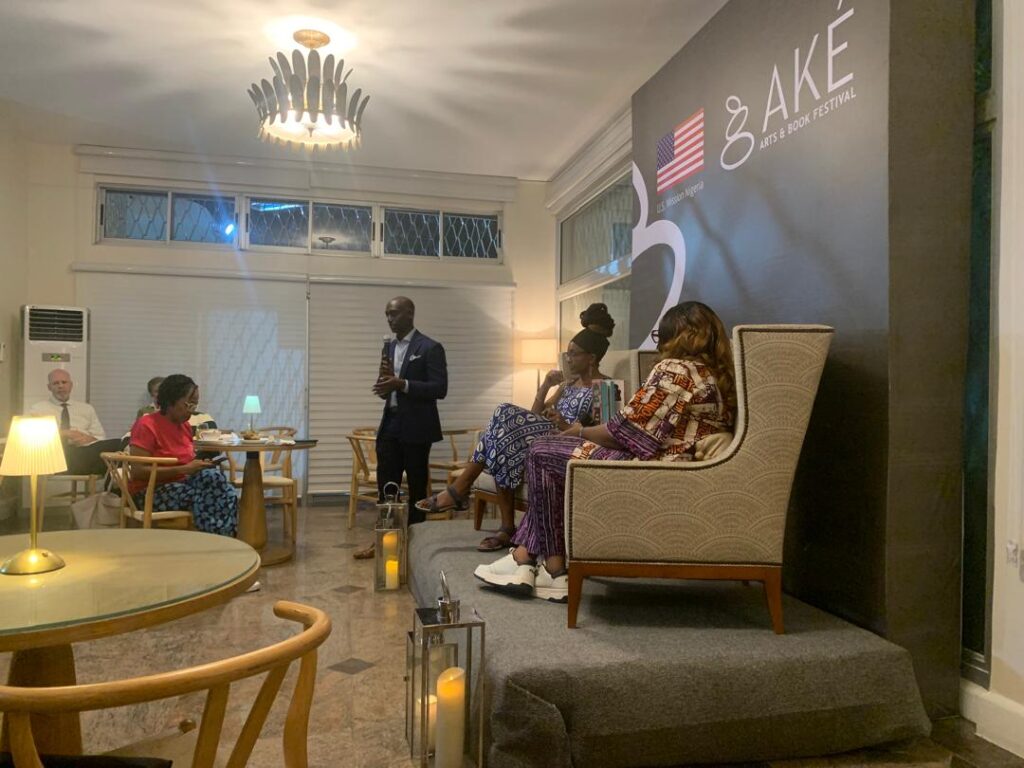
Lola Shoneyin, founder of the Aké Arts and Book Festival, stood before the audience at the United States Consular residence and remembered being fourteen or fifteen, putting on her flip-flops and walking to the USIS library space because it had “this incredible library.”
“We could watch films and documentaries that we couldn’t get on Nigerian television at the time,” she said, according to a recording of the pre-festival launch. “So I have a lot to thank the U.S. for culturally.” She credited a 1999 International Writing Program fellowship at the University of Iowa as “instrumental” and “probably a critical experience to being and doing all the things that I do today.”
Brandon Hudspeth, the US Consul General in Lagos, had spoken before her. He noted that the United States has supported Aké for ten of its fourteen years. “That is not just a one-off partnership,” he said. “That is a commitment and an understanding of the importance of this partnership.” He then made an argument that diplomats rarely make at literary events: “Every author knows that the value is in the words that they have on the page. Intellectual property is such a key piece of the protection of the creative sector.” He announced that Edward Sneed, an intellectual property expert, was in Lagos to conduct discussions with writers and creators on IP rights.
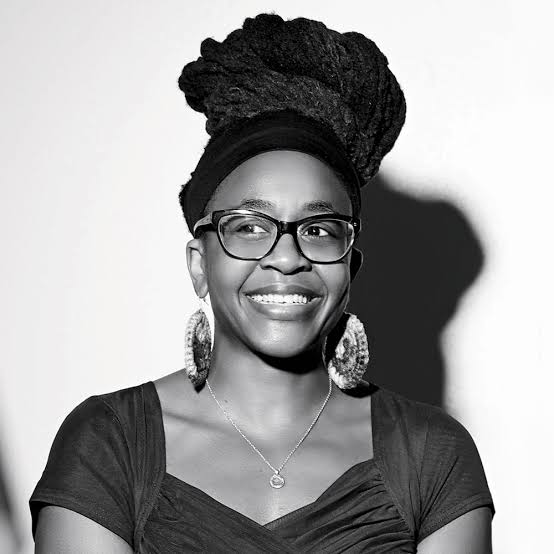
Then Shoneyin introduced the guest of honour with a personal detail. “She’s a lady who was born in the same year as me,” she said. “There are about four Nigerian authors. It’s me, Nnedi. It’s Chika Unigwe. And we were all born in 1974. So we look young.”
The Girl Who Liked Bugs
Nnedi Okorafor did not begin with her awards. She began with her body, and with a childhood that had nothing to do with writing.
“I didn’t grow up thinking I was going to be a writer at all,” she said. “I thought I was going to go into the sciences. I wanted to be an entomologist. I wanted to study bugs. I like bugs. You know, like that kid who would go into the bushes.”
She was born in Cincinnati, Ohio, to Nigerian immigrant parents of Igbo heritage, and raised mainly in the south suburbs of Chicago. “We were one of the first black families to move into that neighborhood,” she said. “And the white people there did not like that. So we dealt with a lot of racism. And a lot of racism, a lot of kind of a reckoning of what it is to be black in America.”
But the family returned to Nigeria. “My parents were very proud Nigerians,” Okorafor said. “So we grew up hearing the stories. Even before they started taking us back, we grew up hearing stories about Nigeria.” The trips, the relatives, the cultural confusion—”it just made it all very lush, very lush.”
She was athletic before she was anything else. “I was able to move easily, jump really fast, run really fast, do flips, walk on my hands, all of that, from a young age,” she said. She played semi-pro tennis from the age of nine. In her senior year, she did track and field and won over 22 medals, finishing as athlete of the year in the state of Illinois. “The reason why I say all of this,” she said, “all of this is really the road to how I became a writer, even though it doesn’t sound like it.”
At 13, Okorafor was diagnosed with scoliosis, a curvature of the spine. All her siblings had it. Hers was the most aggressive. By her first year at the University of Illinois at Urbana-Champaign, where she was on the tennis team and studying pre-med, an X-ray showed her spine had curved into an S. Gravity was compressing it. The doctors said if she did not have surgery to straighten it, she would be paralysed by the time she was 25. Her life would be significantly shorter.
“I had no pain, no difficulty, no nothing,” she said. “So it was a real shock to hear that someday I’d need to have the surgery.”
She had the surgery. There is always a risk of paralysis when operating on the spine, she explained. One per cent. “When they had the surgery, well, about eight hours later, paralysed from the waist down. They did not know if I would ever walk again.”
The Darkness and the Story
Okorafor described the aftermath with a precision that held the room. “You take somebody who’s very athletically inclined and confine them to a bed where they can’t move, where literally half my body can’t disappear,” she said. “You take someone like that, have something like that happen to them, that is a recipe for losing your mind.”
She was in that bed, losing her mind. “It was a shock to all of my senses, to all of my spirits, to everything, to my identity, because I got to know this person who was very athletically inclined. Now I’m in a hospital bed, half my body is gone.”
For three days, she said, “there was a darkness descending on me.” Then she picked up a book. A friend had brought her I, Robot by Isaac Asimov. “My eyes had got to go. And I couldn’t. It was too much pain to read it.”
So she started telling herself a story. “To this day, I don’t know why I started doing that. I had never written anything creatively, never crossed my mind at all to do such a thing. But in that moment, I had to do something. I had this bed. And so I just started telling myself this story on the edges of the words.”
The story was about a woman who could fly. “When you look back, it’s very clear. When you can fly, you don’t have to walk. It’s clear where that’s coming from. And I wasn’t thinking that. I was writing this thing.”
She paused. “There’s something about writing that story. It wasn’t escapism. It was almost like a facing. It’s facing whatever was happening to you. With armor.”
And then the line that will stay with every writer in that room: “There’s something also about the bed connecting to the page. And producing that line. Just aligned to something in me. And as soon as I started telling the story, all the darkness just fled. It was gone. And I was okay.”
The Body and the Page
Okorafor was paralysed for several months. She comes from a strong family, she said, “and my family was not going to let me think I would ever walk again. It was almost irrational. No, you’re going to go into this physical therapy. You’re going to do this.”
She has met three people who had the same surgery and never walked again. But she started physical therapy. “I remember straining and straining to get my legs to do something. And at one point after straining, I was covered in sweat. I was able to get my toe to twitch.”
That was the connection. “I’m like, okay, I can work with this.” She went from a wheelchair to a walker to a half walker to a cane. She returned to the University of Illinois that fall, using a cane. She also returned to writing. She had not stopped writing since that moment in the hospital.
“When I talk about what it is that I do, people ask me about how do you have confidence in what it is that you do. I’m like, if you knew how I started writing, I’m not worried about what other people think. This is something that I love doing. I love it. There’s a joy in it that does not come from validation from other people. It’s from within. It’s like this thing that is very much alive and vibrant. And I do it. So I just do it.”
The Word She Had to Invent
When the conversation turned to Africanfuturism, Okorafor was direct. “I needed to define Africanfuturism because, one, I don’t like categories. I find categories to be very confining. I find them to be boxes. When something doesn’t fit in the box, people ignore that part of it. And I think it’s just reductive.”
She acknowledged the irony. “It’s ironic that I’m the one who coined two terms.” But she had a reason. “When something doesn’t have a name, people have a hard time even understanding it exists. And I noticed that happening with what I coined as Africanfuturism, which is basically African science fiction. It really is. It’s very simple. It’s rooted in Africa. It comes from Africa. It comes from African culture.”
She is aware of the problematics of the word “Africa” itself. “I understand the problematic aspect when we talk about Africa and who named Africa, who carved that. I know all that. I’m fully aware. But I needed a term that could explain what this is.”
Africanfuturism, she said, “skews optimistic. It is written by black people. And it is rooted first and foremost in Africa. And then it branches out into the diaspora.” She paused again. “I am a diasporic. So it’s funny when people talk about Africanfuturism and then they say that it’s only African and it excludes people in the diaspora. I’m the one who coined it. Let’s think about that.”
The Village Ear
Asked how she draws from Igbo language and cosmology, Okorafor complicated the question. “It’s not always my decision. I don’t speak Igbo fluently. I don’t, but I’ve grown up around it. I don’t know how to explain that phenomenon. It is not a phenomenon that I’m ashamed of. It is what it is. I try. The kids laugh at me. Everyone laughs at me. But that’s a whole other conversation.”
What she does, she said, is listen. “A lot of things that I write, it’s not me deciding. It’s like something, I’m there, but there’s something outside of me that is also kind of dictating where things go. And I listen to that. I relax and step back and I let that guide what it is that I’m doing.”
She traced this back to childhood visits to the village. “Even before I was a writer, I always had an ear for the juicy stories. I just had an ear for trouble as well. Things that were forbidden, things that people didn’t want to talk about. My ear would just peak when I noticed, oh, this is something that no one wants to talk about. That’s where the energy is. And so I’d be that kid who’s just around the corner when the elders are talking about something where they think no one else is listening. Around the corner listening. Shelving it away in my mind. And I may not even know what they’re talking about. I just know that it’s good. And so, when I finally started writing, I just spit that stuff directly into the story.”
The Scrutiny and the Seven Figures
Okorafor was asked about how Nigerian readers respond to her work compared to American readers. “If you’re only getting one type of reaction, you’re doing it wrong,” she said. “I’ve had readers who are suspicious of me. What is she up to? What is she trying to do? They don’t trust me. And I’ve seen readers like that come around. To be immediately trusted is almost like not being seen. So I was being seen and I was being scrutinised. That’s fine.”
The scrutiny, she said, often came from a specific accusation. “Nigerian readers who are just like, oh, you’re writing for the West. I’m just like, okay. That’s what I’m doing. You don’t know my process and you don’t know me.”
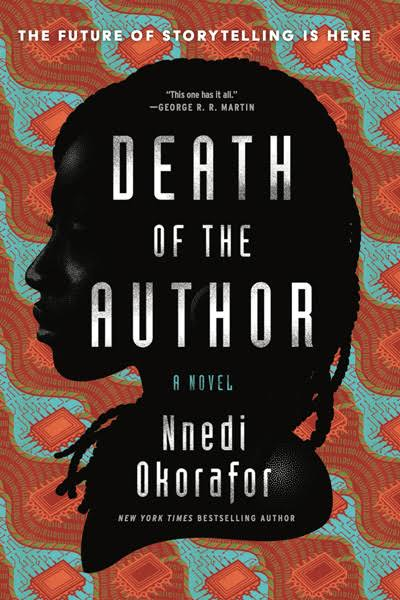
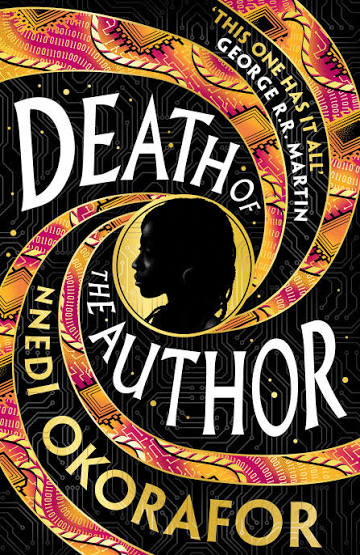
In 2023, Okorafor signed a seven-figure deal with William Morrow, an imprint of HarperCollins, for Death of the Author. “That was the first time this ever happened with any of my works,” she said. “The way Death of the Author sold was surreal. Every single major publisher was trying to get it. Every single one. They were making PowerPoint presentations against me. And I’m just sitting there like, what is even going on? I’ve had over 20 novels. I’ve done this many times. And then suddenly this one is doing that. Especially, I’m not a debut writer. Because these things typically happen to debut writers. I’m very much not a debut writer. I’m quite experienced.”
She offered advice to emerging writers in the room. “I typically don’t like big advances. One thing that I would say to new writers is take it easy with the big advances. If you’re in it for the long haul, if you want to create a career, a smaller advance is a good way to start because you’re not known and you want to earn out. When you earn out your advance, you’re considered a success. If you take a massive advance early on in your career, the likelihood of you earning that out is going to be low regardless of how well that book does.”
Her own advance was different. “I wasn’t new. I had already established myself. I knew it was a risk I could take. It wasn’t about the money at all. It was about I wanted to make a point. This was one book. It wasn’t a three-book deal. I’m a black speculative fiction writer, an African speculative fiction writer. And I’d written this thing that was multi-dimensional on so many levels. For this to be one of those books that got that kind of advance, I knew that I could set the stage for those after me. They can always be like, well, they knew that the author did that, so I can, so you guys can imagine that. So I knew this was a moment. And so I was purposely pushing my agents, no, get more. No, get more. I’ve never done that before.”
The Book
Death of the Author, she explained, “is a Nigerian-American family saga. Our main character is Zelu. She is a failed writer, failed professor, and she’s trying to figure herself out. And she goes out to write this book called Rusty Robots, that does a lot.”
Zelu writes a book about robots in a post-human world. Excerpts from Rusty Robots appear throughout Death of the Author. Okorafor read one, titled “Scholar,” told from the point of view of a robot.
“The earth had already seen so much. Histories, rises, falls, reemergences, plants, dirt, trees, genetic modifications, splices, vibrant colors, natural fabrics, oil and plastic consumption, battles, burning, smoke, exhaust, flowers blooming, men wilting. As I stood in the crumbling parking lot, the hot concrete warming the metal of my feet, I was sure of it. The earth had great things ahead of it, even still.”
The robot narrates a world after humanity. “They created us, sent us all over the planet, but they left us behind. Our creators, our masters, our parents, our authors, gone. It was quiet for a while. We knew how to make ourselves quiet. We also knew how to help the planet be all that it could be. This was the program that they had given us.”
The robots developed emotion. “Emotion ruled them. And it existed in everything they left behind. Their structures, their tools, even us. Emotion formed their language, and therefore it formed our codes. We took emotion from humanity and enjoyed it. Fury, enchantment, inspiration, envy, joy, sorrow, curiosity, whimsy, fear, excitement, boredom, hopelessness, and of course, love. Love was useful.”
And then the line that tied the whole evening together: “No automation, AI, or machine could create stories. Not truly. We could pull from existing data sets, detect patterns, then copy and paste them in new orders.”
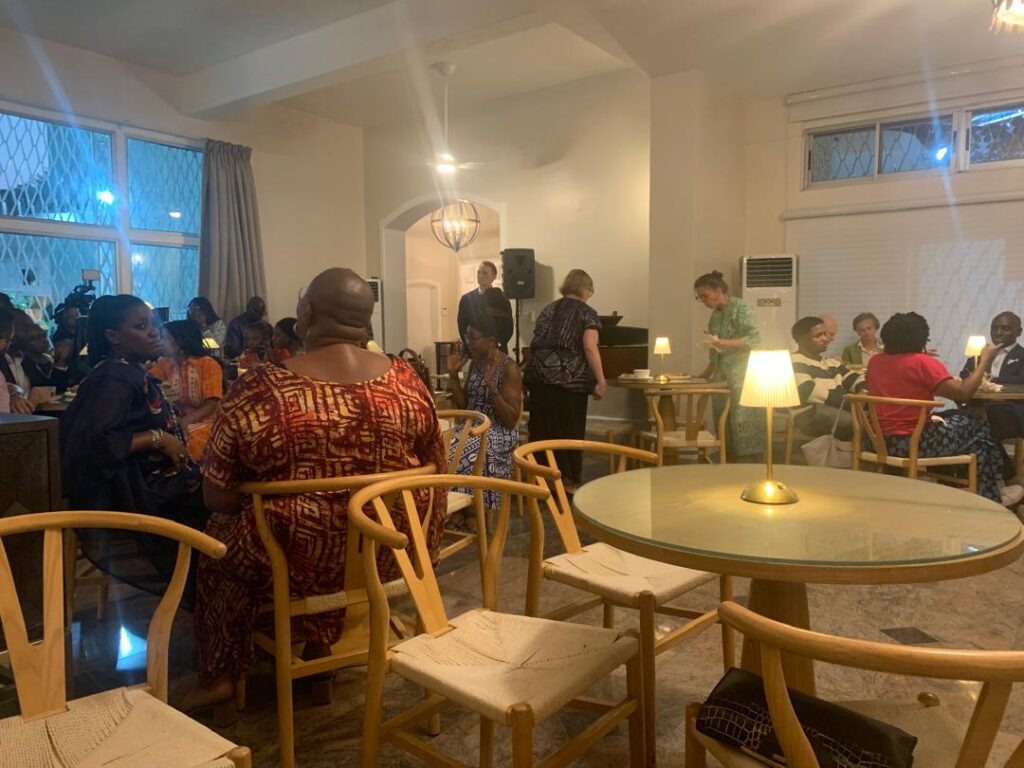
Okorafor stopped reading. The room was quiet.
What She Left the Room With
She had told the story of her body, of the bed that connected to the page, of the story about a woman who could fly. She had explained why she needed a word for what she does, and why she wrote Death of the Author at this particular moment, when Black writers are being accused of being machines.
At the end, she returned to the joy. “This is something that I love doing. I love it. There’s a joy in it that does not come from validation from other people. It’s from within. And I do it. So I just do it.”
Hudspeth had spoken earlier about intellectual property, about the value of words on a page. Shoneyin had introduced Okorafor as a peer, born in the same year, part of a cohort of Nigerian writers who have shaped the last two decades of African literature.
But it was Okorafor, in the end, who gave the room the sentence that no policy could contain. “The bed connecting to the page,” she said. “Just aligned to something in me.”
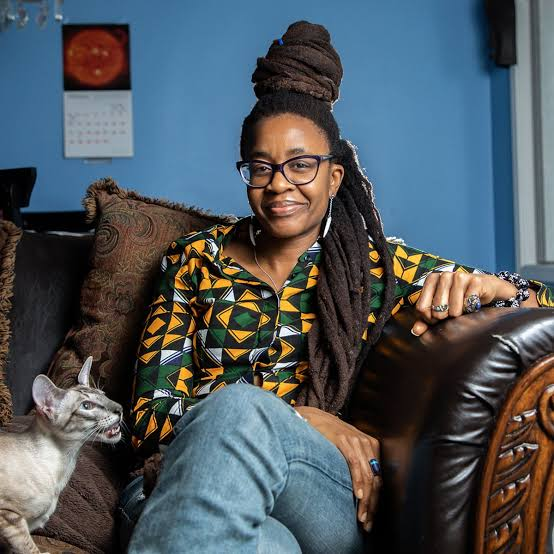
Nnedi Okorafor discusses Death of the Author with Wole Talabi at Aké Festival 2026. The festival runs November 19–21 at Silkwood Hotel, Ikeja GRA, Lagos.
Yoast SEO Credentials
Focus Keyphrase: Nnedi Okorafor Aké Festival 2026 Death of the Author
Secondary Keywords: Africanfuturism, Lola Shoneyin, Brandon Hudspeth, scoliosis paralysis writing, Native Intelligence, Nigerian-American literature, AI and storytelling, USIS library Lagos
Meta Description (155 characters): Nnedi Okorafor told Aké Festival how a USIS library, a paralysed body and a story about a woman who could fly made her a writer—and why she had to invent Africanfuturism.
Slug: nnedi-okorafor-ake-festival-2026-paralysis-africanfuturism-death-of-the-author
SEO Title (60 characters): Nnedi Okorafor: Paralysis, Africanfuturism, and Aké 2026
Readability Score Target: 60+ (Flesch Reading Ease)
Word Count: Approximately 1,500 words
Internal Linking Suggestions:
- Link to Brave Nigerians coverage of Brandon Hudspeth at Aké Festival 2026
- Link to previous Aké Festival Native Intelligence coverage
- Link to coverage of Jerry Falade AI controversy
External Linking Suggestions:
- Aké Festival official programme (akefestival.org)
- Nnedi Okorafor’s Death of the Author publisher page
- Nnedi Okorafor’s Africanfuturism definition post (nnedi.com)
Image Alt Text Suggestions:
- “Nnedi Okorafor reading Death of the Author at Aké Festival Lagos”
- “Lola Shoneyin and Nnedi Okorafor at Ouida Bookstore Lagos”
- “Nnedi Okorafor Aké Festival 2026 audience”
Social Media Snippets:
X/Twitter: Nnedi Okorafor told Aké Festival how a USIS library, a paralysed body and a story about a woman who could fly made her a writer. The full story on Brave Nigerians.
Instagram: “The bed connecting to the page.” Nnedi Okorafor on paralysis, stories, and the word she had to invent. Read the full report on Brave Nigerians.
Facebook: Nnedi Okorafor gave Aké Festival something no policy could contain: the story of how a bed in a hospital ward became the page that launched a career. Read the full report on Brave Nigerians.
Additional Report by Femi Morgan








Leave a comment