

By Chibuzor Alli
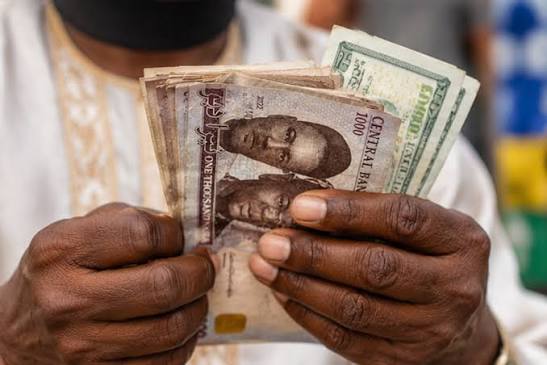
Nigeria’s foreign exchange reserves have shed $406m in one month as renewed pressure on the naira pushed the currency to ₦1,440/$ at the parallel market, reversing some of its recent gains.
Data from the Central Bank of Nigeria showed that gross external reserves declined to $54.713bn on November 18 from $55.119bn on October 19.
The naira also weakened at the Nigerian Foreign Exchange Market, depreciating to ₦1,388/$ on Thursday, November 19, from ₦1,333.50/$ a month earlier. This represents a loss of ₦54.50, or approximately four per cent, over the period.
The currency recorded further losses during the week, closing at ₦1,388/$ on Thursday against ₦1,379.99/$ on Wednesday, representing a daily depreciation of ₦8.01.
It had also weakened by ₦16.99 on Wednesday from ₦1,363/$ recorded on Tuesday, indicating successive declines in the official foreign exchange market.
At the parallel market, the naira traded at ₦1,440/$ on Thursday, compared with ₦1,375/$ a month earlier. Some currency traders reportedly offered even lower rates to buyers seeking large volumes of dollars.
The latest reserve decline comes less than two months after CBN Governor, Olayemi Cardoso, announced that the country’s external reserves had exceeded $55bn, reaching their highest level in more than 18 years.
Cardoso made the disclosure on September 22 after the 307th meeting of the Monetary Policy Committee in Abuja, attributing the growth to improved management of the country’s foreign exchange resources and contributions from Nigerians in the diaspora.
“We have been able to rebuild our reserves. We know that today, the reserves have crossed $55bn – the highest number in over 18 years. That’s a big thing. It’s come through consistency and discipline in approach. In addition to that is the whole issue of diaspora contributions,” Cardoso said.
The CBN governor also pointed to improvements in the foreign exchange market, particularly the narrowing gap between exchange rates following the end of the previous multiple-rate system.
He criticised the former arrangement, arguing that access to foreign exchange had been influenced by personal connections and privileges rather than a transparent market structure.
“We had a very dysfunctional foreign exchange market whereby there were multiplicity of rates depending on whom you knew and the access you had will determine the rate you will get,” he said.
“What has happened is that we have succeeded in closing that gap. It is not fair for some people to profit at the expense of others,” Cardoso added.
He further disclosed that the previous foreign exchange subsidy arrangement had imposed substantial costs on the economy, estimated at about 2.2 per cent of gross domestic product.
“The losses of these ‘subsidies’ were in the region of 2.2% of the GDP. And that is staggering,” he said.
However, economists have pointed to weaker dollar inflows, rising foreign exchange demand and domestic economic uncertainties as possible factors behind the latest pressure on the currency.
An emerging markets expert and economist, Ike Ibeabuchi, attributed the depreciation and reserve decline partly to reduced dollar supply from exporters, investors and other sources, alongside increasing demand for foreign currency.
He said demand for dollars to finance imports, international payments and other transactions continued to put pressure on the naira.
“Lower foreign exchange inflows from exporters, investors and other sources reduce dollar supply in the market, while demand for foreign currency for imports, international payments and other transactions continues to exert pressure on the naira,” Ibeabuchi said.
He also linked the pressure to seasonal demand associated with the festive period.
“I won’t say this has to do with elections, but this is a festive season as well, where demand for FX often rises,” he added.
Similarly, the Chief Executive Officer of the Centre for the Promotion of Private Enterprise, Dr Muda Yusuf, identified domestic political and economic developments as possible contributors to the currency’s weakening.
Speaking in a telephone interview with The PUNCH, Yusuf said political spending, capital flight and policy uncertainty could be affecting the naira and foreign exchange reserves, although he acknowledged that he did not have all the facts.
He explained that increased political spending could inject additional liquidity into the economy and create pressure on the exchange rate.
“The political spending liquidity may be already putting pressure on the naira. The central bank had expressed that fear before during the latest Monetary Policy Committee meeting,” Yusuf said.
The economist also suggested that some foreign exchange demand linked to political activities might be occurring in the parallel market, where transactions may not pass through official channels.
Yusuf further warned that uncertainty surrounding the country’s economic reform direction could influence foreign investor decisions, particularly if political actors continued to make statements about reversing policies introduced by the President Bola Tinubu administration.
He said proposals to restore petrol subsidies could create uncertainty among investors and potentially trigger capital outflows.
“There have been some pronouncements by some political actors that they are going to reverse the reform and bring back the petrol subsidy. It’s a signal that can have an effect on capital flows.
“I don’t have the facts, but I’m talking about possibilities. It is possible that because of the political season and the utterances of some politicians about the reform, some foreign investors may begin to, at least the portfolio investors may begin to, withdraw their money. And that could begin to put pressure on the naira,” the CPPE chief said.












Leave a comment