

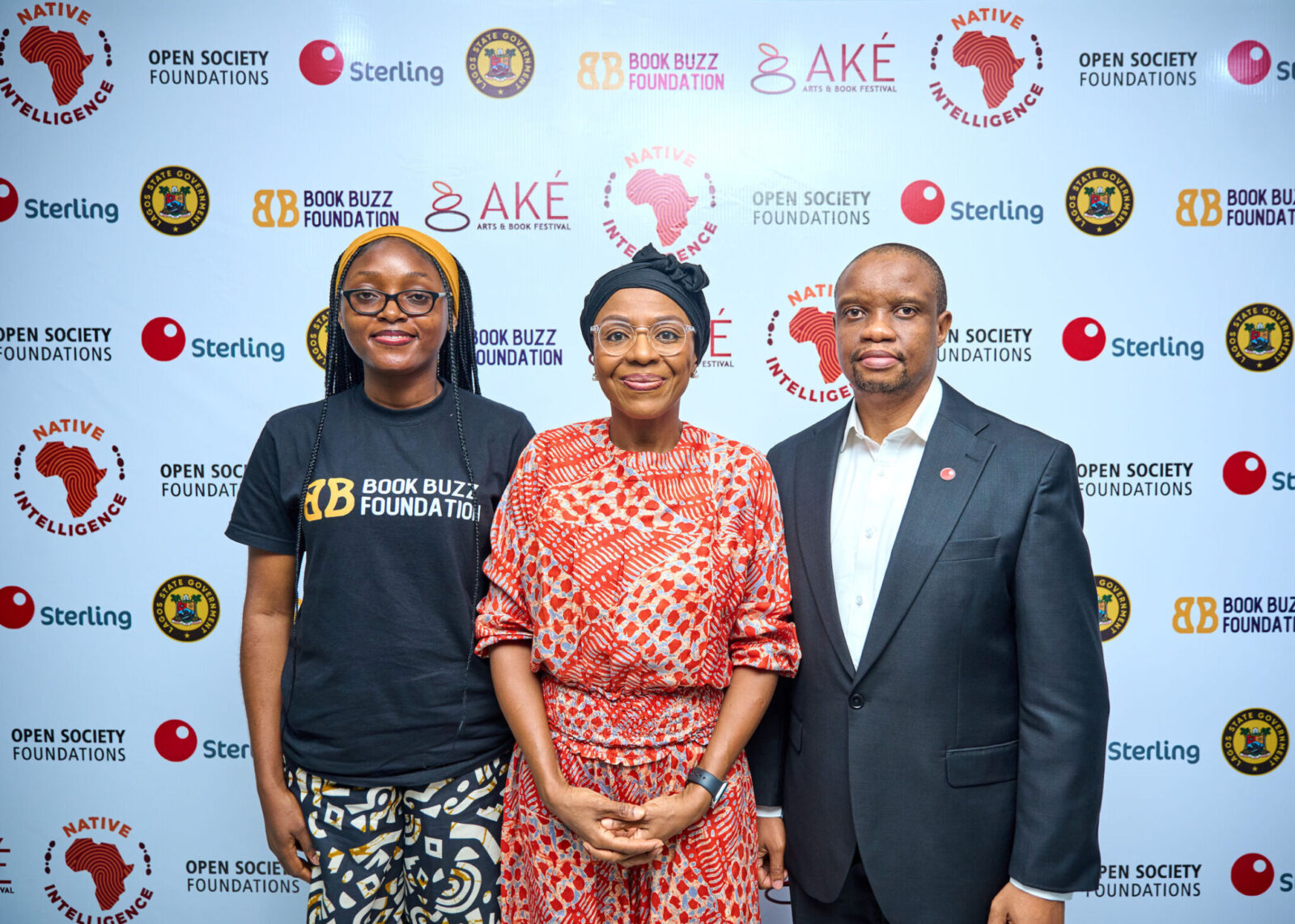
Lola Shoneyin is not in the mood for Western validation. At the press conference announcing the 14th Aké Arts and Book Festival, held at Ouida Bookstore in Lagos, the festival’s founder made her position clear: Nigerian writers should stop measuring success by foreign publishing deals and start building local literary infrastructure.
“As a Nigerian, why is it that we measure our success by whether or not we are published abroad?” she asked. “I am interested in being published here”.
It is a bold stance from a woman who has spent over a decade building the continent’s most visible literary gathering.
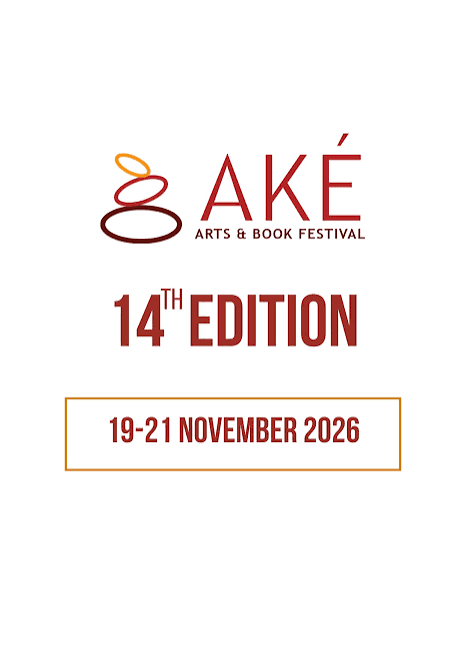
The 2026 Programme: Native Intelligence and the AI Reckoning
This year’s theme, “Native Intelligence,” is characteristically ambitious. It asks whose knowledge counts in an age of artificial intelligence, and whether African systems of knowing, oral tradition, community memory, and indigenous innovation are being erased or commodified by machines trained on Western data.

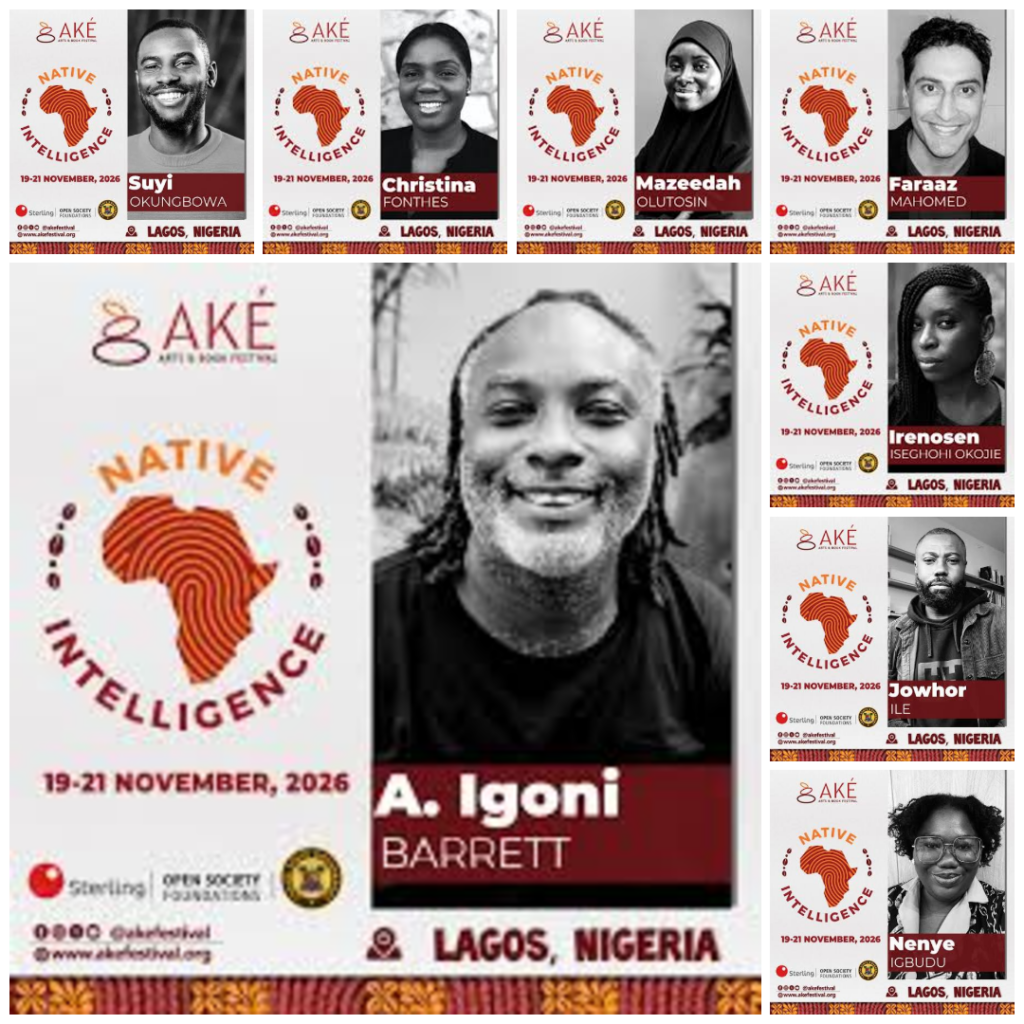
The programme includes 24 events, with 11 book chats and six panel discussions. Chika Unigwe will discuss her new novel Grace. Rukiyatu Brume, recently longlisted for the Booker Prize, will appear. Jerry Falade, whose crime novel Call Me, I’ll Hide the Body became a lightning rod for debates about AI and Black writers after a reported $2 million publishing deal collapsed amid questions about AI involvement, will participate in a panel on AI and creativity. Partnerships with the Caine Prize, Granta (which is producing a special Nigeria edition), and the African Speculative Fiction Society round out the programme.
The eclecticism is real. Aké has always been good at curating a mix of established giants and emerging voices, of literary fiction and speculative fiction, of poetry and film. But the AI panel is the one to watch. It touches on a question that goes to the heart of the festival’s theme: if AI can mimic the style of African writers, what does that mean for the value of native intelligence? And if publishers cannot tell the difference, what does that mean for the careers of Black and brown writers who are already subjected to heightened scrutiny?
A Festival Theme with a Context
The Jason Arday Precedent
In August 2026, Jason Arday, Cambridge University’s youngest-ever Black professor, was found dead at his home in London, less than two weeks after resigning amid a media-driven plagiarism row. Police described the death as “unexpected” but “not suspicious”. Arday had admitted to “errors” in his work but denied plagiarism; Liverpool John Moores University had cleared him. Yet the accusations, amplified by the British press, became unbearable. In his resignation letter, he wrote: “The relentless accusations, speculation and public commentary have taken a profound toll on me and on those I love”.
The Caine Prize Crisis
In October 2026, Zimbabwean writer Simbarashe Kundizeza won the Caine Prize for “The Blue Fighter.” Five days later, The Atlantic published an article by Vauhini Vara claiming that the AI-detection tool Pangram had flagged the story as “entirely AI-generated”. The article also scanned 25 years’ worth of previous Caine Prize winners to check whether they were “human”.
The backlash was immediate. Caine Prize chair Ellah Wakatama told the BBC she was “shocked” The Atlantic had not waited for an investigation: “I do wish The Atlantic had spent more time investigating this so that, alongside Pangram, they did have evidence of real human investigation of it before tainting the prize and tainting this winner”.
Likewise, Nigerian novelist Aiwanose Odafen called it “a very irresponsible article”. Oghenechovwe Donald Ekpeki, the Nigerian speculative fiction writer, was blunter: “These attacks on African and Black writers are nothing new. AI is just the tool of the age. Before this, it was plagiarism. It was almost like a rite of passage. Now it’s AI. The root cause remains the same. Racism, anti-Blackness, Afrophobia”.
Karen Attiah, the award-winning journalist, drew the line directly to Arday: “It is really chilling to see how quickly Black, Caribbean, and African writers and academics have become the global face of AI use and plagiarism”. In a later post, she wrote: “They want another Jason Arday to add to their kill list. Incidentally, Arday was neither a plagiarist nor a compulsive liar. He was a black intellectual—that’s who the white supremacists are gunning for”.
The Pattern
Kundizeza was not an isolated case. Jerry Falade, the Nigerian writer whose debut novel Call Me, I’ll Hide the Body attracted a reported $2 million deal before his agent withdrew it amid AI suspicions, publicly linked his treatment to a longer history: “Eighteenth century: People of Colour who wrote books were forced to sit before committees of white men and answer questions to prove they had written their own work. Later, whenever a Person of Colour wrote something good, we were accused of plagiarism. 2026: If you’re a Person of Colour and you secure a lucrative deal in history, someone, somewhere, will accuse you of using AI”.
True to pattern, Trinidadian writer Jamir Nazir won the Commonwealth Short Story Prize and faced identical accusations; the prize’s 2027 edition was postponed as a result. Canadian-Haitian author Thélyson Orélien was removed from the Goncourt selection over AI allegations he denied, though he later admitted to plagiarism in other, older texts.
What This Means for Aké’s “Native Intelligence”
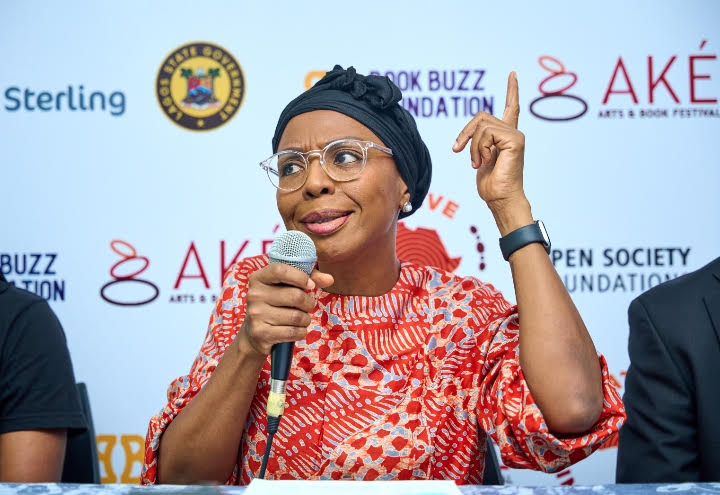
Shoneyin’s theme is not asking whether AI exists. It is asking who gets to define “intelligence” at all. The festival’s own description states, “Long before the algorithm, there was the elder and the proverb. Native Intelligence sits at the crossroads of what we have long known and what the machine is only now learning to mimic”.
The subtext is unmistakable. When Pangram itself an AI tool is treated as the arbiter of whether an African writer’s prose is “human,” the question of whose knowledge counts becomes urgent. Shoneyin said as much at the press conference, “We are interested in our own standards. I am interested in us making literary giants right from here, without the West saying to us, this is how we are supposed to write”. She also criticised “the tendency to mistake differences in language and cultural expression for evidence of AI use”.
The festival’s programme reflects this. Jerry Falade will sit on the AI and creativity panel—the Nigerian writer whose career was derailed by exactly the dynamic the festival is interrogating. The African Speculative Fiction Society, which has documented the pattern of accusations against Black writers, will host its own session. The Caine Prize partnership will bring Irenosen Okojie and Rotimi Babatunde together to discuss the prize’s history, at a moment when that history is being weaponised against its latest winner.
Ake’s Tajectory
From Abeokuta to Ikeja
Aké began in 2013 in Abeokuta, Ogun State, the rocky hometown of Wole Soyinka. For five years, it occupied the June 12 Cultural Centre in Kuto, building a reputation for intimacy and intellectual rigour that felt distinctly provincial in the best sense. The festival’s name itself is a nod to the Egba city.
But in 2018, the organisers announced the move to Lagos, citing the need for a bigger space and better infrastructure. The reaction was immediate and emotional. Kenyan writer Zukiswa Wanner, a regular at Aké, expressed mixed feelings: “I love Abeokuta and while I know that this makes it easier for literary Lagos… I’m gonna miss my palm wine guy, Sunday”. Another attendee, Patrick Okigbo, was blunter: “Ake can’t be Ake if it is in Lagos”.
The move was framed as growth. Sterling Bank, which had supported the festival since its Abeokuta days, provided the backing to make Lagos viable. But the subtext was also about state support—or the lack of it. In 2014, Shoneyin had praised Ogun State’s Commissioner for Culture and Tourism, Yewande Amusan, for understanding “how events like this put places on the map”. By 2018, that relationship had evidently run its course. The festival has never publicly detailed why Ogun lost Aké, but the silence itself is telling. A grave loss to Ogun State and a great gain to Lagos.
The Milestone: Literature as commercially viable
What Aké has achieved in Lagos is genuinely remarkable: it has made a literary festival a ticketed, commercially viable event in a country where book events are usually free and sparsely attended. Tickets for 2026 cost ₦20,000 online and ₦25,000 at the venue. For a three-day programme featuring over 40 writers, that is reasonable by international standards, but it is also a barrier in a country where the minimum wage is ₦70,000 a month.
The festival has hosted over 1,000 writers, poets, musicians, and thinkers since its founding, including Nobel laureates Wole Soyinka and Abdulrazak Gurnah, Booker winner Bernardine Evaristo, and a generation of African literary stars. It has inspired other festivals—Kaduna Book and Arts Festival, also founded by Shoneyin, and a proliferation of smaller literary events across Nigeria that have borrowed Aké’s model of mixing panels with performance, book chats, palm wine, or other local delicacies.
The Money Question: Who Funds Aké?
Aké’s funding model relies on a mix of corporate sponsorship, international grants, and state support. Sterling Bank has been the most consistent partner, backing the festival since 2018 under its HEARTS strategy, which prioritises Education among five key sectors.
The Open Society Foundation has also supported the Book Buzz Foundation, with a disclosed grant of $20,000 in 2023, though that was specifically for the Kaduna Book and Arts Festival, not Aké. The Lagos State Government provides the ₦20,000 book grants for 100 young people, which amounts to ₦2 million in total. Earlier partners included Access Bank, Etisalat, and the French, Italian, and German consulates.
What is not publicly disclosed is the festival’s total budget, its revenue from ticket sales, or the exact amounts contributed by Sterling and other partners. Shoneyin has spoken candidly about the financial challenges of running Aké, noting that “the biggest challenge for any festival… is always financial.”
The 14th Aké Arts and Book Festival runs from November 19 to 21, 2026, at Silkwood Hotel, Ikeja GRA, Lagos.
- African Literature
- African literature AI accusations
- AI in literature
- Aké Festival
- Aké Festival criticism
- Book Buzz Foundation
- Caine Prize
- Caine Prize AI controversy
- Jason Arday
- Jerry Falade
- Jerry Falade AI
- Lagos Events
- Lagos literary events
- Lagos literary scene
- literary festivals Nigeria
- Lola Shoneyin
- Native Intelligence
- Nigerian literary festival
- Nigerian literature funding
- Sterling Bank arts sponsorship






Leave a comment