

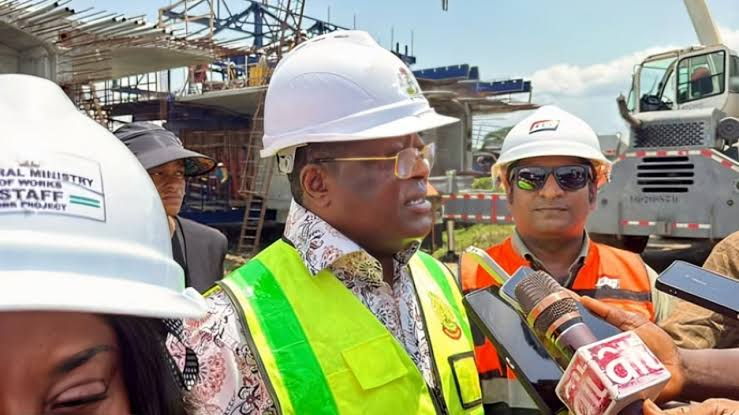
Lagos flooding causes have sparked intense public debate in recent weeks. However, the Minister of Works, David Umahi, has rejected claims that the Lagos-Calabar Coastal Highway triggered the flooding. Instead, he pointed to poor drainage systems, blocked waterways, and rapid urban growth as the real drivers of the problem.
His comments come as residents raise concerns about the environmental impact of major infrastructure projects. Yet, the government insists the highway meets modern engineering and environmental standards.
Government Rejects Highway Blame
David Umahi firmly dismissed allegations linking the coastal highway project to flooding incidents across Lagos. He explained that technical reviews found no evidence connecting the construction work to rising water levels.
Moreover, he stressed that engineers designed the Lagos-Calabar Coastal Highway with strong drainage systems. These systems include culverts and channels that guide water flow effectively.
According to him, the project passed several environmental and engineering assessments before construction began. Therefore, blaming the highway alone ignores deeper and long-standing infrastructure issues.
Drainage Failures and Urban Growth Identified
The minister highlighted key Lagos flooding causes, focusing on drainage failures and urban expansion. He explained that blocked drainage channels remain a major issue across the city.
In many areas, residents dispose of waste indiscriminately. As a result, drainage systems become clogged and ineffective during heavy rainfall.
Additionally, rapid urbanisation has worsened the situation. Developers often build on natural waterways and wetlands. This practice reduces the land’s ability to absorb excess water.
Urban planning experts have repeatedly warned about these risks. They note that poor maintenance and weak stormwater systems continue to drive flooding in Lagos.
President Bola Tinubu has ordered a full technical assessment of affected areas. This move aims to identify the exact Lagos flooding causes and provide lasting solutions.
The assessment will involve engineers, environmental experts, and government agencies. They will examine drainage infrastructure, water flow patterns, and construction activities.
Furthermore, officials expect the findings to address public concerns. The review will also guide future infrastructure planning and environmental protection efforts.
Umahi emphasized that the process will deliver objective results. He added that the government remains committed to sustainable development.
Climate Pressure and Infrastructure Challenges
Lagos continues to face growing environmental pressure. Climate change has increased rainfall intensity and raised sea levels in coastal areas.
As a result, flooding risks have become more severe. Experts warn that cities like Lagos must strengthen their resilience strategies.
They recommend better drainage systems and stricter urban planning policies. In addition, protecting wetlands and natural floodplains remains critical.
These measures can help reduce the long-term impact of flooding. They also support safer housing and infrastructure development.
Impact on Real Estate and Housing
Flooding poses serious risks to property investments in Lagos. It can damage buildings, lower property values, and increase construction costs.
Consequently, developers and investors are calling for urgent reforms. They want improved drainage systems and stronger development controls.
Many stakeholders also stress the need for coordinated action. This includes collaboration across housing, environmental management, and infrastructure sectors.
Addressing Lagos flooding causes will help protect investments. It will also support sustainable urban growth.
The debate over Lagos flooding causes continues to evolve. While some residents blame the coastal highway, the government insists otherwise.
David Umahi maintains that drainage failures, poor waste management, and rapid urban growth drive the problem. Meanwhile, the planned technical assessment will provide clearer answers.
Looking ahead, Lagos must adopt long-term flood management strategies. Stronger infrastructure, better planning, and climate resilience will play key roles.
For policymakers and investors alike, the lesson is clear. Sustainable development must remain a priority in a rapidly growing city like Lagos.








Leave a comment