

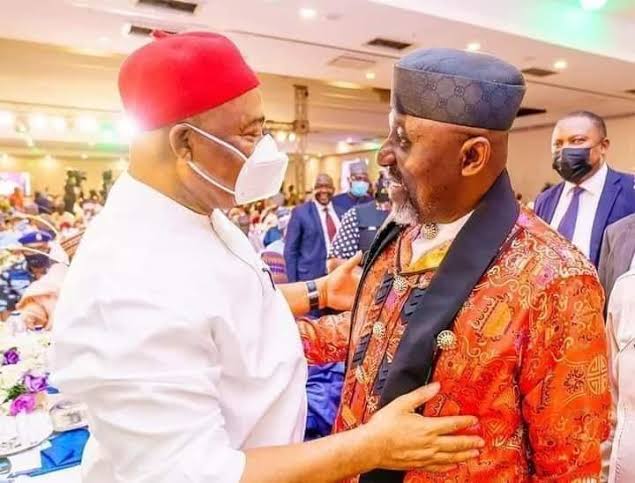
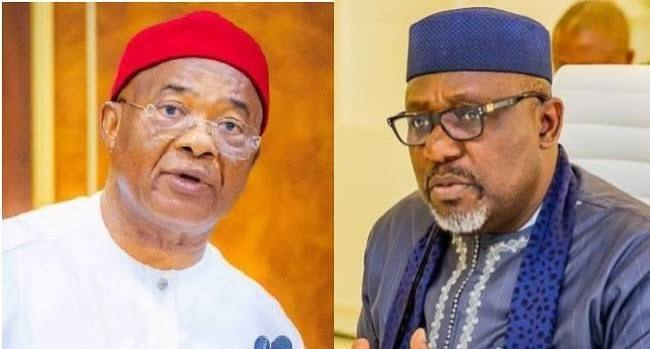
Contested outcomes have defined Hope Uzodinma’s political career. He became governor in 2020 through a Supreme Court ruling that declared him the winner of the 2019 election despite finishing fourth in the official tally with 96,458 votes. Now, as his second term approaches its midpoint, the Imo governor is insisting on a Senate seat that a Federal High Court has already ordered INEC to reassign to another candidate. The dispute is not merely a local political squabble. It raises questions about executive consolidation, judicial authority and the balance of power in the South East ahead of the 2027 elections.
The Court Ruling and Okorocha’s Defiance
On 29 October 2026, Justice Obiora Egwuatu of the Federal High Court in Abuja ordered INEC to remove Uzodinma’s name as the senatorial candidate for Imo West and replace it with that of former Governor Rochas Okorocha. The court held that Uzodinma did not win the APC primary election held on 18 May . Uzodinma’s response was defiant. Speaking after Mass at the Government House Chapel in Owerri, he dismissed suggestions that he would surrender the ticket as “a lie.” He told residents to campaign for the APC “from top to bottom,” listing himself as the senator for Orlu zone alongside Patrick Ndubueze for Okigwe and Alex Mbata for Owerri.
Okorocha’s response was more expansive. In an interview with Arise News on Thursday, he declared himself the dominant force in the Imo APC and dismissed Uzodinma’s supporters as political errand runners. “Rochas is the APC in Imo State. I was a founding father of this party,” he said. “The structure of APC in Imo State is Rochas. And I gave the name APC” . He questioned whether any congress had been held to establish the party structures being used against him, and argued that the dispute was between him and Uzodinma personally, not the state government. “What does Imo State Government have to do with the election between me and Hope Uzodinma as a person? It’s not Imo State Government contesting for election, it’s Hope Uzodinma,” he said .
Okorocha also made a direct claim about his value to President Tinubu’s re-election bid. Speaking on Channels Television hours after the judgment, he said: “What is important to me now is how will Asiwaju be elected in Imo State. With this my name coming on the ballot paper now, Asiwaju can be sure that his victory is given in Imo State” . He urged South Easterners to approach 2027 strategically rather than emotionally, describing support for Tinubu as a “strategic alliance” that could benefit the region politically .
Two Governors, Two Paths to Power
The rivalry between Uzodinma and Okorocha is not merely personal. It reflects two different routes to the Imo governorship and two different bases of political legitimacy.
Okorocha first won the governorship in 2011 on the platform of the All Progressives Grand Alliance, defeating incumbent Ikedi Ohakim in what was widely described as a major upset. He polled 44.86 per cent of the vote to Ohakim’s 38.68 per cent . The election was initially declared inconclusive by INEC due to irregularities, and Okorocha won the subsequent supplementary election . He was re-elected in 2015 on the APC platform, again after an initial declaration of inconclusiveness, with 385,671 votes to Emeka Ihedioha’s 306,142 before the supplementary poll . Okorocha’s legitimacy rested on two electoral victories, however contested the process, and on a political machine he built over eight years in Government House.
Uzodinma’s path was different. He contested the 2019 governorship on the APC platform and finished fourth with 96,458 votes . He became governor in January 2020 only after the Supreme Court overturned the election of Emeka Ihedioha of the PDP, ruling that results from 388 polling units had been wrongly excluded. The judgment was controversial and drew widespread criticism, with civil society groups later alleging that the fallout damaged the judiciary’s reputation and that justices involved were denied United States visas . Uzodinma’s legitimacy, unlike Okorocha’s, rests not on a vote count but on a judicial pronouncement that many Nigerians still question.
This distinction matters for the current dispute. When Okorocha says “Rochas is the APC in Imo State,” he is making a claim about political pedigree and electoral history. When Uzodinma insists on the Senate ticket, he is making a claim about incumbency and control of the party machinery. The court has sided with Okorocha on the primary. The political question is whether Tinubu’s campaign believes Okorocha or Uzodinma can deliver Imo’s votes in 2027.
Tinubu’s Calculation
There is no public statement from Tinubu or his campaign directly endorsing either man. But the political logic is visible in Okorocha’s own framing. Okorocha is not merely fighting for a Senate seat. He is presenting himself as the vehicle through which Tinubu can win Imo State. His claim is that his name on the ballot, drawing on his residual popularity from eight years as governor, will mobilise voters for the APC presidential ticket in a way that Uzodinma’s name cannot.
The evidence for this claim is not conclusive, but it is not implausible. Okorocha won two governorship elections, both times overcoming initial INEC declarations of inconclusiveness. He served as senator for Imo West from 2019 to 2023 . He built a political structure that, whatever its current condition, was once formidable enough to make him a national figure and a presidential aspirant. Uzodinma, by contrast, has never won a statewide election on his own steam. His 2019 showing of 96,458 votes was a distant fourth. His tenure as governor has been marked by infrastructure projects and by allegations of authoritarian tendencies, but it has not produced an electoral mandate that can be measured against Okorocha’s.
A political group, the Renewed Hope Foot Soldiers for Tinubu, warned in October that the Imo APC crisis could cost Tinubu South-East votes in 2027 and urged both men to sheathe their swords . The warning confirms that the dispute is being read in presidential terms, not merely senatorial ones. If Tinubu’s campaign calculates that Okorocha’s name on the Senate ballot is worth more to the presidential vote in Imo than Uzodinma’s, the governor’s position becomes untenable regardless of what the Court of Appeal decides.
The Balance of Power
The stakes extend beyond Imo. The South East has historically been marginalised in national political calculations, and the region’s Senate delegation has often been fragmented. A Uzodinma Senate presence would give the governor a platform to maintain national relevance after leaving Government House in 2028, and it would give the APC a reliable vote in a chamber where its majority is not assured. An Okorocha Senate presence would give the former governor a comeback platform and would signal that Tinubu values electoral history over incumbency.
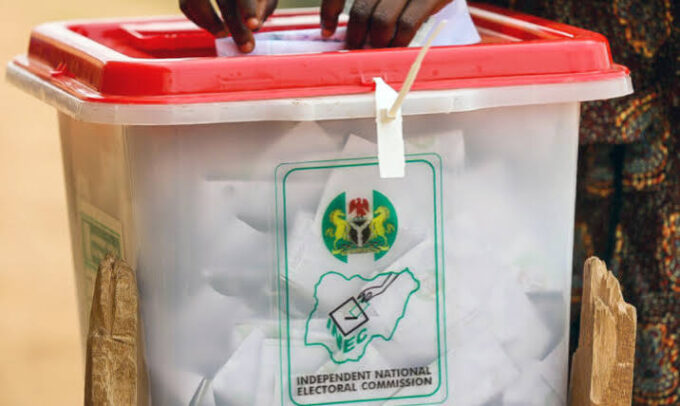
For voters in Imo, the senate contest will be a referendum on Uzodinma’s governorship as much as a choice between candidates. His tenure has been marked by infrastructure projects and allegations of authoritarian tendencies. The court ruling adds a new dimension: whether voters will accept a candidate whose name a judge has ordered removed from the ballot. The answer to that question will shape not only Imo West but the broader perception of whether the 2027 elections will be decided by votes or by courts, and whether the president’s political calculations will override the judicial outcome.
The Court of Appeal will decide the legal question. The political question, whether Tinubu trusts Okorocha or Uzodinma to deliver Imo, will be answered in the campaign that follows.




Leave a comment