

SEO Yoast Credentials
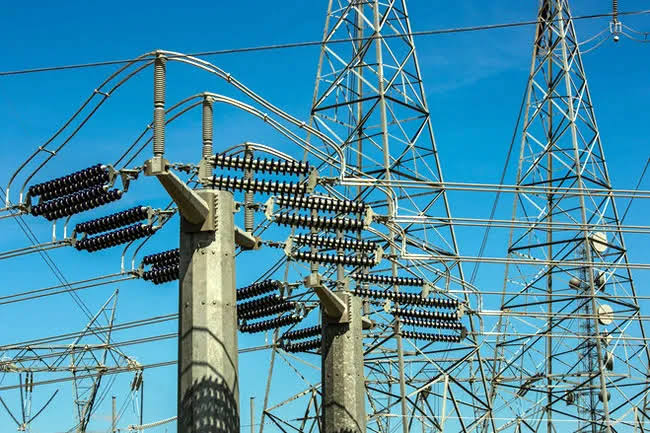
Nigeria’s power crisis is not a natural disaster. It is the cumulative outcome of decades of policy failure, and the data from 2026 shows that the failure is structural, measurable, and persistent. In February 2026, the grid generated just 4,102 megawatt-hours per hour against an installed capacity of 13,625 megawatts, a plant availability factor of 32 per cent. By October, the headline numbers had improved modestly. Peak generation reached 5,520.40 megawatts on 30 October, and total generation neared 5,000 megawatts on some days. But the improvement is fragile, and the structural gap remains. On 19 October, generation crashed from 3,840 megawatts to 476.70 megawatts within six hours, a partial system disturbance that the system operator declined to call a collapse. For a population of over 200 million, this is not an electricity system. It is a rationing mechanism that occasionally fails altogether.
The comparison with peer economies is stark, and the gap is widening. Brazil’s installed capacity reached 217,921 megawatts in March 2026, with 84.73 per cent of its plants classified as renewable. India’s installed capacity stood at 520,511 megawatts as of January 2026. China’s total installed capacity reached approximately 4,000 gigawatts by July 2026, nearly three times the size of the United States grid, with solar alone accounting for 1,286 gigawatts. These are not countries with more resources than Nigeria. They are countries that made different policy choices and sustained them.
The African comparison is more instructive because it removes the excuse of scale. South Africa’s Eskom, long the byword for grid dysfunction on the continent, now reports a net generation capacity of 48.5 gigawatts and an energy availability factor of 68.11 per cent for the financial year to date, its strongest operational performance in six years. The Medupi and Kusile stations are fully operational and contribute up to 9,600 megawatts to the grid. For the first time in more than a decade, South Africa has an estimated surplus capacity of between 2 and 3 gigawatts over the next few years. Egypt’s installed capacity reached 64.4 gigawatts, and its grid recorded a peak demand of 40.2 gigawatts in August 2026 while maintaining stable supply. Algeria has more than 26 gigawatts of installed capacity and added over 1.85 gigawatts ahead of summer 2026 to meet record demand. Nigeria, with four times Egypt’s population, operates a grid that cannot reliably deliver a quarter of Egypt’s peak demand.
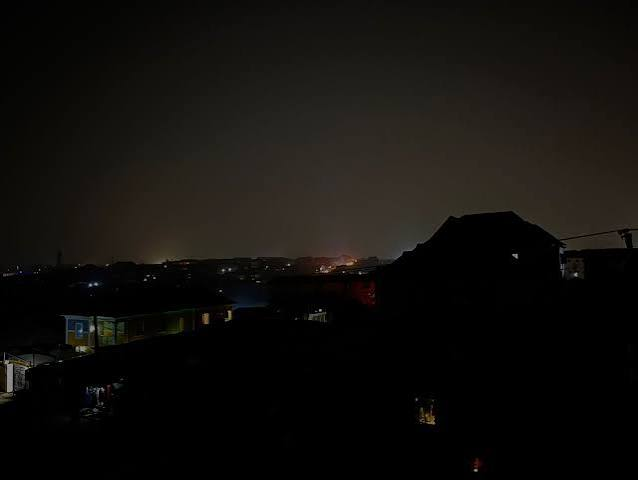
The consequences for young entrepreneurs are direct and measurable. Skills training, no matter how well-funded, cannot produce sustainable enterprises in an environment where electricity is a luxury. A fashion designer in Lagos who needs to run sewing machines for twelve hours a day cannot compete with a counterpart in Johannesburg who now benefits from a grid with surplus capacity. A tech startup in Abuja budgeted for servers, developers and marketing finds a significant portion of its capital consumed by diesel and inverter maintenance. A cold-chain business in Kano loses inventory every time the grid fails. The October disturbance that cut generation from 3,840 megawatts to under 500 megawatts in a single morning is not an abstract statistic for these businesses. It is a day of lost production, spoiled goods, and wages that cannot be paid.
The dysfunction is concentrated in specific plants, and the pattern is consistent between February and October. In February, the top ten energy producers accounted for 82 per cent of total generation. Kainji_1 delivered 574 megawatt-hours per hour at 99 per cent load factor, and Jebba_1 produced 425 at 98 per cent. But Egbin_1, the flagship Lagos steam station with 1,320 megawatts installed, ran at just 37 per cent availability. Alaoji_1 recorded zero megawatts of available capacity and zero per cent availability. Sapele Steam_1, with 720 megawatts installed, delivered a plant availability factor of three per cent. These are not technical failures in the sense of unforeseeable accidents. They are maintenance failures, gas supply failures and management failures, all of which are policy choices made by people who could have chosen differently.
The October data shows the same pattern. On 18 October, peak generation was 4,609.80 megawatts, down 5.24 per cent on the comparison period, with total generation of 102,958.38 megawatt-hours. The next day, the system experienced the crash that reduced generation to 476.70 megawatts. The grid’s fragility is not a weather event. It is the predictable result of a system in which available capacity is barely a third of installed capacity, leaving no margin for the failure of a single major plant or transmission line.
The Solution
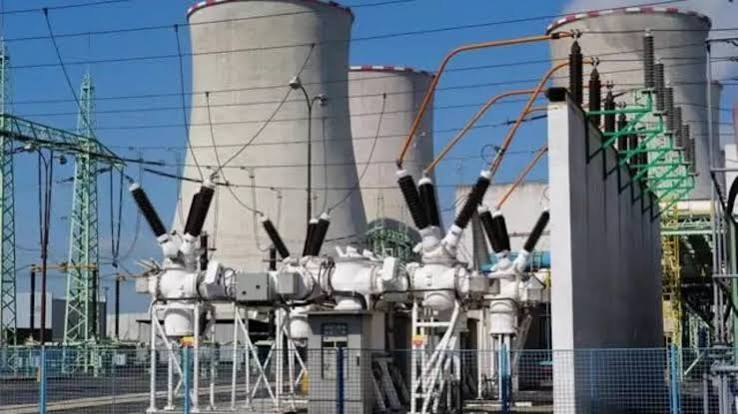
First, Nigeria must separate generation from transmission and distribution at the policy level, not just the rhetorical one. The Electricity Act 2023 theoretically allows states to generate and distribute power, but implementation has been slow and uneven. States with the capacity to build mini-grids and off-grid solutions should be freed from federal bottlenecks. The World Bank has documented that Nigeria’s mini-grid market attracted private investment and connected more than 5.5 million Nigerians through 125 mini-grids and over a million solar home systems between 2018 and 2024. This model works. It needs to be scaled, not piloted indefinitely.
Second, the tariff structure must reflect cost while protecting the poorest. The current system subsidises consumption for those who can afford to pay while failing to invest in the infrastructure that would make power reliable. A targeted subsidy for low-income households, funded by cost-reflective tariffs for industrial and commercial users, would be a start. South Africa’s recovery was not achieved by pretending that electricity was free. It was achieved by maintaining the plants, completing the new build, and charging enough to keep the system solvent.
Third, the federal government should treat gas-to-power as an industrial policy, not a petroleum policy. Nigeria flares gas while its thermal plants sit idle for want of supply. The LCNG stations commissioned in Kano are welcome, but they need to be replicated in every state capital within two years, not two decades. Egypt and Algeria did not become regional power leaders by treating gas as a revenue stream for export alone. They treated it as the foundation of domestic industrial capacity.
Nigeria’s young entrepreneurs are not asking for handouts. They are asking for the electricity that their competitors in Johannesburg, Cairo and Algiers now take for granted. Until that is delivered, every manifesto promise of prosperity, every skills programme and every loan scheme will be built on a foundation that cannot hold.









Leave a comment