

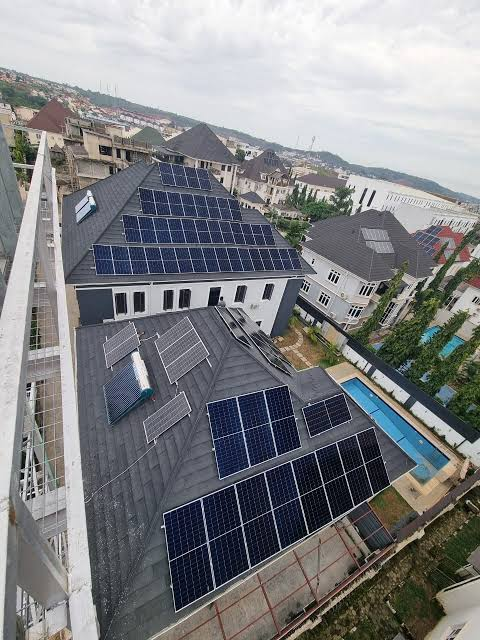
Nigeria’s electricity challenges are pushing real estate developers towards alternative energy as they seek to attract homebuyers and improve residential living conditions. Solar-powered estates in Nigeria are gaining attention as households look for more reliable electricity.
For many Nigerians, unreliable grid supply means depending on petrol generators and inverters. However, rising fuel prices and maintenance expenses have increased the cost of alternative electricity.
Consequently, some property developers are incorporating solar systems into residential projects. The approach also reflects changing homebuyer expectations, as electricity availability increasingly influences property decisions.
Real Estate Developers Incorporate Solar Energy into Housing Projects
One company exploring this approach is Nedcomoaks Limited, through its Citadel Views residential developments in Lagos.
The company introduced Citadel Views as a solar-powered residential community to reduce dependence on conventional electricity and expensive generators.
In July 2023, the company handed over the first 205 homes in its 306-unit Citadel Views 2.0 development. It later unveiled Citadel Oasis as its third fully solar-powered estate in November 2024.
Ichechi Okonkwo, Chief Executive Officer of Victoria Crest Homes and Deputy Managing Director of Nedcomoaks, identified Nigeria’s unreliable electricity supply and rising energy costs as major reasons behind the initiative. The Nation Newspaper+2
Another developer embracing solar energy is LandDeck Investment Limited.
Its Beechwood Estate in Lekki, Lagos, uses a centralised solar farm supported by battery storage. According to a February 2026 BusinessDay report, the 1,200-unit development provides residents with approximately 20 hours of electricity daily.
The report also identified LandDeck as a developer of solar-powered residential communities housing more than 5,000 families in Lagos. Businessday NG
Solar Energy Becomes a Property Market Selling Point
The adoption of solar energy is gradually changing what prospective homebuyers consider before purchasing properties.
Previously, buyers often prioritised location, building design, security and available facilities. However, electricity supply is becoming another important consideration.
For instance, residents who depend on generators face recurring expenses from fuel purchases, servicing and repairs. Solar installations offer an alternative that could reduce these costs over time.
Some developers also incorporate electricity expenses into estate service charges. Others provide individual solar systems for separate homes.
However, the cost and quality of these arrangements differ across developments. At Premium Trust Estate in Ibadan, smaller solar installations reportedly provide approximately eight hours of daily electricity. Businessday NG
High Installation Costs and Maintenance Remain Challenges
Despite its benefits, solar-powered housing comes with financial and operational challenges.
Installing solar panels, inverters and battery storage requires significant initial investment. Developers must also consider maintenance, battery replacement and the long-term management of their energy infrastructure.
Additionally, residents may face disagreements over electricity tariffs and service charges.
Therefore, developers must establish transparent payment structures and explain the actual capacity of their solar systems. They should also clarify whether the installations can power entire homes or only essential appliances.
Solar Adoption Could Influence Nigeria’s Housing Market
As electricity challenges continue, solar-powered developments could become an increasingly important feature of Nigeria’s real estate industry.
For developers, alternative energy offers an opportunity to differentiate their properties. For homebuyers, it provides another factor to consider when comparing residential developments.
Nevertheless, affordability remains important. Solar technology must deliver reliable electricity without making housing inaccessible to middle- and low-income earners.
Ultimately, the growing adoption of solar energy highlights how Nigeria’s power challenges are influencing property development. As more developers explore alternative energy, electricity infrastructure could become a major consideration in the country’s future housing market.







Leave a comment