

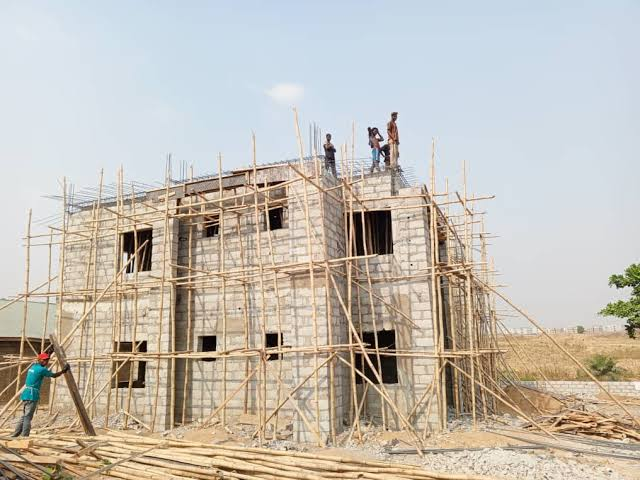
The Housing Development Advocacy Network (HDAN) has urged the National Assembly and the Federal Government to take urgent steps to reduce building material costs in Nigeria, warning that rising prices are worsening the country’s housing affordability crisis.
The housing advocacy organisation is calling for manufacturing reforms, targeted tax relief and a 100-day emergency action plan to address the rising cost of construction.
In a research report titled Reducing the High Cost of Building Materials in Nigeria and Across Africa: Towards Affordable Housing, Stronger Local Manufacturing and Sustainable Construction, HDAN identified expensive energy, transportation costs, foreign exchange pressures, high financing costs and inadequate industrial infrastructure as major drivers of construction expenses.
The report also highlighted Nigeria’s dependence on imported materials and concerns about market competition.
According to HDAN, the rising prices of cement, reinforcement steel, roofing sheets, tiles, glass, electrical fittings and plumbing materials are making homeownership increasingly difficult for Nigerians.
Festus Adebayo, the organisation’s Executive Director, described the situation as a national economic challenge requiring deliberate legislative and executive action.
He argued that reducing construction costs should become a national policy priority because affordable building materials can stimulate industrial production, create jobs, attract investment and improve living conditions.
HDAN Calls for National Assembly Investigation
HDAN has called on relevant Senate and House of Representatives committees overseeing housing, industry, trade, finance and economic development to investigate the high cost of building materials.
It also proposed a national public hearing involving cement and steel manufacturers, the Federal Competition and Consumer Protection Commission (FCCPC), the Standards Organisation of Nigeria (SON), relevant ministries, developers, financial institutions and housing consumers.
The organisation cited an FCCPC disclosure from August 2026, which put Nigeria’s installed cement production capacity at between 60 million and 65 million metric tonnes annually. This compares with estimated domestic consumption of 25 million to 30 million tonnes.
However, HDAN noted that installed capacity does not necessarily reflect actual production or market supply. It therefore called for an independent assessment of production efficiency, operating costs, distribution arrangements, competition and pricing practices.
The organisation stressed that the investigation should also recognise legitimate production expenses and manufacturers’ rights.
Six Reforms Proposed to Reduce Building Material Costs
HDAN outlined six major areas where government intervention could help lower construction expenses.
1. Review taxes and tariffs: The organisation wants targeted, time-bound tax relief on essential manufacturing inputs and selected building products with inadequate local supply. It also wants measures to ensure that the savings benefit builders and homebuyers.
2. Reduce energy and transportation costs: Government should improve electricity and gas supply to manufacturers, strengthen logistics infrastructure and address illegal road levies and distribution barriers.
3. Develop manufacturing hubs: HDAN proposed accelerating building material manufacturing hubs across Nigeria’s six geopolitical zones, with clear investment targets and transparent public reporting.
4. Provide affordable financing: It called for long-term financing through development finance institutions to support local producers of steel, roofing materials, ceramics, glass, sanitary fittings and other construction products.
5. Promote indigenous materials: The organisation recommended investment in research, testing and certification of locally produced alternatives, including stabilised earth blocks, laterite-based products and prefabricated components.
6. Introduce price monitoring: HDAN wants a national system to track factory, wholesale and delivered prices of major building materials to improve market transparency and help policymakers identify unusual price movements.
HDAN Urges Nigeria to Learn from Other African Countries
The organisation also called for stronger African cooperation in building materials production, research, industrial financing and regional trade.
Its report examined experiences in Ghana, Rwanda, Kenya, South Africa and Tanzania, highlighting lessons in market transparency, local materials development and affordable housing delivery.
HDAN encouraged governments to use the African Continental Free Trade Area (AfCFTA) to improve access to certified construction materials, manufacturing equipment, technology and regional markets.
It further proposed partnerships with manufacturers from China, India, Türkiye and other industrial economies to establish production and assembly facilities in Nigeria.
According to the organisation, such partnerships should prioritise technology transfer, local employment and stronger domestic manufacturing capacity rather than dependence on imported finished products.
The proposed reforms, HDAN said, could help reduce construction costs, strengthen local industries and make affordable housing more achievable across Nigeria.







Leave a comment