

By Chibuzor Alli
From a ₦750m counterfeit-products operation in Aba in 2023 to a ₦5bn raid in 2025, Nigeria’s latest crackdown raises fresh questions about the persistence of fake-product networks.
The bottles looked familiar. The labels carried established brand names. But inside suspected illegal production facilities in Lagos and Aba, regulators say they found expired drinks, imitation packaging, industrial materials and liquid mixtures linked to the alleged counterfeiting of alcoholic beverages.
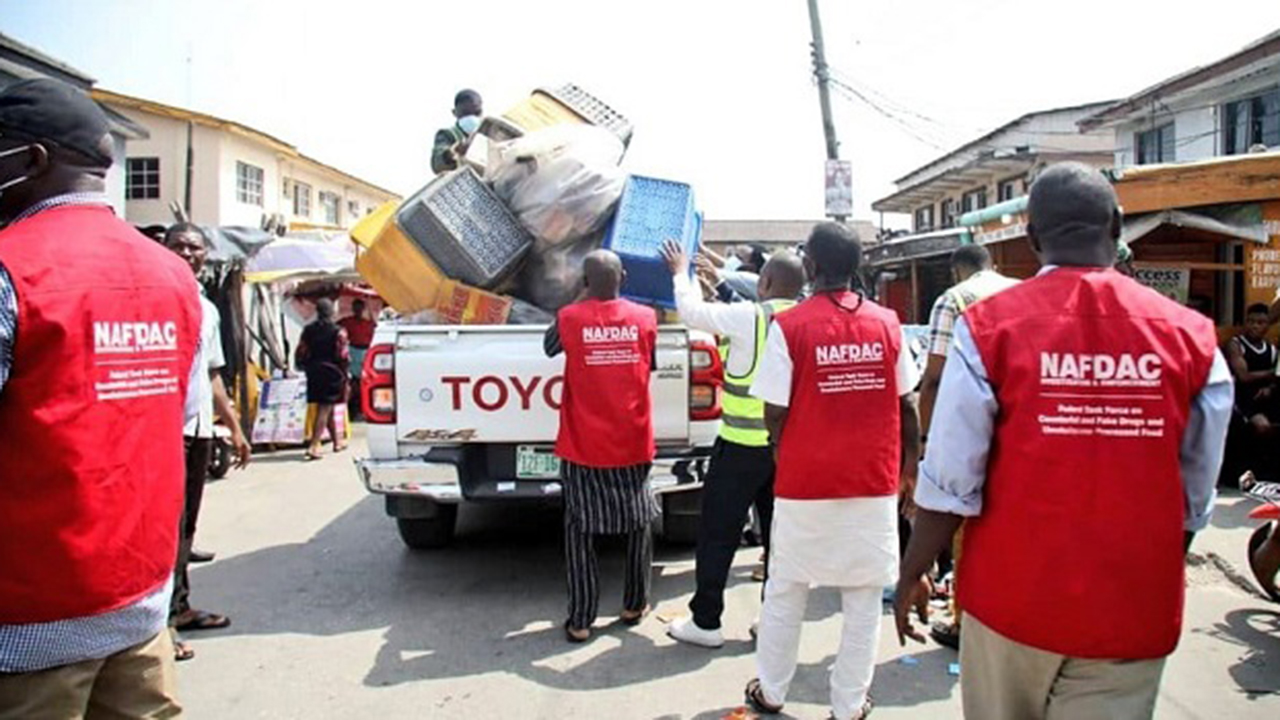
The discoveries formed part of a nationwide enforcement push in which the National Agency for Food and Drug Administration and Control (NAFDAC) reported seizing and destroying products valued at more than ₦5.3bn within a week.
The scale of the latest operations is significant. But the deeper story lies in what they reveal about a problem that has surfaced repeatedly in Nigeria: the alleged production, repackaging and distribution of questionable goods under the appearance of legitimate brands.
The latest figures cover three operations across Lagos, Abia and Rivers states. NAFDAC said it seized suspected counterfeit alcoholic beverages and related products valued at about ₦2bn at the Lagos International Trade Fair Complex on October 13, 2026. It reported further seizures worth more than ₦700m in Aba, while products valued at ₦2.6bn were destroyed in Port Harcourt.
The agency’s Deputy Director of Public Relations, Christiana Obiazikwor, disclosed the details in an interview with press men.
The seizures and destruction should, however, be distinguished: the reported ₦5.3bn represents the value of products involved in the wider enforcement operations, not goods all destroyed in a single exercise.
Not the first time Aba has been under scrutiny
The latest discoveries are not the first time NAFDAC has publicly raised concerns about suspected counterfeit production in Aba.
On December 18, 2023, the agency announced that it had uncovered counterfeit production activities at Eziukwu Market, popularly known as Cemetery Market, in Aba.
According to its account of that operation, officials found shops being used as production facilities for counterfeit wines, soft drinks and other consumables. The agency reported the use of recycled bottles, imitation packaging, unhygienic water sources and materials for adulterating products.
NAFDAC said more than 240 shops were raided during the exercise, with counterfeit and substandard goods worth an estimated ₦750m seized and destroyed. Ten people were arrested, according to the agency’s statement.
The crackdown returned to the headlines in January 2025.
On January 29, media men reported that NAFDAC had raided 240 shops at Cemetery Market and confiscated counterfeit products valued at more than ₦5bn. The operation targeted suspected illegal factories producing fake alcoholic beverages, soft drinks and other consumer products.
The two episodes, reported just over a year apart, establish a documented history of repeated enforcement operations against suspected counterfeit production in the market.
They do not, by themselves, establish that the same individuals or businesses were responsible for the 2023, 2025 and October 2026 discoveries. They do, however, raise a legitimate question about the durability of enforcement efforts and the conditions that allow suspected illegal production to persist.
Inside the latest alleged counterfeiting operations
The October 2026 operation in Lagos provided another illustration of the challenge.
NAFDAC operatives uncovered more than 20 illegal stores at Zamfara Plaza, within the Lagos International Trade Fair Complex, on October 13.
Obiazikwor said the premises were allegedly used to counterfeit popular alcoholic beverage brands, revalidate expired drinks and stockpile banned imported products.
The products seized and evacuated were valued at more than ₦2bn, and two suspects were arrested.
The discovery is particularly significant because the alleged activities went beyond producing imitation beverages. Revalidating expired drinks and placing them back on the market could undermine consumers’ ability to determine whether a product is safe and fit for consumption.
The operation also points to the importance of packaging in suspected counterfeit trade. If labels, bottles and closures are made to resemble those of genuine products, consumers may have difficulty distinguishing the contents from authentic merchandise.
In Aba, operatives raided five shops at Old Court Road Market, where they seized suspected counterfeit alcoholic beverages and packaging materials valued at more than ₦700m.
The materials reportedly included labels, corks, packs and outer packaging bearing established brand names. NAFDAC said resistance from traders affected the evacuation of the materials. The shop owners were absent, and the premises were placed on hold to prevent interference with the items left behind.
A separate operation on October 15 uncovered a suspected production facility at No. 25 Omenazu Street, Aba.
According to Obiazikwor, the operator allegedly produced spirits and herbal liqueurs under unhygienic conditions. He reportedly fled when officials arrived following a tip-off, abandoning a vehicle.
The agency said the vehicle contained labels and products bearing the names Sir Edwards Scotch Whisky and Scottish Hills Whisky, as well as empty bottles.
Other materials reportedly found at the premises included a drum containing approximately 200 litres of liquid, ethanol drums, plastic buckets, pieces of tree bark, liquid-mixture tanks, dirty sieves, sealing machines, corks and bottles bearing popular brand names.
Obiazikwor valued the materials and facility at more than ₦500m.
The valuation requires careful interpretation: the report does not establish whether the separate facility’s value is included in the wider Aba seizure figure of more than ₦700m. The figures should therefore not be added together without clarification from the agency.
The numbers behind Nigeria’s recurring counterfeit-products problem
The latest operations also fit into a wider history of seizures and destruction exercises involving counterfeit, expired and substandard goods.
On December 29, 2024, The Guardian reported that NAFDAC had disclosed the destruction of counterfeit and substandard products worth more than ₦120bn between July and December of that year.
The report cited an earlier destruction exercise on December 11, 2024, when the agency destroyed expired and unregistered drugs valued at ₦11bn in Ibadan, Oyo State. It also noted a November 2024 raid in Lagos involving fake medicines valued at ₦300m and the seizure of products worth ₦2bn from counterfeit alcohol packaging operations.
In December 2025, Nigeria’s Federal Ministry of Information and National Orientation reported another NAFDAC destruction exercise in Nasarawa State involving counterfeit, fake and substandard products valued at more than ₦5bn. The products included foods, drugs, medical devices, detergents and chemicals seized across five North-Central states.
These figures cover different periods, locations and categories of goods, so they cannot be combined into a single measure of the current counterfeit market. They nevertheless illustrate the scale of the enforcement burden reported by the agency over successive years.
The pattern also shows why the latest operation should be assessed on more than the value of goods seized or destroyed. Enforcement figures measure the products authorities have intercepted; they do not, on their own, establish the total volume of counterfeit goods circulating in the country or how much illegal production remains undetected.
₦2.6bn destroyed in Port Harcourt
In Rivers State, NAFDAC destroyed products valued at ₦2.6bn during a separate exercise in Port Harcourt on October 16, 2026.
The goods included pharmaceutical products, chemicals, tomato paste, biscuits and other items described by the agency as unwholesome. They had been intercepted and seized by the Nigeria Customs Service at Onne Port between 2025 and 2026.
Dr Martins Iluyomade, chairman of the Federal Task Force on Counterfeit, Fake Drugs and Unwholesome Processed Foods in Nigeria and NAFDAC’s director of investigation and enforcement, represented the agency’s Director-General, Prof Mojisola Adeyeye, at the exercise.
He said the destruction demonstrated cooperation between NAFDAC and the Nigeria Customs Service, adding that the process had begun in 2025 and was supported by memoranda of understanding between the agencies.
Iluyomade described the exercise as the first phase and called for the remaining containers of seized products to be moved from the port for destruction.
He also urged government agencies involved in tackling counterfeit products and illicit activities to cooperate rather than allow inter-agency rivalry to undermine enforcement.
The destruction is an important part of the regulatory process: seized goods that are confirmed as unsuitable for circulation must be disposed of appropriately. But removing products from warehouses and ports addresses only one part of the problem; identifying those responsible for bringing them into the country or distributing them is another.
The public-health cost of counterfeit products
The implications extend beyond lost revenue or competition with legitimate manufacturers.
Public health expert Olusoji Aramide warned that adulterated alcoholic beverages could expose consumers to harmful substances. Counterfeit or substandard medicines, he said, might contain incorrect ingredients, insufficient quantities of active ingredients or contaminants that could compromise treatment and put patients at risk.
The problem is compounded when packaging conceals a product’s actual origin, contents or expiry date.
A bottle bearing a familiar name is not proof that its contents are genuine. Likewise, packaging that appears intact may not be sufficient to establish that a medicine or food product came from an authorised manufacturer.
Consumers are therefore advised to buy regulated products from reputable outlets, examine packaging and expiry information, and report suspicious products to NAFDAC.
What happens after the seizures?
The recurring reports from Aba, the successive operations in Lagos and the destruction exercise in Rivers point to three distinct challenges: detecting suspected illegal production, preventing unsafe products from reaching consumers, and ensuring that enforcement actions produce lasting disruption.
The published record establishes that NAFDAC has conducted repeated raids and large-scale destruction exercises. It does not, without further evidence, establish how many of the latest suspects will be prosecuted, whether the alleged production sites supplied the same distribution networks, or how much of the trade has been displaced by previous operations.
Those questions matter because the success of a crackdown cannot be measured by seizure values alone.
The latest operation has removed substantial quantities of suspected counterfeit and unwholesome goods from circulation. The longer-term test will be whether investigations identify the people behind the alleged production and distribution activities, whether the relevant cases lead to prosecution where evidence supports it, and whether sustained monitoring prevents similar operations from resurfacing.
For consumers, the immediate concern is safety. For regulators, the broader challenge is ensuring that the next major seizure is not simply another episode in a recurring cycle.










Leave a comment