

Taiwo Hassan, the veteran Yoruba Nollywood actor known to millions simply as Ogogo, has died at 66 after a battle with stage-four cancer. His death was confirmed on Sunday, August 23, 2026, in an emotional Instagram Live session by his daughter, Kira Taiwo, bringing to a close a career that spanned more than four decades and helped define the establishment of Yoruba cinema as an art form.
His stage name “Ogogo” is part of a panegyric for the people of his town, that he adopted as his onscreen identity, harking back to yet another lifetime in which he was a chanter, a fact that even I didn’t know, in spite of having followed his career for at least 3 decades, until I saw him in full flow in Femi Adebayo’s 2024 miniseries “Seven Doors”. The research I did revealed that he was such a master chanter that had he pursued it to the full, he would have achieved legendary status. Another dimension to the multi-dimensional entertainer that he was.
From Ilaro to the Stage to Screen
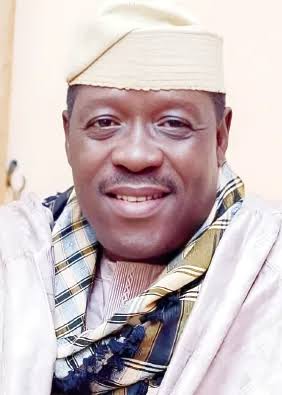
The life and career of Ogogo is not one that lends itself easily to writing. No matter how much one writes about him, one still feels like one has left something crucial out. Such was his multi-facetedness. Born Taiwo Hassan on October 31st, 1959, in Ilaro, Ogun State, to parents whose circumstances did not allow him the luxury of a completed formal education. He was forced to drop out of school early, a common enough story among his generation, but one that in his case took an unusual detour before it arrived at the movie set. Rather than stumbling into performance as a restless teenager might, Hassan first trained and worked as an automobile mechanic, a trade that demanded discipline and patience long before either quality would be tested by the equally unforgiving world of stage and screen.
It was not until 1981 that he left the garage behind to pursue acting in earnest, entering an industry that, at the time, offered little of the infrastructure, funding, or prestige it would later command. And he contributed to a huge part of that infrastructure, from that uncertain starting point, a career recognized today as one of the pillars of Yoruba-language cinema says as much about his persistence as it does about his talent.
The Ideal Action Hero
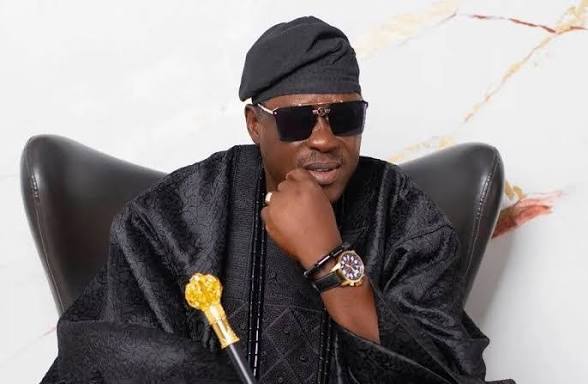
For us millennials who grew up in the 90s, when Nollywood had not yet completely and comprehensively won the battle for dominance of Nigerian viewership, our heroes were American heroes like Schwarzenegger, Stallone, and Chinese legends like Chan and Jet Li, among others. These legends are vigilante action heroes who get drawn into conflict against their will and who tackle villains that the law is either too weak or too corrupt to handle by using guns (in the case of the first two) and martial arts (in the case of the latter two) to deliver beatdowns to the bad guys. It was that persona that Ogogo established in Yoruba Nollywood that made him instantly recognizable to Yoruba film audiences: the quintessential noble vigilante hero, a peace-loving, law-abiding man who is forced by circumstances beyond his control to get involved in bringing criminals to justice and avenging people who have been wronged by a corrupt and weak justice system. What made Tade Ogidan’s 1996 three-part film “Owo Blow”, where Ogogo plays Owolabi, the Robin Hood type-hero, who rose from poverty and hardship to become a dreaded armed robber, so compelling was how Ogogo, with his noble hero persona, had the audience temporarily forget that crime is supposed to be bad and actively root for a crime lord to beat a villainous justice system. The ending of the third film “ Owo Blow:The Final Struggle” where Owolabi commits suicide rather than be arrested and tried when the evidence of his criminal past becomes indubitable, reinforces the moral lesson that crime does not pay, by making the main character die, yet still preserves his dignity by not allowing the villainous and corrupt justice system to get the last laugh over a man whose evil acts really came from being an unfortunate victim of circumstance.
There is also another dimension that must be kept in mind in order to be able to truly grasp the beatification of Ogogo as an action hero. For most of the 1990s, the time generally regarded as the “Home Video era” of Nollywood, when “action” stars like Ogogo became dominant in the public’s consciousness, Nigeria was under military rule, and if there was one thing the military government was notorious for, it was widespread corruption and weak institutions. Thus, the character that Ogogo played starting were characters that Nigerians who frequently experienced the frustration of illegitimate governments and a justice system with no teeth could live vicariously through. So, for instance, a crime like murder in cold blood is bad, but if Ogogo does it, the victim must have been an asshole who deserved it. No further discussion needed.
One cannot talk about the persona of Ogogo in his prime without talking about two onscreen relationships that anchored that persona and gave it dramatic texture. His long creative partnership with Yinka Quadri frequently cast Quadri as the antagonist to Ogogo’s hero, a dynamic the two men’s real-life friendship and shared history in the Odunfà Caucus made all the more compelling; audiences were, in effect, watching two collaborators who trusted each other completely perform distrust and conflict with total conviction. The second equally memorable was his pairing with the late actress Bimpe “Ìrètí” Adekola (No relation to leading Nollywood star Odunlade Adekola), whose characters often served as the steadfast partner supporting Ogogo’s heroes through the trials of their journeys. It was an on-screen relationship with chemistry so sizzling that us kids thought they were a real-life married couple, while adults endlessly speculated about an affair. It would sadly be cut short by Adekola’s tragic passing at the age of 33 in 2002. That partnership, relatively fleeting as it was, held the Nigerian audience held the audience in such a chokehold that up until his own passing, two decades after, Ogogo was still debunking rumors that the two had extramarital affairs.
The Odunfà Caucus
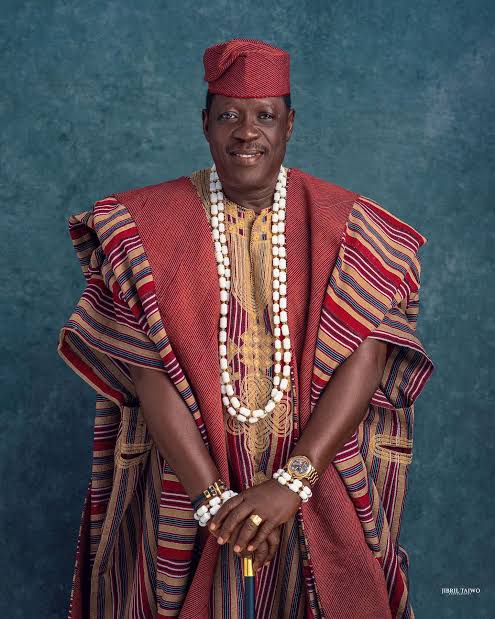
Ogogo’s greatest gift to Yoruba Nollywood was not his movies, it was the institution that he ultimately built. In 1987, alongside his close friend and creative collaborator Yinka Quadri, and the likes of Rasak Ajao and Abbey Lanre, a noteworthy director in the early Yoruba home video years, he founded the Odunfà Caucus. Initially conceived as a stage theater troupe in the tradition of the Yoruba traveling theater movement that had shaped so much of the region’s dramatic culture. When home video technology began to transform Nigerian entertainment, the Odunfà Caucus made the leap from stage to screen without missing a step, evolving into what remains, by wide consensus, the single most influential collective in Yoruba Nollywood. The caucus has gone on to produce some of the leading lights of Yoruba Nollywood, the likes of Bukky Wright, Saheed Balogun, Fathia Balogun, Moji Olaiya and more recently the likes of Wunmi Toriola and, Funke Akindele.
That the group’s transition happened so smoothly is itself notable; many stage troupes of the era struggled to translate their strengths to the more intimate, technical demands of video production. The Odunfà Caucus not only survived the shift but became a training ground and creative home for a generation of Yoruba actors, with Hassan and Quadri as its most visible and enduring faces.
An Enduring Icon

What makes Ogogo such a larger than life presence in Yoruba Nollywood is the sheer volume and consistency of his output, Ogogo remains one of the most enduring memes and cultural touchstones in Yoruba Nollywood, a status he holds arguably even ahead of younger stars like Odunlade Adekola, who came of age with the built-in advantage of social media amplification. That Ogogo’s image, mannerisms, and catchphrases continued to circulate and resonate with that same digital infrastructure, as it had before it existed, is a testament to how thoroughly his performances embedded themselves in the popular imagination through sheer cultural gravity alone.
Even when he became too old to be an action hero, Ogogo was simply too cool to be anything less than a morally upright voice of reason. That strict father who would always has a sensible solution to every problem? Ogogo. That morally upright uncle who wouldn’t hesitate to give you a deserved tongue lashing if you erred or sensible advice if you needed it? Ogogo. That king who will always be the good king with a burning love for his people? Ogogo. There was no doubt that the “goodness” ended up being dialed up to saccharine levels at times, but none of us actually cared whether he became to good to be true. His career output over more than 40 years included work across traditional Yoruba home-video cinema and, in later years, mainstream Nollywood productions, including a role in the acclaimed film “Aníkúlápó,” which introduced him to audiences beyond the Yoruba-language film ecosystem he had spent his career building is a testament to that fact
Final Thoughts.
The late “Ogogo” the literal representation of the concept tall dark and handsome as we perceived it. If there is one person within the Yoruba Nollywood industry to embody the saying “Men want to be him, women want to be with him.” Ogogo in his prime would be the top contender. Ogogo, like Lagbaja, is no longer just a stage name, it has become an identity, a transcendental character that has moved beyond the small screen and become a representation of a set of ideals in mind of all of us who have followed his long and storied existence.
As we bid Alhaji Taiwo Hassan farewell and we celebrate him for the excitement he brought into our lives via the small screen, we know in our hearts Ogogo lives on, because we know that a transcendental icon like that is simply too cool and too good to die.










Leave a comment