

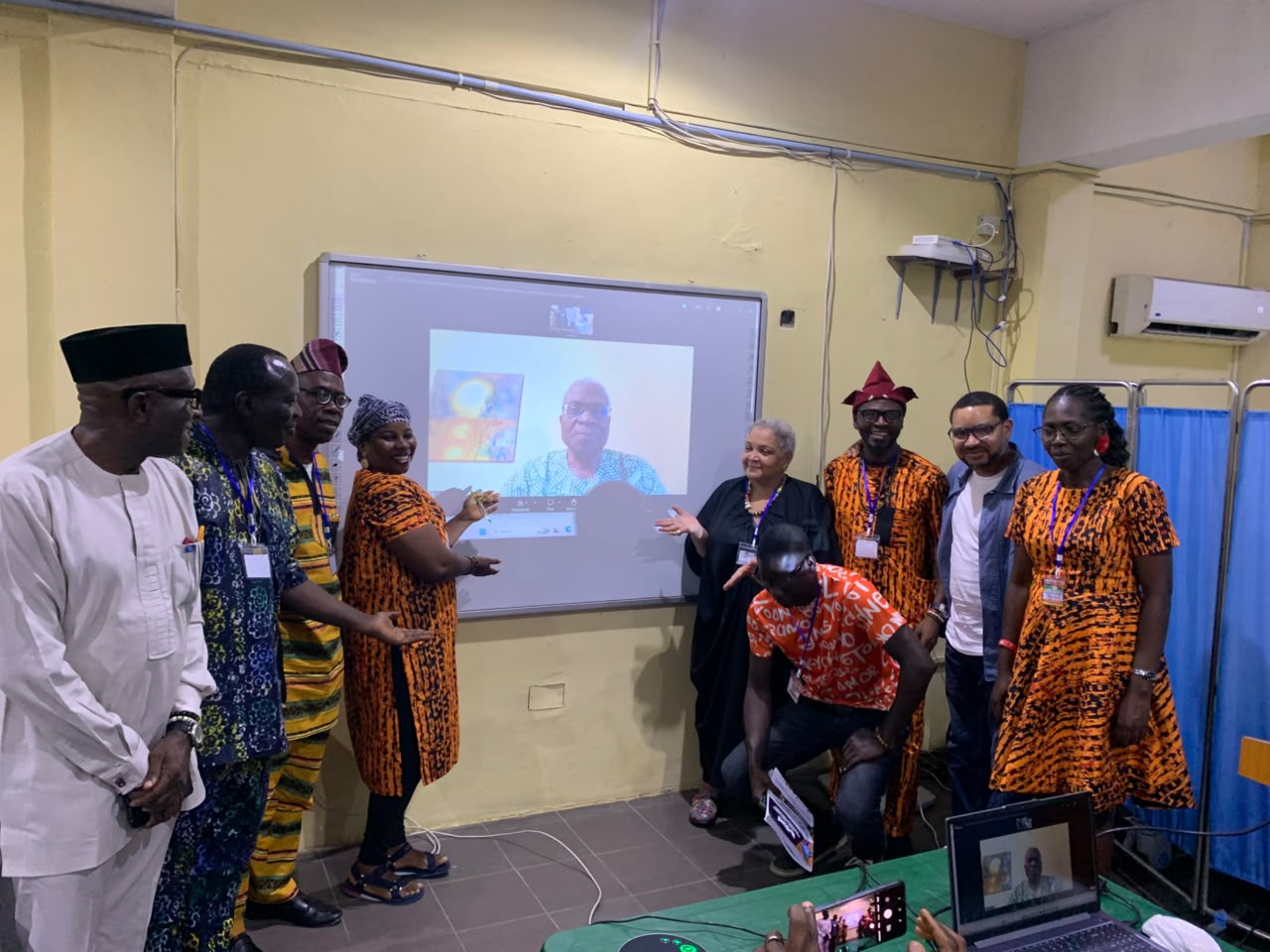
When Professor Saheed Aderinto, alongside Abosede George and Ademide Adelusi-Adeluyi, convened the first Lagos Studies Association (LSA) Conference in 2016, the modest 9-panel event was an experiment in academic community-building.
Surprisingly, a decade later, that experiment has exploded into a global intellectual movement. The 10th Annual Conference, held from June 16-20, 2026, at Trinity University (Sabo/Yaba, Lagos) and via Zoom, was not merely an academic gathering. It was a powerful declaration that African scholarship has arrived on the world stage, demanding to be heard on its own terms.
FROM NINE PANELS TO THREE HUNDRED AND FORTY
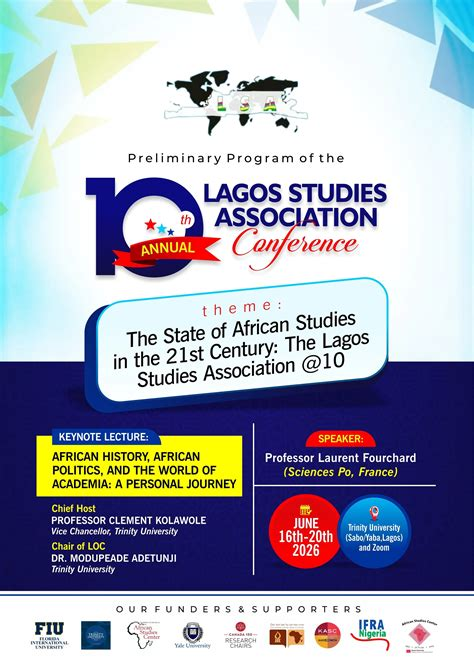
The staggering growth of the LSA Conference mirrors the hunger for rigorous, locally-grounded knowledge production about Africa. What began as a small gathering of scholars has ballooned into a massive intellectual ecosystem featuring 340 panels spread across five days.
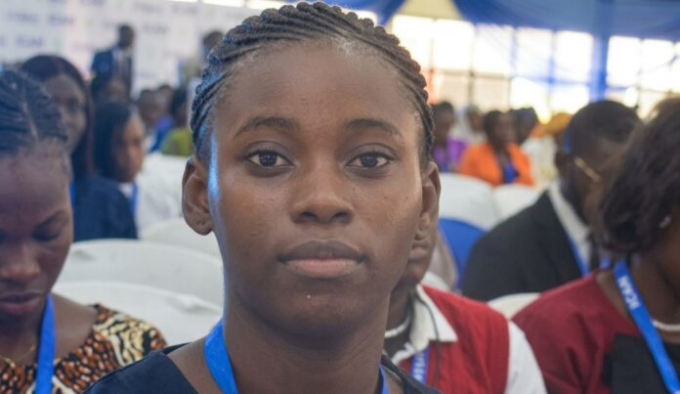
The conference drew participants from 193 Nigerian institutions and over 207 international institutions from every continent, including Australia.
Unfortunately, numbers alone cannot capture the significance of this gathering. The diversity of attendees ranging from university professors to independent scholars, museum curators, journalists, poets, and cultural activists, underscored the LSA’s commitment to bridging the gap between formal academia and the broader intellectual community.
As one participant noted, this was not a conference where scholars spoke about Africa; it was a space where Africa spoke, listened, and debated its own futures.
THE ADERINTO VISION: BUILDING BRIDGES, NOT WALLS
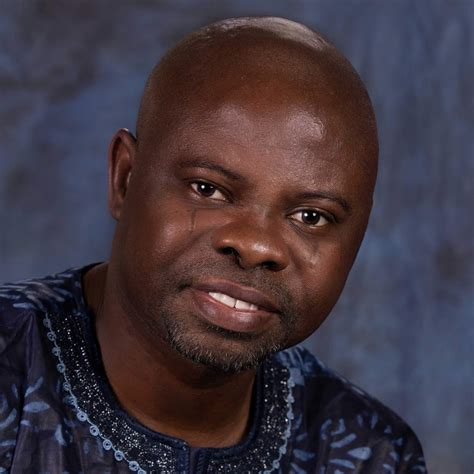
At the heart of this movement is Professor Saheed Aderinto, the President of the LSA and a historian at Florida International University. Aderinto’s vision has always been clear; to democratize knowledge production and ensure that Nigerian and African scholars are not mere subjects of study but active participants in shaping global intellectual conversations.
Boldly, Aderinto has overseen a remarkable transformation over the years. The LSA has become a critical bridge for Nigeria-based scholars, with over 100 academics securing international postgraduate scholarships and global employment opportunities through the network.
“Our vision is clear,” Aderinto stated during the opening ceremony, “bridging the gap between knowledge systems across the world and integrating non-academic intellectuals into mainstream scholarly work.”
This philosophy was evident throughout the conference. One of the most anticipated events was the screening of “The Women of Fuji,” Episode II of The Fuji Documentary, produced and directed by Aderinto himself.
The documentary, which premiered on International Women’s Day 2026 and has already won a Best Feature Documentary Award at the Eko International Film Festival, turns its lens on the often-overlooked role of women in the masculine-dominated world of Fuji music.
The documentary is divided into eight insightful parts, including “Music, Gender, and Colonial Legacy,” “The Art of Women,” and “Mothering Fuji”, the film explored the lives of women as artists, wives, patrons, and spiritual advisers.
Aderinto’s decision to use visual media as a tool for preserving and reinterpreting African popular culture demonstrated his commitment to pushing the boundaries of traditional scholarship.
A GATHERING OF MINDS
The conference attracted some of the most distinguished scholars in African studies from around the world. The keynote lecture, delivered by Professor Laurent Fourchard of Sciences Po, France, explored the intersection of “African History, African Politics, and the World of Academia: A Personal Journey,” offering a deeply personal reflection on the challenges and triumphs of studying Africa from within and outside the continent.
Impressively, the list of participating institutions read like a who’s who of global academia, Yale University, Harvard University, the University of Michigan, Brown University, Columbia University, Princeton University, Stanford University, and the University of Chicago, among many others.
Crucially, the conference funders included the Council on African Studies at Yale, the African Studies Center at the University of Michigan, the Steven J. Green School of International and Public Affairs at Florida International University, and the French Institute for Research in Africa.
THE FESTIVAL OF BOOKS: CELEBRATING SCHOLARLY EXCELLENCE
One of the conference’s most distinctive features was the “Author Meets Readers” sessions, where scholars engaged with celebrated books that are reshaping the field. With over 30 book panels, the LSA provided a platform for authors to receive direct feedback from their peers and the broader intellectual community.
Among the most talked-about sessions was the tribute to Professor Niyi Osundare, one of Africa’s greatest living poets. The panel, organised by Dr Funke Awodiya, brought together a remarkable mix of established scholars and poets including Aduke Gomez, Tade Ipadelola, Dr Chris Anyokwu, and Dr Tosin Gbogi.
Conversely, The session was widely considered one of the best of the conference, not just for the subject but for the format. it demonstrated that the LSA values diverse voices and recognizes that knowledge can be produced and shared in multiple forms.
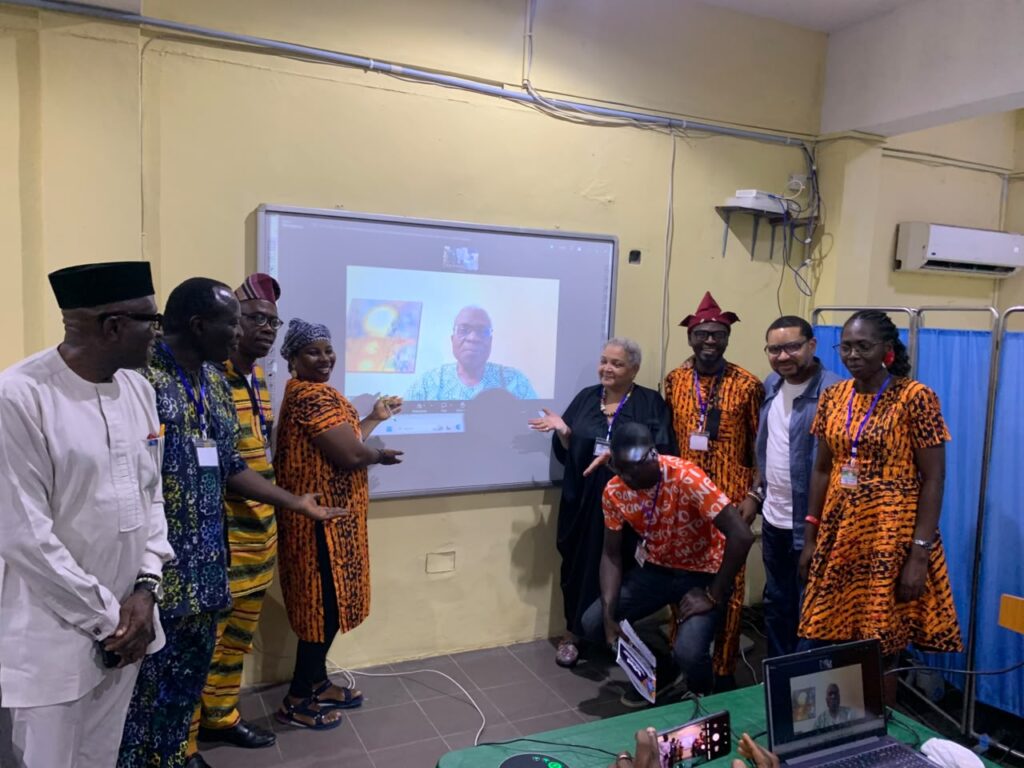
Professor Osundare who had quietly listened to the panel via zoom also gave pointed creative and intellectual direction amist much appreciation to the faces and voices in the session.
Other notable book sessions included engagements with Ainehi Edoro’s Forest Imaginaries: How African Novels Think, Femi Eromosele’s Mad Fictions: Psychiatry, Disability and the Politics of Mental Distress in African Literature, Ogechukwu Ezekwem Williams’ Birth Politics: Colonial Power, Medical Pluralism, and Maternity in Nigeria, and Tosin Gbogi’s Nigerian Hip-Hop: Race, Knowledge, and the Poetics of Resistance.
HONOURING EXCELLENCE INSIDE AND OUTSIDE THE ACADEMY

The grand closing ceremony on June 19 was a celebratory affair that recognized excellence beyond the conventional boundaries of academia.
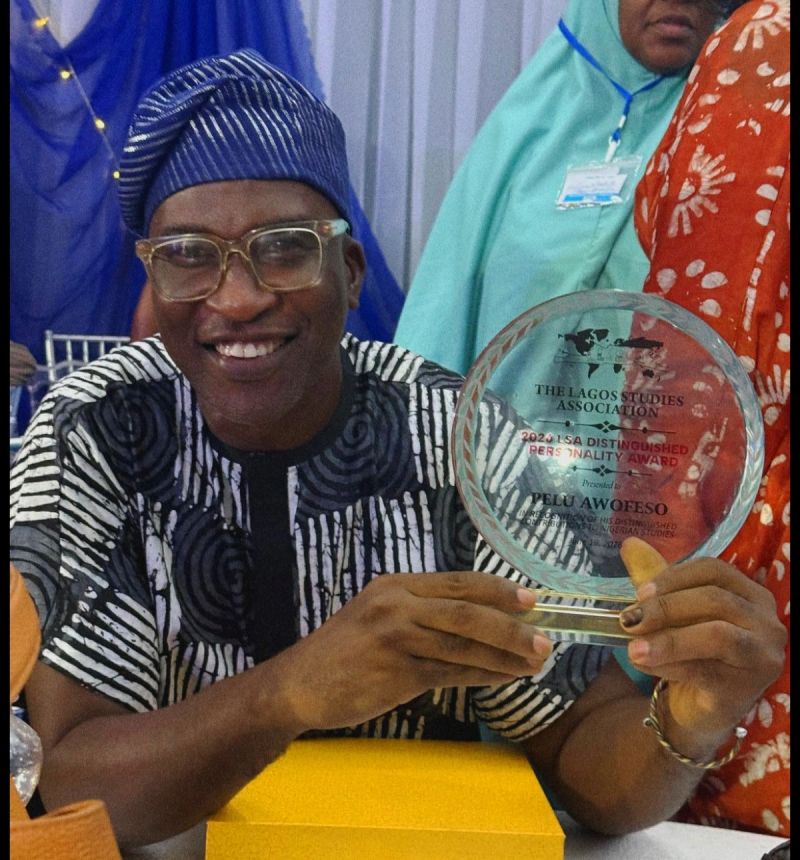
The Distinguished Personality Award went to Pelu Awofeso, a renowned travel journalist and culture advocate. In a career spanning over 25 years, Awofeso has visited no less than 20 museums and monuments across Nigeria, documenting the nation’s unique heritage and tourism assets.
He is a past winner of the CNN/Multichoice African Journalist Awards in the tourism category, and his work has appeared in publications like The Guardian, World Policy Journal, and Kinfolk.
The LSA also announced the winners of its Best Doctoral Thesis Award, continuing a tradition that has honored some of the brightest minds in the field. The 2025 edition celebrated the work of Elizabeth Modupe Animashaun (University of Ibadan), who joined a prestigious list of previous winners that includes Adaugo Pamela Nwakanma (Harvard University) and Ying Cheng (Peking University).
WORKSHOPS AND CAPACITY BUILDING
What sets the LSA Conference apart from many other academic gatherings is its commitment to capacity building. The conference featured over a dozen professional development workshops on topics ranging from book and journal publishing to AI literacy and graduate school applications.
The LSA Mentoring Program for Women Graduate Students in Nigeria, now in its third cohort, paired emerging scholars with established academics from institutions like Howard University, Peking University, and the University of Ibadan. This program addresses the systemic barriers that women face in academia and provides crucial mentorship and networking opportunities.
The Teaching Critical AI Literacy Workshop, now in its second edition, equipped selected candidates with the skills to navigate and utilize artificial intelligence ethically in African educational contexts. This forward-thinking initiative recognizes that African scholars must be at the forefront of debates about technology and education.
THE FUJI CONNECTION: ART, MUSIC, AND SCHOLARSHIP
The conference’s engagement with Fuji music extended beyond the documentary screening. Several panels explored the cultural and historical significance of Fuji, including a session on “Gendered Voices and Silences in Fuji Music Culture” and another on “Yoruba History in Music and Yoruba Music in History.”
The screening of “The Women of Fuji” was a particularly poignant moment. The documentary, shot in libraries, museums, galleries, and archives across southwestern Nigeria, Europe, and the United States, tells the incredible story of women’s contributions to a genre that emerged in the 1970s. T
oday, Fuji is the most dominant of Yoruba musical traditions, influencing Afrobeats, hip-hop, and even gospel music. By bringing this story to the conference, Aderinto demonstrated that African popular culture is worthy of rigorous scholarly attention and that the boundaries between academic research and cultural production are artificial and limiting.
A MOVEMENT, NOT A CONFERENCE
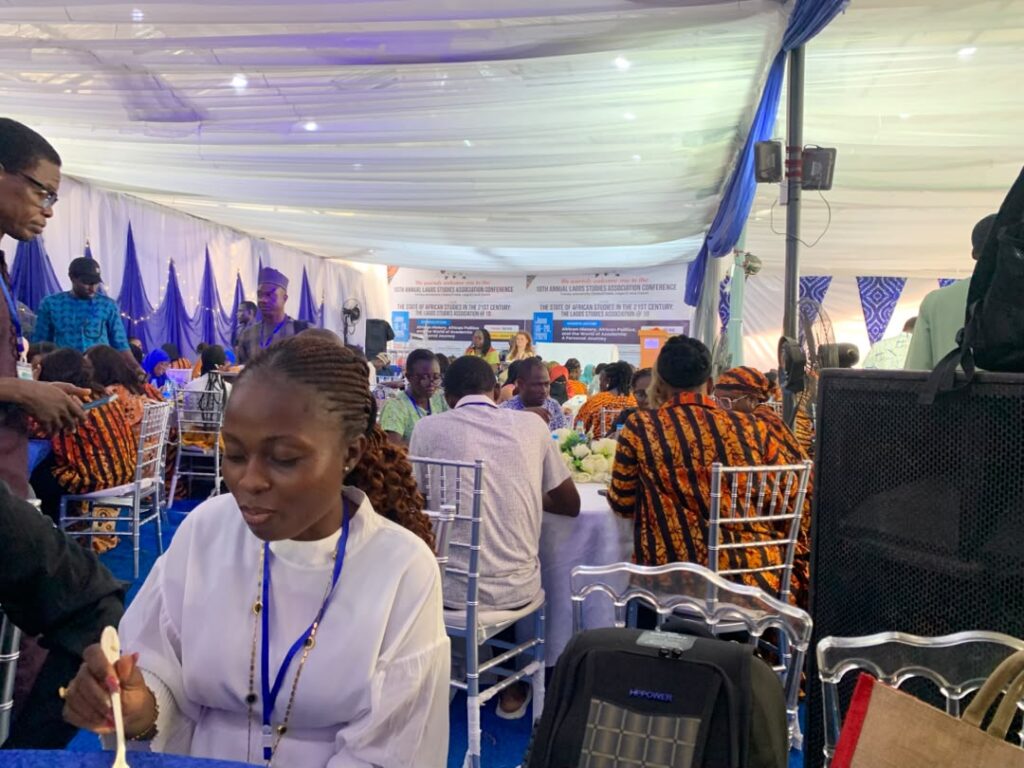
As the delegates departed on June 21, they carried with them more than just new contacts and ideas. The 10th LSA Conference was a reaffirmation that African scholarship is vibrant, diverse, and indispensable to understanding the modern world.
The LSA has successfully built a sustainable ecosystem that nurtures the next generation of scholars while providing a platform for established intellectuals to engage in critical conversations on issues ranging from xenophobia to environmental justice. By providing free Zoom access, meals, and travel bursaries, the association ensured that its sessions were inclusive and accessible.
What began as a small gathering in 2016 has become a movement, one that is not just studying African realities but actively shaping its intellectual future. The LSA Conference is a testament to the power of community, the importance of rigor, and the enduring relevance of African knowledge in the 21st century.









Leave a comment