

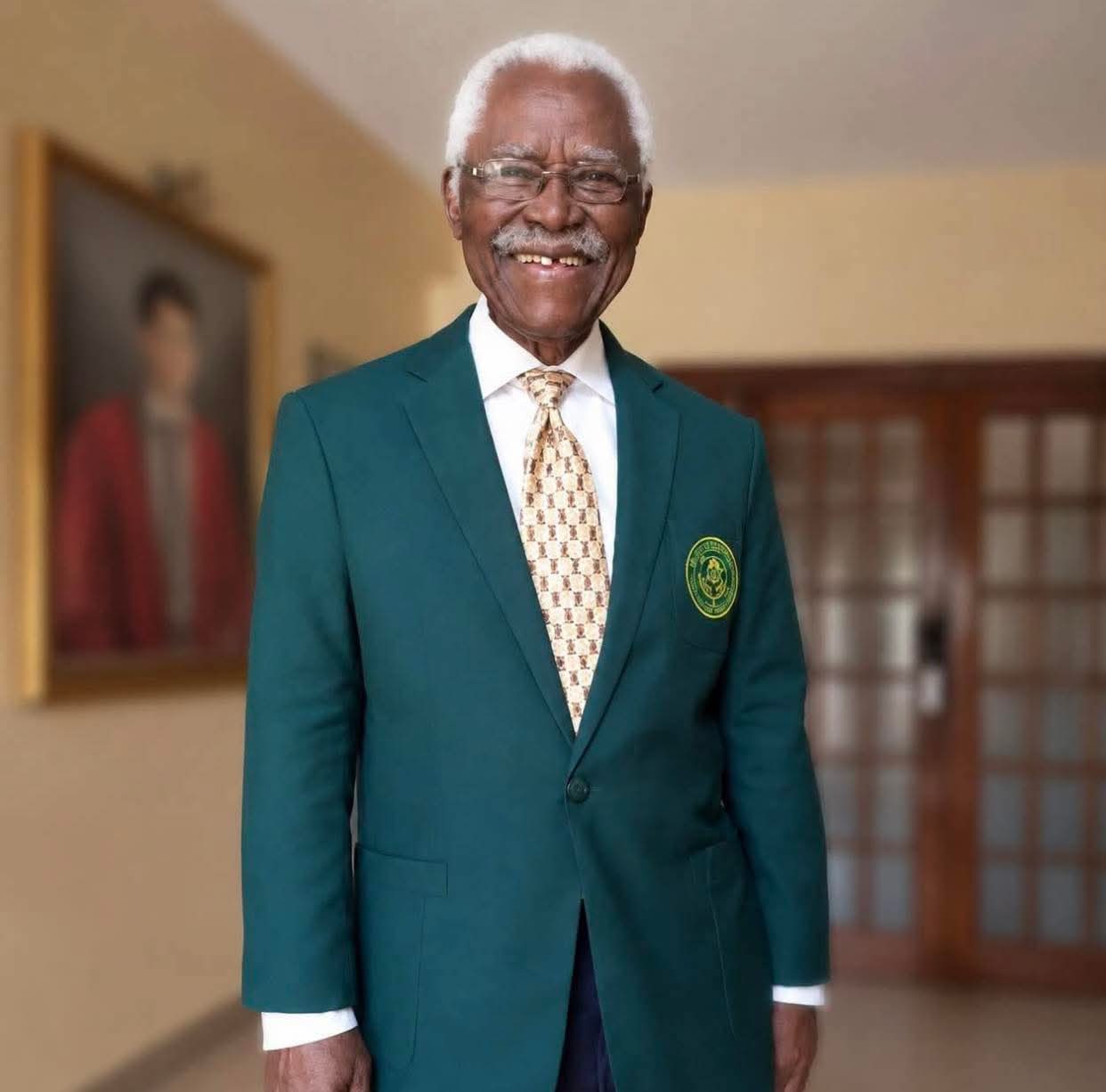
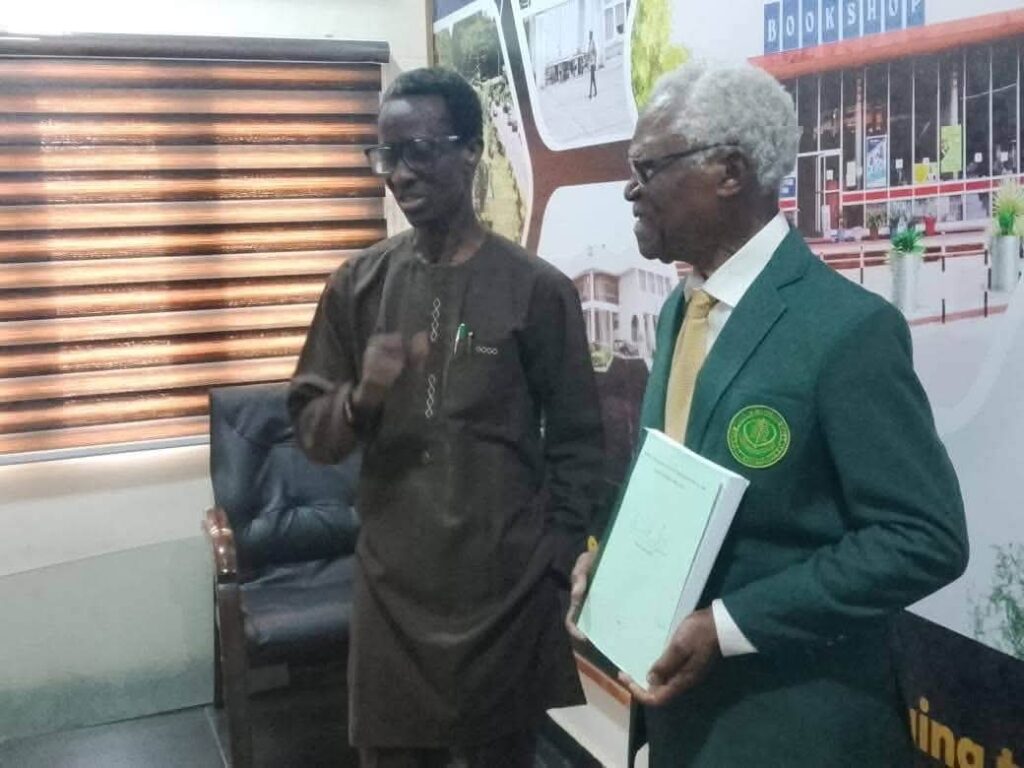
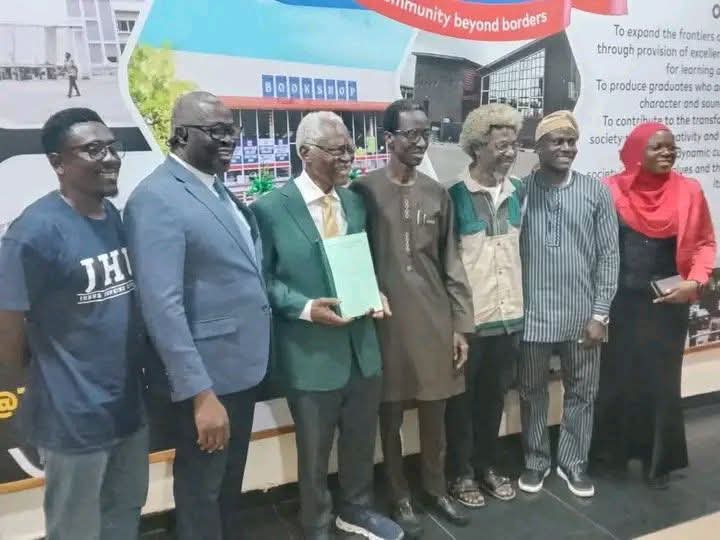
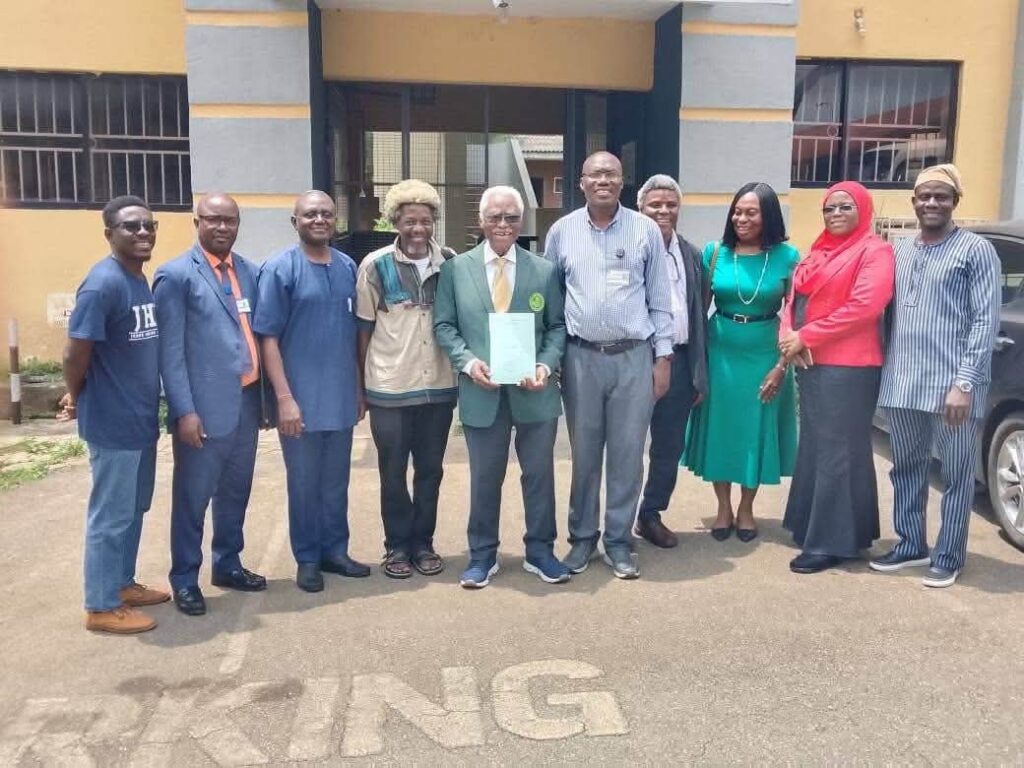
On a July afternoon at the University of Ibadan, a 89-year-old man in convocation robes posed for photographs with the Acting Vice-Chancellor, the Registrar, his supervisor, and a small crowd of university officials. It was not his first graduation. It was not even his first doctorate. But for Professor Mark Nwagwu, Fellow of the Nigerian Academy of Science, it was, in his own words, the day his thesis “came to life”, and, as he put it on his Facebook page, the day “history was made.”
Prof. Nwagwu had just been awarded a Ph.D. in Cultural and Media Studies by the Institute of African Studies, University of Ibadan, his second doctorate, earned three years after he enrolled in the programme at age 86. His first Ph.D., in Zoology, came from Stockholm University back in 1965, over six decades earlier. Between those two milestones lies a life that reads less like a single career and more like several, stacked one on top of the other, each pursued with the same restless curiosity.
A Scientist First
Nwagwu’s academic story began in 1957 at the then University College, Ibadan. He went on to earn a Bachelor of Science in Zoology from the University of London in 1961 and a Master’s in the same field in 1965, the same year he completed his doctorate in Sweden. From there, he crossed the Atlantic for postdoctoral research at the University of Connecticut, where he spent three years investigating myosin messenger RNA and the machinery of muscle-protein synthesis, the kind of granular, unglamorous science that quietly builds the foundations of modern biology.
Back at the University of Ibadan, he climbed the academic ladder the long way: Senior Lecturer, then Reader, then Professor of Zoology in 1982, before narrowing his focus to Cell and Molecular Biology. He also spent time abroad as Assistant and Associate Professor at Brock University in Canada. By the time he retired in 2002, he had spent more than four decades in laboratories and lecture halls, training generations of Nigerian scientists.Most people would call that a full life’s work. Nwagwu called it a beginning.
The Poet Beneath the Scientist
Even while immersed in cell biology, Nwagwu was quietly building a second identity. He wrote poetry, essays, and memoirs, publishing across some of Nigeria’s most respected outlets. His reflections on Nigerian life and the University of Ibadan itself — which he once described as a place where “some of Nigeria’s finest minds have lived, and still live” — reveal a man as attentive to culture and memory as he was to microscopes and molecules. That dual devotion eventually earned him a rare distinction: he is believed to be the only Nigerian scholar to hold fellowship in both the Nigerian Academy of Science and the Association of Nigerian Authors — one foot in the laboratory, one in the library, equally at home in both.
Why He Went Back
Nwagwu’s second doctorate wasn’t a symbolic gesture or a bid for headlines. It grew out of a real intellectual itch. While researching the biography of a prominent lawyer, he found himself pulled into deeper questions about the family’s history — and, by extension, Nigeria’s own past. Those questions kept multiplying, and no book on the shelf could settle them. “During our discussions on our history, far too many questions lingered on my mind and could not be answered by a book,” he later explained. The material demanded something more rigorous than storytelling, it demanded research.
So, in his mid-eighties, he enrolled.Three years of coursework, fieldwork, and thesis-writing followed, the same slow, exacting process any doctoral candidate endures, except this candidate had already lived through it once before, sixty years and one scientific revolution earlier. He pushed through, defended his work, and, at 89, added “Cultural and Media Studies” to a résumé that already spanned zoology, molecular biology, and literature.*
An Inspiration Without Trying to Be One
Nwagwu has never framed his story as a lesson for others. He’s simply followed his own questions wherever they led, from Swedish laboratories to Canadian classrooms to Ibadan’s archives, without ever deciding that a particular age was a finish line. But the lesson lands anyway. In a country where the pressure to “settle” into a fixed identity, scientist, or writer, or retiree, can feel absolute, Nwagwu has spent sixty-five years quietly refusing that choice.At 89, with a second Ph.D. in hand, Professor Mark Nwagwu isn’t closing a chapter. Knowing him, he’s probably already circling the next question he can’t find in a book.








Leave a comment