

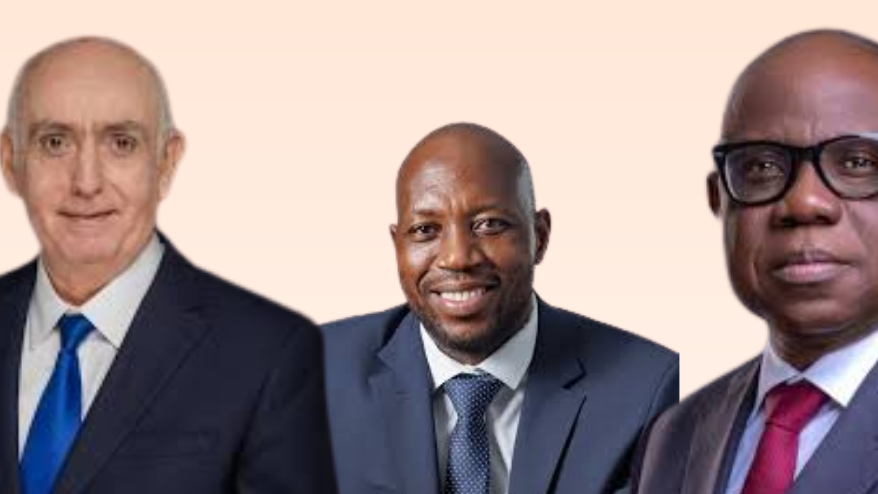
CEOs of Africa’s largest refineries are shaping the continent’s energy future in 2026. These executives oversee strategic assets that support fuel production, exports, and industrial growth.
Many of them have spent decades in the oil and gas sector. Their careers span engineering, operations, project management, and executive leadership.
As Africa seeks greater energy security, these leaders are steering major refineries through expansion and modernization programmes.
Leading Executives Drive Africa’s Refining Industry
Africa’s refining sector continues to evolve. Industry leaders now face rising demand, volatile crude prices, and pressure to improve efficiency.
In addition, they must position their facilities to compete globally. Several of these executives have managed operations across multiple continents.
Their experience has helped strengthen some of the continent’s most important energy assets.
Noureddine Daoudi Leads Algeria’s Skikda Refinery
Noureddine Daoudi serves as Chairman and Chief Executive Officer of Sonatrach. He assumed the position in October 2025.
The experienced executive graduated from Houari Boumediene University of Science and Technology. He joined Sonatrach in 1988 and steadily rose through the ranks.
Before becoming CEO, Daoudi headed exploration activities and later chaired Algeria’s National Agency for the Valorization of Hydrocarbon Resources.
He also joined the Executive Board of the International Energy Forum in 2022.
Under Sonatrach, the Skikda refining and petrochemical complex processes around 122,000 barrels per day. The facility sits along Algeria’s Mediterranean coast.
Rashad Nazim Hassan Heads Egypt’s El Nasr Refinery
Engineer Rashad Nazim Hassan Mohamed leads Nasr Petroleum Company. The company operates the El Nasr Petroleum Refinery in Suez.
Hassan joined the organisation in 1995 after graduating from Suez Canal University. Over nearly three decades, he held several technical and management positions.
He became Assistant General Manager for Development and Improvement in 2012. Later, he moved up to General Manager for Technology and Development.
The El Nasr facility remains one of Egypt’s oldest refining assets. Today, it processes about 131,000 barrels of crude daily.
Mohamed Saad Oversees Egypt’s Mostorod Refinery
Mohamed Saad Ibrahim manages the Egyptian Refining Company. His career in the petroleum industry began in 1975.
He worked for several organisations before leading major industry institutions. He also served as Chairman of Al Nasr Petroleum Company.
The Mostorod refinery underwent a major transformation through a $4.3 billion redevelopment project.
Today, the facility processes between 142,000 and 161,000 barrels per day. It has become one of Egypt’s most advanced refining centres.
Bayo Ojulari Supervises Nigeria’s State Refineries
Bashir Bayo Ojulari became Group Chief Executive Officer of NNPC Limited in April 2025.
The petroleum engineer graduated from Ahmadu Bello University in 1989. He built a global career with Shell before returning to Nigeria’s energy sector.
Ojulari previously served as Managing Director of Shell Nigeria Exploration and Production Company.
He now oversees NNPC Limited’s downstream assets, including the Port Harcourt and Kaduna refineries.
Together, these facilities have a combined capacity of around 210,000 barrels per day.
Masoud Mahmoud Suleman Guides Libya’s Ras Lanuf Refinery
Masoud Mahmoud Suleman leads Libya’s National Oil Corporation. He has more than two decades of industry experience.
Before becoming chairman, he held senior leadership roles within the corporation. He also chaired Mellitah Oil and Gas.
The Ras Lanuf refinery remains Libya’s largest refining facility. It can process up to 220,000 barrels daily.
Built in 1984, the complex supports both refining and petrochemical activities.
Simon Baloyi Leads South Africa’s Sasol Operations
Simon Baloyi became President and Chief Executive Officer of Sasol in April 2024.
He joined the company in 2002 and progressed through several leadership roles.
Baloyi has focused on operational reliability and energy transition policies. He also co-chairs the B20 Energy Mix and Just Transition Task Force.
Sasol’s refining network combines conventional processing with coal-to-liquids technology.
Its facilities have a combined output exceeding 250,000 barrels per day.
David Bird Heads Dangote Refinery
David Bird currently serves as Chief Executive Officer and Managing Director of Dangote Petroleum Refinery and Petrochemicals.
He assumed the role in 2025. His responsibilities include expanding output and strengthening export markets.
Bird previously held senior positions at OQ8, Santos Limited, and Shell.
He also worked in engineering roles at Hitachi in Japan. In addition, he earned an MBA from Stanford Graduate School of Business.
The Dangote Refinery has a processing capacity of 650,000 barrels per day. Located in the Lekki Free Trade Zone in Lagos, it stands as Africa’s largest single-train refinery.
The CEOs of Africa’s largest refineries play a crucial role in strengthening the continent’s energy sector. Their leadership influences fuel supply, industrial growth, and export opportunities.
As African countries pursue greater energy independence, these executives will remain central to the transformation of the refining industry. Their decisions will shape the future of energy across the continent for years to come.






Leave a comment