

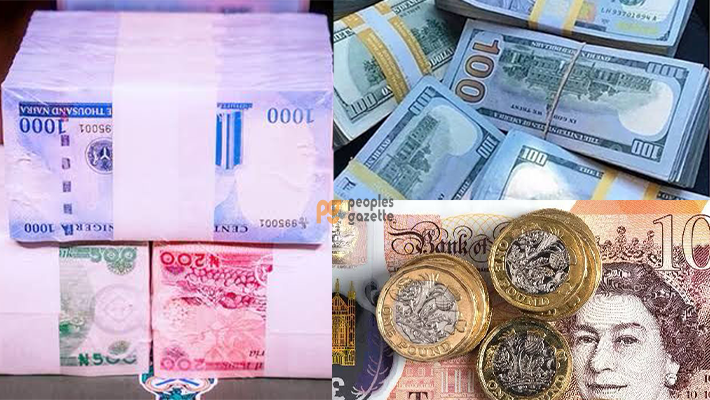
The Naira against British Pound remained relatively stable as trading opened at N1,823/£1. Recent data from the Central Bank of Nigeria showed the local currency maintained its strength in the foreign exchange market.
Figures released by the apex bank indicated that the naira settled at N1,823 per pound on Friday, June 5, 2026.
The latest performance marked an improvement from the opening days of June, when the exchange rate climbed to around N1,845/£1.
CBN Policies Support Exchange Rate Stability
The modest recovery in the Nigerian currency comes amid the Central Bank of Nigeria’s liquidity management measures.
The Monetary Policy Rate remained unchanged at 26.5%. In addition, the Cash Reserve Ratio stayed at 45%.
These policies continue to help absorb excess liquidity in the financial system.
Nigeria’s foreign reserves have also strengthened. The country currently holds reserves estimated at about $50 billion.
Furthermore, crude oil prices near $100 per barrel have provided additional support for external reserves and foreign exchange stability.
Official Market Faces Persistent Demand Pressure
Despite the recent gains, demand for foreign currencies remains high.
Manufacturers, importers and service providers continue to seek dollars and pounds through the official market. Consequently, exchange rate pressures have persisted.
The official exchange rate hovered between N1,810/£1 and N1,815/£1 during the period.
Meanwhile, activity in the parallel market attracted attention. Recent transactions showed rates above N1,850 per pound.
Market analysts noted that local traders often price the GBP/NGN pair based on dollar availability in Nigeria rather than movements in international markets.
As a result, changes in the global pound-dollar exchange rate do not always translate directly into the domestic market.
Energy Prices And Reserves Remain Key Factors
Global energy prices continue to influence Nigeria’s foreign exchange outlook.
Higher oil prices support the country’s reserves and provide the Central Bank with more room to defend the local currency.
However, weaker oil demand or lower production levels could affect reserve levels and place fresh pressure on the naira.
Consequently, developments in the energy market remain important for the future direction of the exchange rate.
British Pound Faces Pressure From Strong US Dollar
The British Pound experienced selling pressure against the US dollar following stronger-than-expected US Non-Farm Payrolls data.
The impressive jobs figures boosted the greenback and strengthened expectations that the US Federal Reserve could maintain a tighter monetary stance.
As a result, the pound slipped below the 1.34 level against the dollar. The US currency also reached its highest level in two months.
Although a ceasefire agreement involving Israel and Lebanon helped reduce some geopolitical concerns, tensions across the Gulf region continued to create uncertainty.
Reports also indicated that military confrontations involving Iran and US forces added to global market concerns.
In addition, stalled diplomatic talks over Iran’s nuclear programme and the Strait of Hormuz have kept investors cautious.
These developments could increase volatility in the currency market and influence the performance of the pound and the dollar.
Traders Await Key Economic Data
Market participants are expected to monitor upcoming US employment figures closely.
The report could influence expectations regarding future interest rate decisions by the Federal Reserve.
Developments in the Middle East are also likely to affect investor sentiment and currency movements.
For now, analysts believe the US dollar retains a strong position, which may continue to limit gains for the British Pound
The Naira against British Pound has shown resilience as the exchange rate held at N1,823/£1. Support from stronger foreign reserves, elevated crude oil prices and CBN policies has helped maintain stability.
Nevertheless, rising demand for foreign currencies and developments in global markets remain critical factors that could influence the exchange rate in the coming months.













Leave a comment