

By Chibuzor Alli
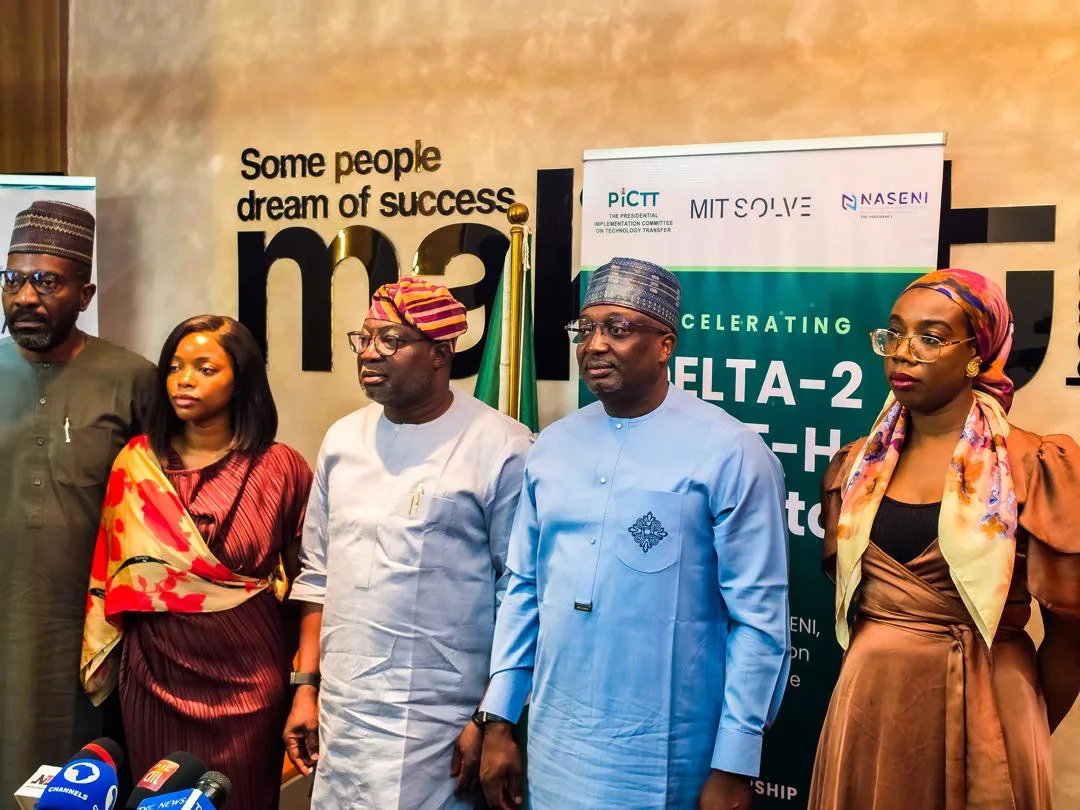
Ten Nigerian innovators are set to receive international mentorship, technical support and business development opportunities under a six-month acceleration programme backed by the Federal Government in partnership with the Massachusetts Institute of Technology’s MIT Solve initiative.
The programme is designed to help homegrown innovators transform their inventions into commercially viable products, strengthen their business models and attract the partnerships needed to take their solutions to market.
The initiative will draw participants from the DELTA-2 and Developing Engineering Leaders Through Her (DELT-Her) programmes, both aimed at strengthening Nigeria’s innovation ecosystem and promoting locally developed technologies.
The partnership involves the National Agency for Science and Engineering Infrastructure (NASENI) and the Presidential Implementation Committee on Technology Transfer (PICTT), with MIT Solve providing international expertise and access to global innovation networks.
Chairman of PICTT, Dr Dahiru Mohammed, disclosed the development on Thursday during a media briefing at the committee’s office in Abuja.
He explained that 20 innovators from the two programmes would first present their solutions before a panel of judges, with 10 finalists selected for the six-month acceleration programme with MIT Solve in Boston, Massachusetts, United States.
He said, “Twenty innovators from the two programmes would pitch their solutions before a panel of judges, from which 10 would be selected for the six-month acceleration programme with MIT Solve in Boston, Massachusetts, United States.”
According to Mohammed, the selected innovators would undergo an assessment to determine their individual and collective needs, allowing MIT Solve to develop tailored interventions to address the challenges facing their ventures.
The support will cover business model development, presentation and pitching skills, as well as entrepreneurial leadership, with the broader objective of preparing participants to scale their innovations into sustainable businesses.
Beyond individual mentorship, the programme will also facilitate engagements between the innovators and industry associations, academic institutions and other relevant stakeholders to encourage partnerships and increase the visibility of Nigerian-developed solutions.
Mohammed described the partnership as an important opportunity for local innovators to benefit from international expertise and networks through government-supported intervention.
He said, “The DELTA-2 Programme is focused on helping entrepreneurs access funding and partners from across the world to build on their innovations or to undertake research development and innovation activities that would bring about commercially viable products that would help Nigeria’s industrial development.”
He also highlighted the role of the female-focused initiative in broadening opportunities for women in engineering and technology.
Explaining its objectives, he said, “The second initiative is DELT-Her, which focuses on female engineers across Nigeria to access opportunities to showcase their research and innovations and get them to the market.”
The programme reflects a growing policy emphasis on bridging the gap between research, invention and commercialisation, a critical challenge facing many innovation ecosystems.
For Nigeria, the ability to translate locally developed technologies into market-ready products could strengthen domestic industrial capacity, attract investment and reduce dependence on imported solutions.
Through the partnership with MIT Solve, the Federal Government is seeking to give selected Nigerian innovators access to the expertise, business support and international connections needed to move their ideas closer to commercial success.












Leave a comment