

By Chibuzor Alli
Nigeria’s Federal Government is seeking to attract billions of dollars in private investment into the electricity sector, despite spending more than ₦10tn since privatisation in 2013 without achieving the stable power supply promised by the reform.
The fresh push for private capital highlights the government’s growing recognition that public funding alone cannot deliver the infrastructure expansion and operational improvements required to transform the country’s struggling electricity industry.
Managing Director of FGN Power Company Limited, Kenny Anuwe, said government spending had been instrumental in keeping the sector operational but argued that continued dependence on public funds was no longer sustainable.
Speaking at the sixth annual conference of the Power Correspondents Association of Nigeria in Abuja, Anuwe called for simpler investment arrangements, predictable regulations and commercially viable projects capable of attracting private financiers.
He said, “Government has invested over N10tn in the electricity sector since the advent of privatisation. But is it enough? How much money is enough? If government didn’t invest that money, the industry would not be standing today. No matter how you look at it, no matter how critical you are about what government’s role is, if government did not put that money in, the industry would not be standing.”
However, he questioned the sustainability of a funding structure in which the Federal Government accounts for more than 95 per cent of new infrastructure investment.
“That’s not why we privatised. We have all kinds of excuses why that has happened. And a lot of them are legitimate. But it’s time for us to move from excuses to looking at how to fix it. It does not need government to do everything. I believe that government cannot do everything,” Anuwe said.
His remarks come more than a decade after Nigeria transferred its 11 electricity distribution companies and six generation companies to private investors, while retaining government ownership of the transmission network.
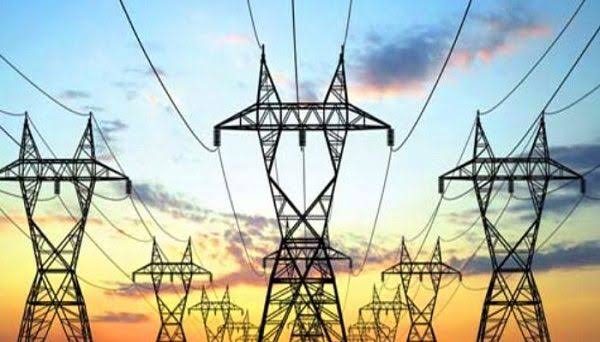
Despite the privatisation exercise and subsequent public interventions, the industry continues to grapple with inadequate generation, gas supply constraints, weak transmission and distribution infrastructure, mounting debts and limited investment.
The challenge is now to create an investment environment that can attract private capital without leaving critical infrastructure development entirely dependent on government funding.
As part of that strategy, Anuwe disclosed that FGN Power Company was targeting an investment structure capable of attracting $18bn from financiers. The company is also pursuing a capitalisation plan of at least $1bn, with the Africa Finance Corporation expected to provide a matching amount.
He said ongoing projects under the Presidential Power Initiative were expected to expand transmission capacity, with a target of 5,540 megawatts by 2029 and an improvement of at least 60 per cent in grid reliability.
The projects include a second batch of 12 Siemens substations and special interventions involving Omotosho substations, which are expected to deliver a combined additional capacity of nearly 3,400MW.
The Federal Government is also pursuing broader reforms aimed at addressing the sector’s financial and infrastructure weaknesses.
Minister of Power, Joseph Tegbe, said the government had developed a four-pronged strategy covering grid stabilisation, sector liquidity and sustainability, asset optimisation, and transmission expansion and enhancement.
Under the plan, the government has raised ₦1.23tn from its ₦3.3tn programme to settle verified legacy debts owed to electricity generation companies.
Tegbe also disclosed that more than 2.8 million electricity customers had been metered under the Presidential Metering Initiative, while transmission capacity exceeding 15,000 megavolt-amperes had been added to the national grid between 2023 and October 2026.
He said the government was adopting a corridor-based approach to prioritise major electricity demand centres and improve the availability of reliable, round-the-clock power for industrial and commercial activities.
“Let me inform this gathering that we have developed a four-pronged roadmap to address the power sector challenges comprehensively. These are Grid Stabilisation, Sector Liquidity and Sustainability, Asset Optimisation, and Expansion and Enhancement of the grid. Central to this plan is a corridor approach that prioritises major load centres for reliable, round-the-clock electricity supply. A technical audit has been commissioned to establish a robust diagnostic baseline, identify critical constraints and guide the prioritisation, sequencing and execution of interventions. The corridor approach gives this roadmap a practical industrial focus.
“In the past two months alone, I have commissioned newly installed substation equipment across Kumbotoso, Dankata, Mashi, Dan-Agundi, Apapa, Ijora, Ikeja, Biliri, Walalambe and other locations, adding over 1,300MVA to Nigeria’s transmission capacity. This has unlocked more power to the respective Distribution Companies for onward distribution to industrial and household customers,” Tegbe said.
The developments underline the scale of the government’s attempt to reposition the electricity industry, but they also expose the difficult task of translating financial commitments and infrastructure projects into dependable electricity for consumers.
With an ambitious $1tn economy target for 2030, attracting private investment, resolving sector debts and expanding transmission infrastructure will remain critical to Nigeria’s ability to deliver the reliable and affordable power needed to support industrial growth.












Leave a comment