

By Chibuzor Alli
Nigeria’s expected inflation slowdown could face fresh challenges from rising energy and fertiliser costs, even as economic reforms and increased domestic refining capacity offer hope of easing price pressures in 2026 and 2027.
The International Monetary Fund (IMF) projects Nigeria’s annual average inflation to fall to 15.6 per cent in 2026, down from 23.0 per cent in 2025, before declining further to 14.7 per cent in 2027.
However, the projected moderation in inflation may not immediately translate into significant relief for households, as elevated food production costs, energy expenses and persistent supply constraints continue to threaten purchasing power.
In its assessment of the economic outlook, Coronation Research identified exchange rate stability and expanding domestic refining capacity as important factors that could help moderate price increases.
The research firm stated, “Exchange rate stability and increased domestic refining capacity could help moderate price pressures. However, higher energy and fertiliser costs, alongside election-related spending, may slow the pace of disinflation”.
Economic reforms offer hope of slower price increases
Nigeria’s inflation outlook has been shaped by exchange rate volatility, domestic supply challenges and disruptions in international supply chains, which have contributed to elevated prices in recent years.
Following significant adjustments to foreign exchange policies and other economic reforms, attention has increasingly shifted towards restoring price stability and strengthening domestic production.
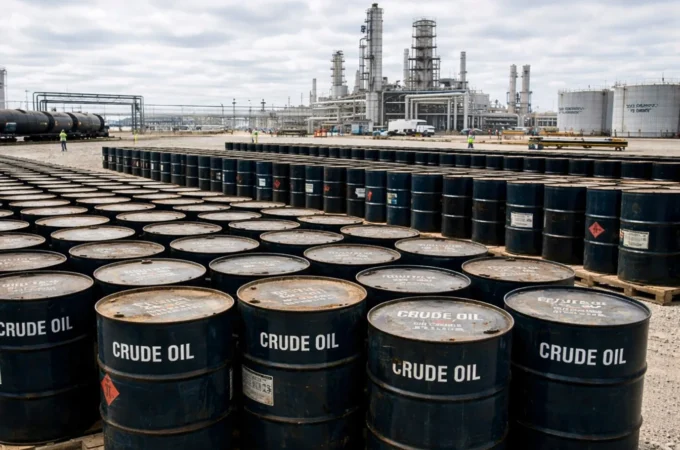
The gradual stabilisation of the foreign exchange market is expected to help moderate imported inflation, while increased domestic refining capacity could reduce reliance on imported petroleum products and ease some transportation-related costs.
Nevertheless, the outlook remains vulnerable to rising agricultural input expenses, particularly fertiliser, as well as energy costs that could feed into the prices of food and other essential goods.
The report also warned that election-related spending could complicate efforts to sustain the anticipated decline in inflation.
It added, “Increased local refining capacity has further aimed to reduce energy import dependency and temper transportation fuel costs. However, lingering supply risks, higher agricultural input costs, and fiscal pressures continue to pose potential risks to the broader disinflation trend”.
IMF forecasts stronger economic growth
Beyond the inflation outlook, the IMF expects Nigeria’s economy to expand by 4.2 per cent in 2026 and 4.3 per cent in 2027.
The projected growth is expected to receive support from continued foreign exchange reforms and stronger activity in the non-oil sector.
The outlook suggests that economic expansion could continue alongside a gradual moderation in inflation, although the benefits will depend partly on how effectively reforms translate into lower production costs and improved household purchasing power.
Coronation Asset Management also expressed support for the medium-term disinflation outlook, with its internal forecast placing Nigeria’s 2027 annual average inflation at 14.56 per cent, close to the IMF’s projection of 14.7 per cent.
An analyst said, “While structural headwinds remain, the ongoing economic policy reforms and expanded refining operations provide a strong foundation for steady, long-term price moderation”.
Lower inflation may not mean cheaper living costs
Although the projected decline in inflation would represent a substantial improvement from the 2025 average, it does not necessarily mean that the prices of goods and services will return to previous levels.
Rather, lower inflation would indicate that prices are rising at a slower rate than before. Households could therefore continue to face high living costs even if the forecast decline materialises.
Food insecurity, expensive agricultural inputs and elevated energy costs remain important concerns because they affect both household budgets and businesses that depend on transportation, farming and other essential production activities.
The speed at which Nigerians experience meaningful relief will depend not only on the moderation of headline inflation but also on developments in food supply, production costs, exchange rate stability and the wider economy.
The latest October 2026 World Economic Outlook update by the IMF, alongside analyses from Coronation Research, provides an improved inflation outlook for Nigeria. However, persistent structural and fiscal pressures remain potential obstacles to a sustained reduction in the cost-of-living burden.











Leave a comment