

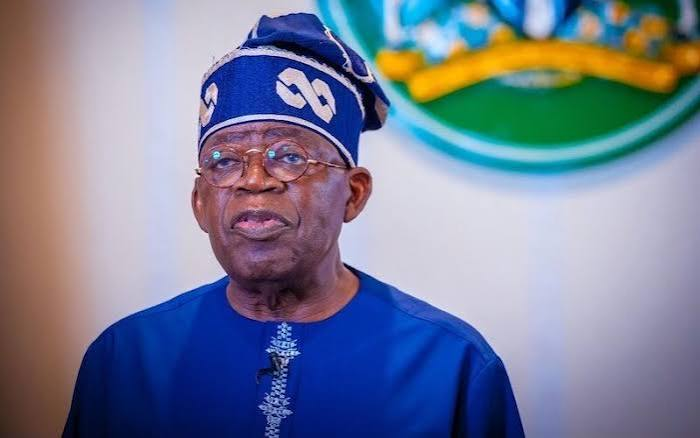
It began as a list of twelve. By mid-November, it had become nineteen.
When President Bola Tinubu’s campaign council unveiled its itinerary in October, the president would personally lead rallies in twelve states. Barely a month later, the Punch reported the list had grown to nineteen states plus the Federal Capital Territory, twenty rallies between October 24, 2026 and January 13, 2027.
On the surface, it is a logistics story, beneath it is a political map, one that tells Nigerians at home and in the diaspora where the ruling All Progressives Congress believes the 2027 election will actually be won and lost.
The Numbers That Matter
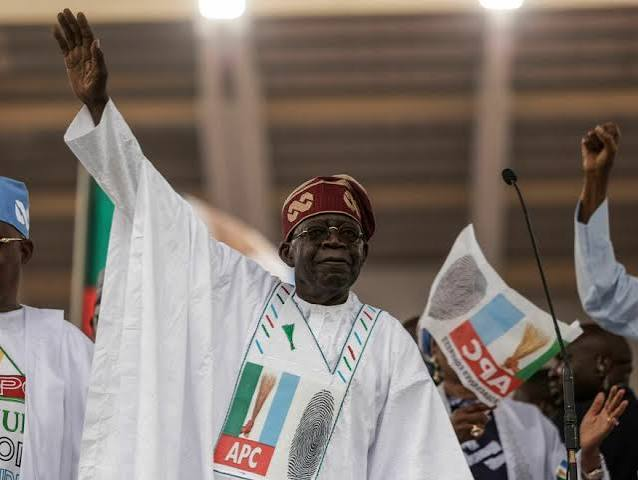
Of the original twelve states Tinubu chose to personally campaign in, he won only three in 2023, Rivers, Oyo, and Borno. He lost the other nine.
That is not a coincidence. It is a confession.
The itinerary reads like a list of 2023 wounds, Kaduna, lost to Atiku Abubakar by over 155,000 votes; Kano, lost to Rabiu Kwankwaso by nearly half a million; Sokoto, lost by just 3,235 votes; Adamawa, Atiku’s home state; Enugu, where Tinubu managed a mere 4,772 votes against Peter Obi’s 428,640; and Lagos, lost to Obi by 9,848 votes.
The expanded list, now including Katsina, Taraba, Zamfara, Imo, Kwara, Akwa Ibom, Jigawa and Kebbi, does not change the logic. It deepens it. The North-West now accounts for seven of the nineteen states, the single largest regional bloc on the president’s personal calendar.
Reading the Map: Recovery vs. Consolidation
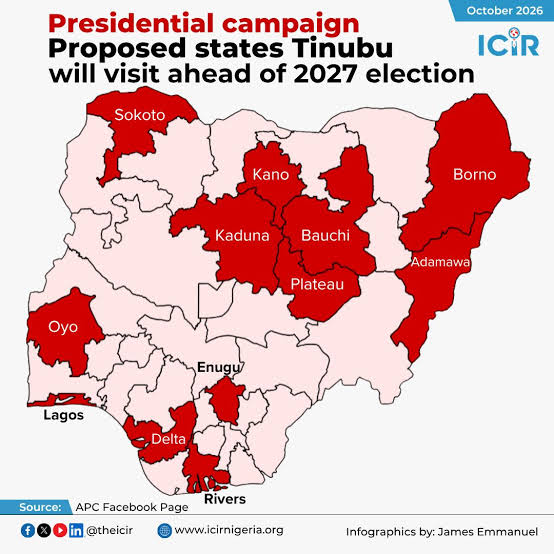
The campaign splits into two distinct missions.
Recovery states are where Tinubu lost in 2023 and where the APC now believes 2027 will be decided. We have Kaduna, Kano, Sokoto, Bauchi, Adamawa, Plateau, Enugu, Delta and Lagos. These are not feel-good visits. They are rescue missions.
Consolidation states are where he won and cannot afford to lose: Rivers, where FCT Minister Nyesom Wike’s influence remains decisive; Oyo, complicated by Governor Seyi Makinde’s presidential ambition; and Borno, Vice-President Kashim Shettima’s base.
The geographic spread is deliberate. The original twelve cut across all six geopolitical zones, with seven in the North and five in the South. The expanded nineteen maintains that balance: seven North-West, three North-East, three South-South, and two each in North-Central, South-West and South-East.
For a president whose 2023 victory was built on a narrow plurality, this is not luxury campaigning. It is triage.
The Kano Problem
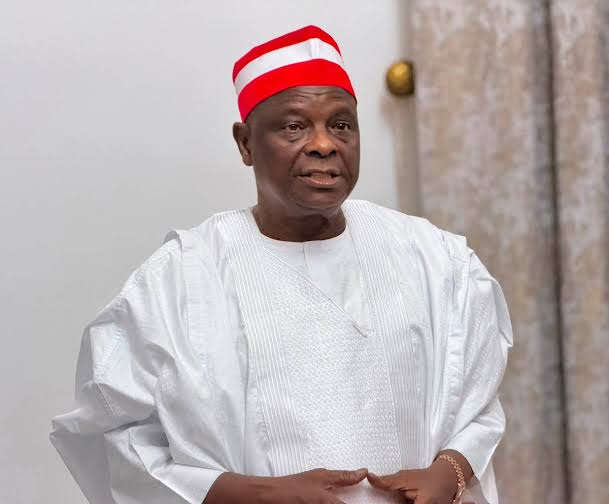
No state on the list carries more strategic weight than Kano.
In 2023, Kwankwaso polled 997,279 votes in Kano against Tinubu’s 517,341, a margin of nearly half a million. But the political geometry has shifted. Kwankwaso is now running alongside Obi on the Nigeria Democratic Congress platform, turning Kano from a single-opponent problem into a combined-opposition problem.
Tinubu’s December 17 rally in Kano is therefore not merely about reversing a defeat. It is about testing whether the APC can break a coalition before it fully forms.
What This Means for Nigerians at Home
For the trader in Kano’s Kurmi market, the civil servant in Enugu, or the artisan in Kaduna, the campaign calendar is an early indicator of where government attention and government spending will flow over the next fourteen months.
Presidential visits in Nigeria are rarely just political. They come with security deployments, road rehabilitation, and the kind of federal presence that signals to local power brokers which way the wind is blowing. States on the president’s personal itinerary are more likely to see accelerated project commissioning, targeted palliatives and federal appointments in the run-up to the election.
States left off the list, seventeen of them, plus the FCT in the original plan will be handled by “the campaign machinery and other party leaders,” in the official explanation. In practice, that means less presidential attention, fewer photo opportunities, and a clearer signal about where the APC believes it does not need to fight.
What It Means for the Diaspora
For the millions of Nigerians abroad, in London, Houston, Johannesburg, Dubai and Toronto, the campaign map matters for three reasons.
First, remittances and the naira. Diaspora remittances remain a lifeline for families at home, and election-year spending patterns affect the exchange rate. A campaign that concentrates resources in nineteen states will pull money into those local economies, while currency volatility around the January 13 finale in Lagos could affect remittance timing. Nigerians sending money home should expect the usual election-season premium on informal channels and should plan transfers around the campaign calendar.
Second, diaspora voting. The expansion of the itinerary and the early flag-off in Kaduna on October 24 signals that the APC is treating 2027 as a mobilisation election, not a persuasion election. That has implications for the long-running campaign by diaspora groups for out-of-country voting. If the parties are focused on turning out their bases in specific states, the incentive to invest in diaspora voting infrastructure weakens. Diaspora advocacy groups should expect to press harder, not less, over the next year.
Third, the legitimacy question. The opposition’s reaction, Atiku Abubakar’s campaign calling Tinubu “too ashamed to face the people,” and the Makinde/Daura organisation accusing him of being “scared of being jeered”, will be amplified in diaspora media and community groups. For Nigerians abroad who serve as informal ambassadors for the country’s image, the narrative of a president avoiding national campaigning is a reputational liability. It will surface in investment conversations, academic settings and community forums.
The Opposition’s Counter-Move
The ADC’s Atiku Abubakar has framed Tinubu’s limited itinerary as an admission of failure: “He can fill every campaign stage in Nigeria. He cannot fill an empty pot with surrogates. He cannot send a politician into a market to persuade prices to fall.”
The Makinde/Daura campaign has gone further, suggesting the decision “reinforces public apprehension that the APC is not ready for a free, fair and credible election but plotting to circumvent and compromise the process.”
These are campaign rhetoric, but they carry a substantive point, a president who campaigns in nineteen of thirty-six states is making a bet about where the election is decided. If that bet is wrong, the electoral map could shift in ways the APC did not anticipate.
The Calendar
For the record, the revised schedule now runs:
- October 24, 2026 — Kaduna (flag-off)
- November — Akwa Ibom (Nov 6), Rivers (Nov 7), Jigawa (Nov 10), Kebbi (Nov 17)
- December — Katsina (Dec 2), Kano (Dec 17), Taraba (Dec 19), Abuja (Dec 21), Zamfara (Dec 28), Imo (Dec 30)
- January 2027 — Adamawa (Jan 4), Sokoto (Jan 5), Kwara (Jan 8), Delta (Jan 11), Lagos (Jan 13, grand finale)
The remaining states will be covered by the party’s national campaign machinery and other leaders.
Conclusion: The Map Is the Message
The expansion from twelve states to nineteen is not a sign of strength or weakness on its own. It is a sign of calculation.
The APC has looked at its 2023 map, identified the nine states it lost among its original targets, and decided that the road to 2027 runs through the North-West and the South-South, with consolidation stops in Rivers, Oyo and Borno, and a symbolic finale in Lagos.
For Nigerians at home, the map tells you where to watch for federal attention. For Nigerians abroad, it tells you where the political risk — and the remittance economics — will concentrate over the next fourteen months.
And for the opposition, it offers a target list. The president has shown his hand. The question is whether the other parties can play theirs before January 13.
The map, in the end, is the message. And the message is that the battle for 2027 has already begun — not by the opposition’s declaration, but by the president’s own campaign choices.






Leave a comment