

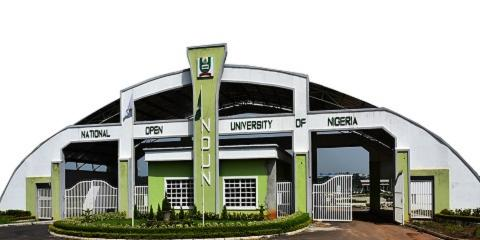
A NOUN graduate who faced academic discrimination in Nigeria has transformed a painful setback into an inspiring success story. CeeCee, a writer and research fellow at Lehigh University in Pennsylvania, has revealed how her master’s degree from the National Open University of Nigeria (NOUN) became an obstacle to pursuing a doctorate in Nigeria, only for the same qualification to later earn her a fully funded PhD opportunity in the United States.
Her experience has reignited conversations about the treatment of distance learning graduates in the country.
Ebonyi State University Offered Conditional Admission
CeeCee earned a Master’s degree in Information Technology from NOUN. In 2017, she applied for a doctoral programme at Ebonyi State University.
Despite having a grade point average above 4.0 and meeting all academic requirements, she was not granted direct admission.
Instead, the university offered her provisional admission. She was instructed to repeat her master’s courses because they had been completed through NOUN.
Only after another year of coursework would she be allowed to continue with the PhD programme.
A friend who received a similar offer chose to withdraw. However, CeeCee decided to proceed.
Reflecting on her determination, she said, “You want hard? I show up rock hard.”
Years of Sacrifice and Extra Expenses
Accepting the offer came with financial and emotional costs.
At the time, she lived in Owerri but had to travel regularly to Abakaliki to attend classes. She also spent money on transportation and accommodation while repeating courses she had already completed successfully.
By 2019, she had finished both the repeated master’s coursework and her PhD coursework.
She also completed her research work.
However, the COVID-19 pandemic and prolonged strikes by the Academic Staff Union of Universities delayed her graduation.
Eventually, she completed her doctoral programme in 2021.
Same Degree Opened Doors in America
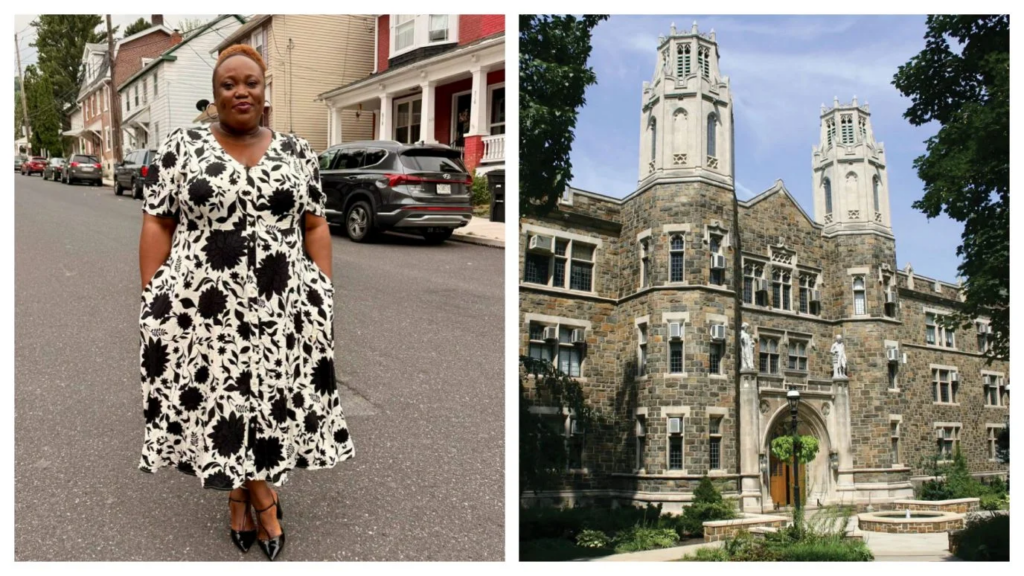
Ironically, the same NOUN qualification that attracted additional conditions in Nigeria became the basis for a fully funded doctoral scholarship in the United States.
Unlike her experience in Nigeria, there were no requirements to repeat courses or satisfy extra conditions.
The scholarship took her to Lehigh University in Pennsylvania.
Since August 2022, she has served as a research fellow at the institution where she completed her American doctorate.
Her success story highlights the contrast between perceptions of distance learning qualifications in Nigeria and abroad.
Debate Over Discrimination Against NOUN Graduates
CeeCee has questioned the widespread prejudice faced by graduates of the National Open University of Nigeria.
According to her, many NOUN graduates struggle to secure admission into conventional universities or gain employment as lecturers because their qualifications are often viewed as inferior.
She noted that NOUN programmes receive accreditation from the National Universities Commission, the same regulatory body responsible for approving programmes in other universities.
She also pointed out that many academics from traditional institutions contribute to NOUN’s curriculum and assessment process.
“The same people setting the standard for NOUN are the ones dismissing its graduates,” she said.
Distance Learning Builds Valuable Skills
CeeCee also challenged the belief that open and distance education is less demanding.
According to her, the learning model develops qualities such as discipline, digital literacy and independent thinking.
She revealed that she once worked as a university lecturer while holding her NOUN master’s degree, contrary to claims that such opportunities are unavailable to graduates of the institution.
Her experience, she argued, demonstrates that capability should be measured by competence rather than the mode of study.
This underscores the importance of judging qualifications based on merit rather than stereotypes. Although CeeCee encountered barriers in Nigeria, she refused to allow them to define her future. Her journey from repeated coursework to a fully funded PhD and a research fellowship in the United States has become a powerful example of resilience and perseverance. It also raises important questions about how distance learning graduates are treated within Nigeria’s higher education system.



Leave a comment