


The Sahara Go Recycling Hub has expanded its footprint in Northern Nigeria following the commissioning of a new facility in Masaka, Nasarawa State. The initiative is led by Sahara Group Foundation in partnership with local waste authorities.
This development strengthens structured recycling systems in underserved communities. It also supports environmental protection and economic empowerment at the grassroots level.
The Masaka hub is part of a wider strategy to transform waste into value. It focuses on building cleaner communities while creating income opportunities for residents.
Masaka Recycling Hub Commissioned to Boost Sustainability
The new facility was officially launched in Masaka, Nasarawa State. It was developed in collaboration with the Nasarawa State Waste Management Authority (NASWAMSA).
NASWAMSA played a key role in ensuring local coordination and community integration. The partnership reflects a shared commitment to improved waste management practices.
The hub is designed to collect and process recyclable materials. It helps reduce the volume of waste sent to landfills.
In addition, it strengthens environmental awareness among residents. Communities are encouraged to see waste as a resource rather than a burden.
By promoting local participation, the project strengthens ownership and sustainability. It also encourages behavioural change toward responsible waste disposal.
The Sahara Go Recycling programme transforms waste management into a source of income. Residents can now earn money by collecting and sorting recyclable materials.
This model supports households in low-income communities. It also creates jobs across collection, sorting, and logistics value chains.
According to project data, the initiative has already supported the recycling of over 1,000 tonnes of waste. It has also positively impacted more than 2,000 livelihoods across Nigeria.
These results highlight the economic potential of structured recycling systems. They also demonstrate how environmental projects can support financial inclusion.
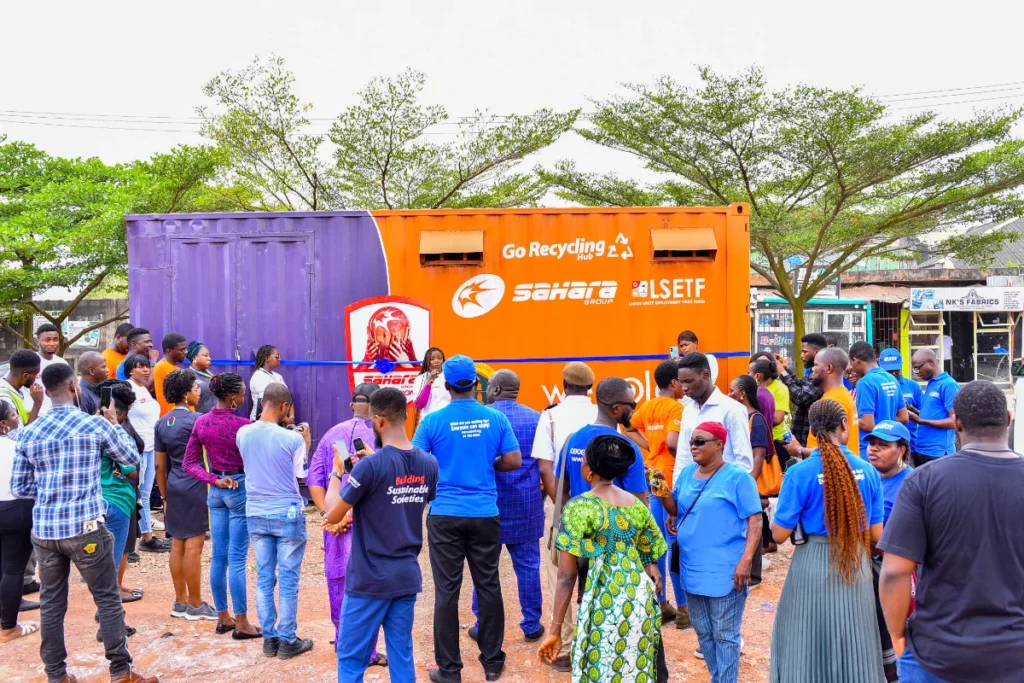
Stakeholders Emphasise Community Impact and Growth
During the commissioning ceremony, stakeholders highlighted the importance of collaboration. Representatives from the foundation, government agencies, and local communities attended the event.
Speaking at the launch, Director of the Foundation, Chidilim Menakaya, said the initiative reflects a long-term vision. She explained that the programme focuses on sustainability and community empowerment.
She noted that the Masaka hub represents progress in scaling environmental solutions. According to her, partnerships remain key to achieving wider impact across Nigeria.
Local officials from NASWAMSA also praised the initiative. They described it as a practical response to waste management challenges in the region.
They added that the project will improve environmental conditions while supporting economic activity.
Expanding the Sahara Go Recycling Hub Network
The Masaka facility is part of a broader expansion plan across Nigeria. The goal is to establish more recycling hubs in different regions.
This expansion supports the long-term vision of building sustainable communities. It also aligns with environmental goals focused on reducing pollution and promoting recycling culture.
The initiative continues to gain traction in urban and rural areas. More communities are expected to benefit from future phases of the programme.
By promoting local participation, the project strengthens ownership and sustainability. It also encourages behavioural change toward responsible waste disposal.
The expansion of the Sahara Go Recycling Hub in Masaka marks a significant step in Nigeria’s sustainability journey. It shows how environmental challenges can be turned into economic opportunities.
Through the leadership of Sahara Group Foundation and collaboration with NASWAMSA, the initiative continues to reshape waste management in Nigeria.
As more hubs are developed, the programme is expected to deliver greater environmental and social impact. Ultimately, it reinforces the importance of innovation in building cleaner and more sustainable communities.









Leave a comment