

Our Political Analysis Desk
Lagos PDP Crisis
The Lagos PDP crisis has once again exposed the deep rooted dysfunction within the Peoples Democratic Party in Lagos State.
What should have been a formidable opposition over the years has instead become a case study in missed opportunities internal conflict and political decline. Despite moments where the party appeared capable of challenging the ruling party it has consistently failed to convert potential into victory leaving Lagos firmly under the control of successive ruling parties.
The Peoples Democratic Party in Lagos State has long been a study in political dysfunction, a once-promising opposition movement that has consistently snatched defeat from the jaws of potential victory, leaving the state firmly in the grip of the ruling party from the days of the Alliance for Democracy to the Action Congress of Nigeria and now the All Progressives Congress.
The history is painful and well-documented, despite the towering influence of President Olusegun Obasanjo, who as a Southerner himself carried the entire South-West in the 2003 presidential election, his political machinery could not translate that national wave into governorship success for Funsho Williams, the PDP candidate who lost to incumbent Bola Tinubu of the AD in that year’s election.
Years later, President Goodluck Jonathan, another Southerner who defeated a Northern challenger in 2011, also failed to reverse the PDP’s losing streak in Lagos, as the party’s internal contradictions proved more powerful than any presidential coattail.
The only moment in recent memory when the PDP gave the ruling party a genuine run for its money was during the brief, shining candidacy of Funsho Williams, the pharmacist and technocrat who challenged Tinubu in 2003 before his tragic assassination in 2006.
This “what-could-have-been moment” remains a haunting “what-if” in Lagos political folklore.
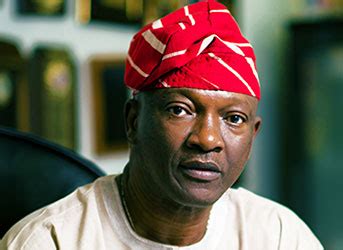
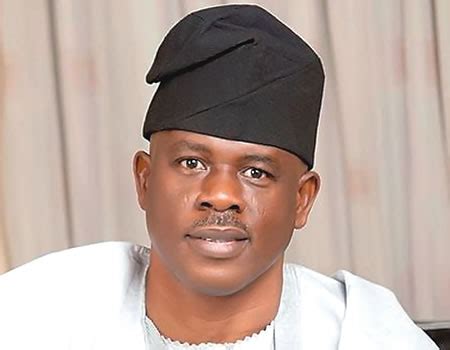
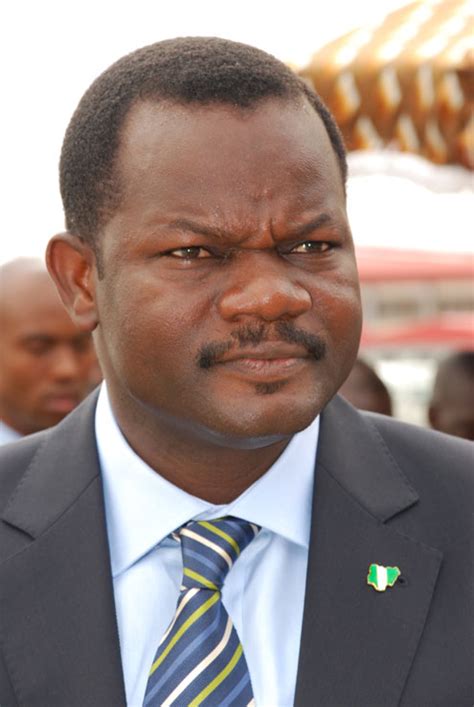
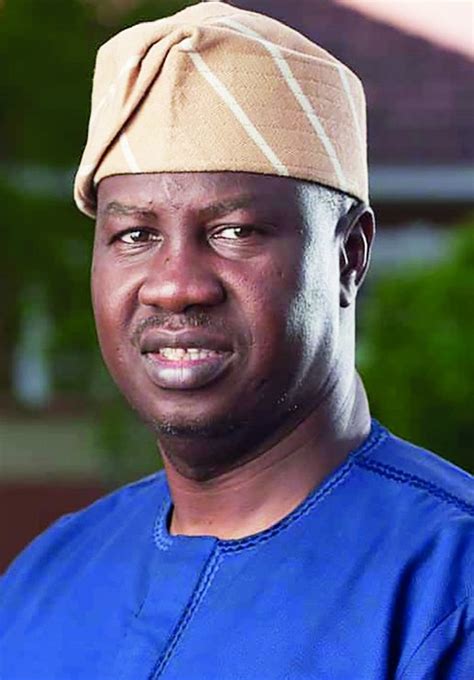
Unfortunately, the list of former governorship flagbearers like Ade Dosunmu, Jimi Agbaje, Musiliu Obanikoro among others show that the PDP failed to entrench a formidable political base after every disappointing loss.
Instead, it chose to continue to dwell in internal chaos leading to silence, obscurity and defections to the ruling party.
Unfortunately, the party has fielded a procession of candidates, including the charismatic but lone voice of Babatunde Gbadamosi, a governorship candidate who roused affection among the grassroots but could not overcome the party’s internal sabotage.
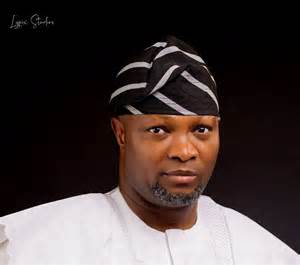
More recently, Olajide Adediran, popularly known as Jandor, who defected from the APC with promises of understanding the ruling party’s playbook yet found his campaign scuttled by insufficient support from his own party chieftains.
READ ALSO: O-K Alone: How Obi and Kwankwaso’s NDC Gamble Breaks Opposition
The tragedy of the PDP in Lagos is that even when it fields credible candidates and even when the APC is vulnerable, the party’s culture of misalignment, distrust, and gatekeeping ensures that it remains a feeble opposition incapable of capitalising on any oppourtunity.
To make matters worse, the few PDP members who manage to win House of Assembly seats in the party’s stronghold areas,such as Eti-Osa, Ojoo, and other federal constituencies,often end up defecting to the ruling party, further weakening an already fragile opposition.
Recent history is replete with such betrayals, considering the wave of defections that swept the National Assembly, the PDP lost at least five lawmakers in the House of Representatives alone, including and Seyi Sowunmi of Ojoo who joined the African Democratic Congress, while more than 500 PDP supporters in Lagos were reported to have defected en masse to the APC alongside Jandor, dealing a devastating blow to the party’s grassroots presence.
The bleeding has continued, with the party losing its own spokesman, Rapheal Adeyanju and other leaders to the APC in a humiliating public spectacle that underscores the lack of loyalty and ideological commitment within its ranks.
The Guardian‘s tally of defections since July 2024 shows the PDP as the biggest loser, shedding 82 seats in the House of Representatives, including multiple Lagos-based lawmakers, while the APC gained 103 seats, further entrenching the ruling party’s dominance.
Unfortunately, rather than learning from these painful lessons and uniting to present a formidable front, the Lagos PDP remains hopelessly fractured, this time caught in the crossfire of the national leadership crisis that has split the party into two warring factions, each throwing vitriolic jabs and threats at the other.
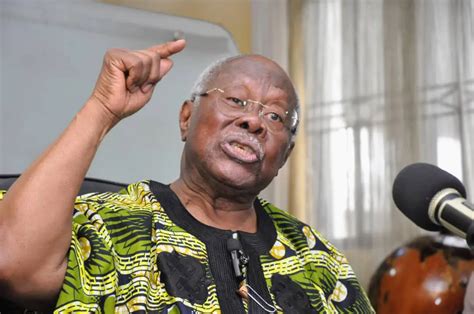
The longstanding animosity between Chief Bode George, the former Deputy National Chairman and arguably the most recognizable PDP elder in Lagos, and Adedeji Doherty, the National Vice Chairman for the South-West, has erupted into a public war of words that threatens to consume whatever remains of the party’s coherence.
George, a retired naval commodore and former member of the PDP Board of Trustees, has been a fixture in Lagos PDP politics for decades, earning a reputation as a principled but sometimes polarising figure who has consistently opposed what he perceives as the hijacking of the party by outsiders and interests not aligned with the South-West’s aspirations.
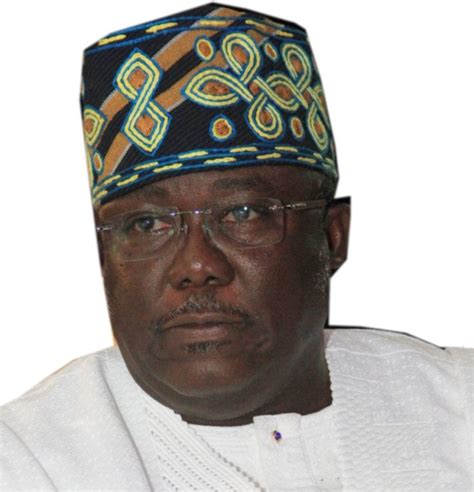
Doherty, on the other hand, is a younger, more combative politician who has aligned himself squarely with the camp of FCT Minister Nyesom Wike, the powerful and controversial figure at the center of the PDP’s national crisis.
The battle lines are stark, Doherty has vowed to ensure George’s expulsion from the party if he continues his public criticism of Wike, declaring in a fiery statement, “We won’t hesitate to expel Chief Bode George from his ward and local government in Lagos State if he continues to malign Wike in the media again. Enough is enough!”.
Doherty accused George of misunderstanding the Supreme Court’s recent judgment, which he insists has restored legitimacy to the Wike-aligned faction, and he warned that the party would now “wield its big stick” against any recalcitrant members seeking to play the role of spoilers .
The war of words has escalated to the point where Doherty suggested that George’s oft-repeated claim that the Board of Trustees is the “conscience of the party” has no constitutional basis, dismissing the elder statesman’s influence as a relic of a bygone era.
The Supreme Court’s ruling on the PDP leadership crisis has done little to heal these wounds. While the Lagos PDP faction publicly hailed the judgment as having “restored order, legality, and institutional direction” to the party, It claimed that it had nullified the controversial Ibadan National Convention and affirmed the suspension of Senator Samuel Anyanwu and other NWC members, the reality is that the decision has only emboldened the Wike faction while alienating the camp of Oyo State Governor Seyi Makinde, who had spearheaded the Ibadan convention.
Doherty has been particularly scathing in his criticism of Makinde, accusing him of moving from Ibadan to Lagos in 2019 to disrupt his election as National Ex-Officio and asserting that “no political party worth its salt would admit Seyi Makinde.” He also claimed that the governor is on his way out of the PDP entirely, following the example of Bauchi State Governor Bala Mohammed who has already joined the Allied Peoples Movement.
With both George and Doherty claiming legitimacy, and with neither willing to back down, the Lagos PDP remains a house divided against itself, incapable of mounting the kind of unified, strategic opposition that could challenge the APC’s dominance.
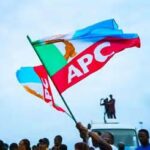
What is clear to any objective observer is that the opposition in Lagos is weak, fragmented, and demoralised, making the state a near one-party stronghold for the ruling APC. A visit to any major thoroughfare in the Lagos metropolis reveals the robust advertorial presence of House of Assembly aspirants of the APC. The APC banners and billboards dominating the visual landscape, while the PDP lags embarrassingly behind, its candidates invisible and its messaging absent, largely due to the judicial impasse, and political incoherence at the centre that has frozen its campaign machinery.
The APC, by contrast, has moved with seamless confidence, already coalescing around the consensus governorship candidacy of Obafemi Hamzat, the current deputy governor, whose emergence signals that the ruling party believes the PDP is too fractured to pose any serious threat. The body language from the APC camp is unmistakable, they are watching the PDP’s internal rancour with amusement, fully aware that the migraine of factionalism and litigation will prevent their opponents from fielding a candidate who can stand shoulder to shoulder with Hamzat in a competitive contest.
Even the Labour Party, which in the last presidential election delivered a convincing victory for Peter Obi in Lagos State with hundreds of thousands of votes, has shown more organizational capacity than the PDP, while Atiku Abubakar lost the state by a wide margin, a humiliation that still stings.
Unfortunately, the PDP elders in Lagos remain divided over what can only be described as meagre spoils of small power-sharing arrangements and gatekeeping privileges, squabbling over who controls the party structure while Lagosians continue to face the administrative and leadership shortcomings of the state government.
Lagos is not a perfect state; it has its flaws, its infrastructural challenges, its traffic gridlock, its flooding crises, its housing affordability problems, and its growing inequality. The PDP should be the voice that puts the ruling party and its political leaders on their toes, holding them accountable, offering alternative visions, and demanding better governance.
Instead, the party exhibits a docility that borders on political surrender, content to fight among themselves while the APC consolidates its hold on the state’s vast resources and electoral machinery.
The memory of Funsho Williams,the last PDP candidate who truly challenged the ruling party’s hegemony, should serve as a rallying cry, a reminder that the PDP was once capable of giving the AD and later the ACN a good run for their money.
But that was a long time ago, and unless the party wakes up from its slumber, unless Bode George and Adedeji Doherty set aside their egos and recognise that the political real enemy is not each other but the ruling party that has locked them out of power for over two decades.
The PDP in Lagos will remain what it has always been, a tragedy of missed opportunities, a cautionary tale of how not to build an opposition, and a warning to any political movement that puts personal ambition above collective purpose.
The 2027 election looms, and with the APC already marching in lockstep, the PDP must decide whether it wants to be a credible alternative or continue as a footnote in Lagos’s political history.






Leave a comment