

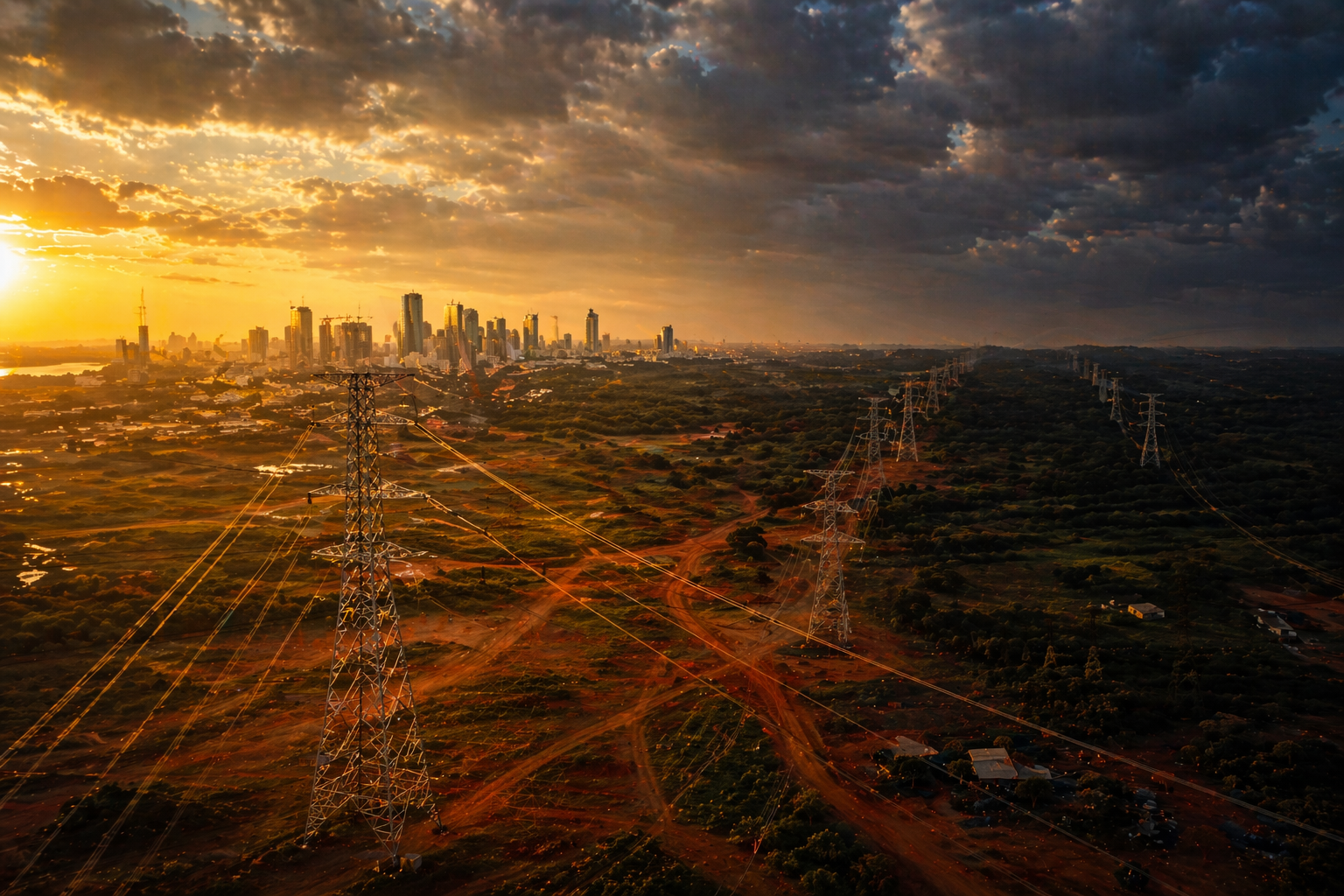

Nigeria’s power sector is undergoing a structural shift that is not making enough noise outside energy industry circles, but should be dominating the conversation in every finance ministry, boardroom, and development institution focused on West Africa’s largest economy.
Investors eyeing Nigeria’s long-troubled power sector are increasingly bypassing broad national grid exposure in favour of state-led electricity deals with identifiable demand, contracted off-takers, and clearer governance. A PwC report published this month, following the firm’s Annual Power and Utilities Roundtable, frames this as a quiet but consequential realignment in how the country finances its energy future. From an economic standpoint, it is much more than that. It is a stress test of Nigeria’s federal architecture, and early results suggest the states may be winning.
The Grid’s Broken Promise
The numbers behind Nigeria’s electricity crisis have long resisted improvement. Nigeria’s grid has 14 to 16 gigawatts of installed capacity but delivers only around 5 GW to consumers. Total national electricity demand exceeds 40 GW, with unmet demand estimated at another 60 GW. That is not merely an infrastructure failure, it is a ceiling on economic output. Studies estimate that energy-related constraints cost Nigeria between 5 and 7 percent of its GDP annually, amounting to approximately $25–29 billion. To put that in perspective, that loss alone exceeds the total GDP of several sub-Saharan African nations.
The private-sector response has been costly and inefficient. Businesses, from small traders to multinational manufacturers, have self-insured against grid failure through diesel generators, creating a parallel energy economy that is both costly and carbon-intensive. The generating capacity of private diesel and gasoline generators in Lagos alone is around 19.4 GW, almost four times what the national grid actually delivers to the entire country. This is not a resilience strategy; it is a permanent tax on productivity.
The 2023 Pivot and Its Commercial Logic
The pivot documented by PwC reflects the early commercial consequences of the Electricity Act 2023, which devolved significant regulatory authority from federal institutions to Nigeria’s 36 states. Two years in, the law is reshaping capital allocation in the sector. Investors are no longer pricing national grid exposure as the baseline risk; they are evaluating individual state markets on their own merits.
Investors are now assessing projects on a case-by-case basis, with bankability driven by regulatory clarity, tariff credibility, and cash-flow visibility. That shift in investor calculus matters enormously at the macroeconomic level. It suggests that the problem with Nigeria’s power sector was never purely a capital shortage; it was a governance and accountability problem. Remove the opacity, and the money moves.
Sector revenues rose from approximately 1 trillion naira in 2023 to about 1.7 trillion naira in 2024 and are projected to reach 2.3 trillion naira by the end of 2025. Grid collapses fell sharply from about 12 incidents in 2024 to one in 2025. At least 15 states are now at various stages of establishing operational electricity markets. These are not marginal improvements. They represent a sector beginning to behave more like a market.
What States Are Actually Doing
The most telling evidence of the shift is in state-level action. Lagos, which requires 6,000 MW of electricity but was receiving only 2,000 MW at most from the grid, has invited bids for the construction of up to 4,000 megawatts of gas-fired power plants and has allocated four hubs for the construction of power stations under its Clean Lagos Electricity Market plan. Businessday NG That Lagos — which alone accounts for an estimated 30 percent of Nigeria’s GDP — is now building out its own generation capacity is an economic signal of the highest order.
In Ekiti, the state government has granted operational licences to 14 electricity investors, including three distribution companies, four generation companies, two mini-grid providers, and five meter asset providers, aiming to reach 130 megawatts through a state grid and reduce dependency on national supply. Further north, the governors of Kano, Katsina, and Jigawa have announced a tri-state electricity market with direct equity stakes in a distribution company, in what analysts describe as the first coordinated subnational electricity market in Nigeria, designed to harmonise regulations, pool investments, and jointly plan cross-border power infrastructure.
The Risks That Cannot Be Ignored
The economic optimism around devolution must be tempered by real structural risks. Regulatory overlap between the Nigerian Electricity Regulatory Commission and emerging state regulators is already visible. Outstanding unresolved issues, including legacy subsidy treatment, taxation, levies, tariff assumptions, and ownership structures, should not be left to drift into the next fiscal cycle.
There is also the equity question. States with stronger fiscal positions, such as Lagos, Rivers, and Kano, are best placed to attract power investment quickly. States with weaker revenue bases risk being left behind in a tiered energy market where economic geography hardens into permanent inequality. If the devolution model delivers reliable power to coastal commercial hubs while leaving interior states further in the dark, it will deepen Nigeria’s regional economic divergence rather than resolving it.
The Executive Director of the Association of Power Generation Companies warned that the federal government’s bypassing its own grid infrastructure signals to local and international investors that the national grid is no longer a viable platform for critical infrastructure. That perception, if it consolidates, creates its own self-fulfilling dynamic — diverting investment away from transmission improvements that are still necessary for any truly national energy market.
The Bottom Line
Nigeria’s energy devolution is not a clean solution. It is a pragmatic workaround born of decades of centralised failure — and it is working, at least partially, for the states moving fastest. The macroeconomic case for it is strong: clearer accountability structures attract capital, and capital flowing into energy infrastructure has second-order benefits across manufacturing, services, and household welfare.
The federal government retains a critical role in transmission, grid stability, and ensuring that reform does not simply reward the already-wealthy. But the direction of travel is now clear. Nigeria is not going to power its economy through a single national grid delivering universal, reliable electricity anytime soon. It is going to power it state by state, deal by deal, and the economy will follow the electricity.









Leave a comment