



Beneath the red soils of the Congo Basin, the plateaus of Zimbabwe, and the creeks of the Niger Delta lies one of the modern economy’s most brutal ironies: the communities sitting atop the world’s most valuable mineral wealth are, more often than not, among its poorest residents. Cobalt from the DRC powers the batteries in electric vehicles sold in Europe and North America. Gold from Ghana and Tanzania adorns jewellery in luxury markets thousands of miles away. Oil from the Niger Delta fuelled decades of Nigerian GDP growth. Yet in the villages closest to these operations, basic infrastructure, such as clean water, reliable electricity, and paved roads, remains elusive. This is not a coincidence. It is a structural failure, and one that cooperatives may be uniquely positioned to correct.
The economics of resource extraction have long been skewed against African host communities. When a multinational mining company arrives in a rural territory, the revenue model is straightforward: extract at the lowest possible cost, repatriate profits, and leave. Environmental remediation, community development, and fair labor compensation are treated as externalities, costs to be minimized rather than obligations to be honored. The result is a pattern economists call the “resource curse”: nations and regions rich in natural endowments that nonetheless record chronically low human development indicators. Nigeria, despite being Africa’s largest oil producer, has seen this play out with painful clarity. The Niger Delta, the goose that laid the golden barrel, remains one of the most environmentally devastated and economically deprived regions on the continent.
The mechanisms of this curse are well-documented across the continent. Land dispossession is often the first blow. Large-scale extraction requires vast territorial footprints, and communities are frequently displaced, sometimes without the Free, Prior, and Informed Consent that international frameworks require. In countries like Mozambique and Guinea, where large mining concessions have been granted to foreign corporations, entire villages have been relocated with minimal consultation and inadequate compensation. When people lose land, they lose more than a home; they lose the agricultural and ecological systems that form the base of their informal economies.
What replaces these systems is usually a wage-labor arrangement that is precarious at best and exploitative at worst. In the artisanal and small-scale mining sectors that employ millions across sub-Saharan Africa, from the gold fields of Burkina Faso to the gemstone mines of Tanzania, occupational safety standards are unevenly enforced, wages are suppressed, and child labor remains a documented problem in several producing regions. The environmental cost compounds the economic one: contaminated water undermines agriculture and fisheries, while respiratory illness from dust and chemical exposure increases household health expenditure in communities already operating at the margins.
The revenue that flows to national governments frequently concentrates at the top, with little reaching the localities bearing the heaviest burden. Africa collectively loses tens of billions of dollars annually to illicit financial flows linked to the extractive sector, a figure that dwarfs the foreign aid the continent receives. Communities that generate enormous global wealth remain aid-dependent. The ledger is written against them before the first ore is lifted.
This is where cooperatives enter the economic analysis, not as idealistic alternatives to the market, but as structurally rational responses to market failure. A cooperative, in its essential form, is a business owned and governed by its members, with profits distributed among them. In a mining context, this means the people doing the extraction are also the ones receiving its returns, making decisions about its scope, and bearing collective responsibility for its consequences. The incentive structure is fundamentally different from that of an absentee corporation: a cooperative has every reason to protect the land and invest in community infrastructure, because its members live there.
Africa already has working examples to draw from. In Tanzania, cooperative frameworks in artisanal gold mining have helped small-scale miners access formal markets, negotiate better prices, and pool resources for safer equipment. In South Africa, worker cooperatives in the mining supply chain have provided an ownership pathway for communities historically excluded from the sector’s profits. These models are imperfect, and without supportive regulatory environments, cooperatives can reproduce some of the same inequities they are meant to counter. But the structural logic is sound.
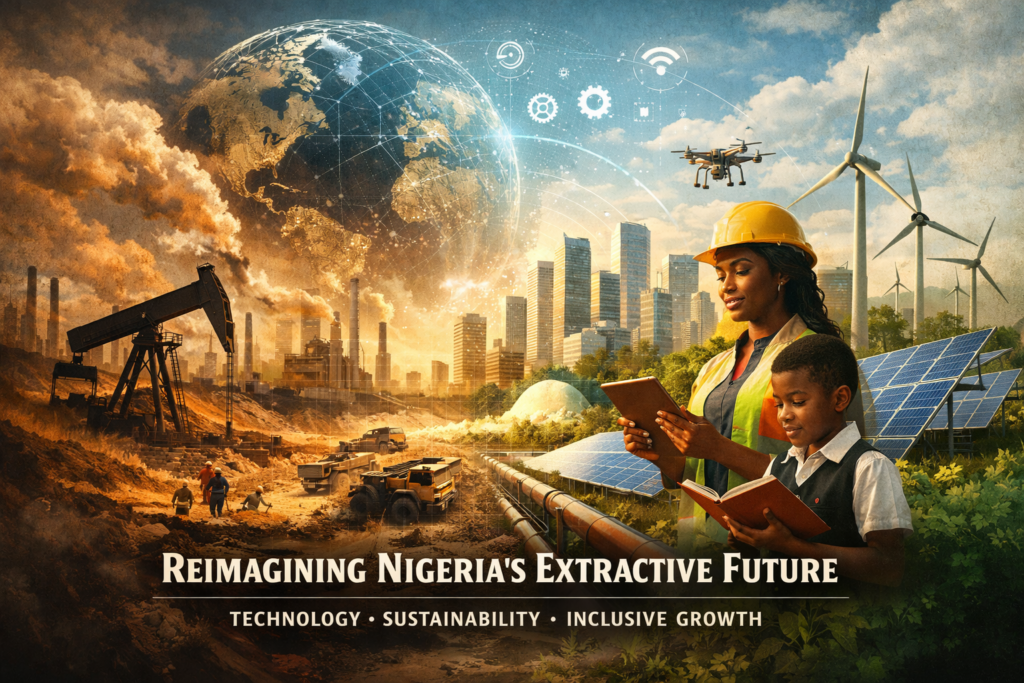
For African governments, the policy implications are concrete. Legal frameworks that formally recognize and support cooperatives in extractive industries, streamlined registration, access to capital, and community benefit agreements written into mining licenses can shift how resource revenues circulate. Rather than flowing outward to distant shareholders, profits can be retained locally, funding schools, building infrastructure, and seeding the small enterprises that transform resource endowments into lasting development.
Corporate accountability must also be part of the equation. The renegotiation of extractive contracts, a conversation increasingly happening in Mali, Senegal, and Zimbabwe, reflects a growing continental consensus that old terms no longer serve national interests. Stronger environmental liability, mandatory consent processes, and transparent revenue reporting are not obstacles to investment; they are the foundations of the stable, legitimate operating environments that responsible capital increasingly demands.
The minerals the global economy needs are beneath African soil. The question has never been whether they will be extracted. The question is who benefits when they are, and whether the answer will finally change.
This piece is an adaptation of a research work carried out by Finlay House of Inclusion. The original research work is available to read on the Finlay House of inclusion blog












Leave a comment