

The third edition of Oyo State’s fastest-growing cultural event is shaping up to be its most ambitious yet with 10 countries, 200 masquerades, a royal chairman, and a quiet push for UNESCO recognition
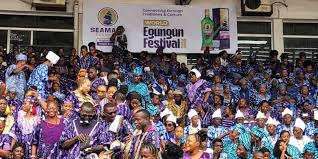
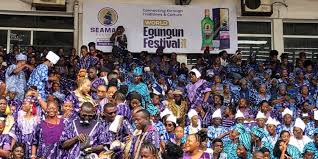
On the first and second days of May, Liberty Stadium in Ibadan will fall silent for a moment, then erupt. The drums will begin, the masquerades will emerge, and one of the most spiritually charged and culturally significant festivals in West Africa will take centre stage once again.
The 2026 World Egungun Festival, the third edition of an event that has grown remarkably since its relaunch in 2024, is set to be the largest and most globally visible iteration yet. Oyo State’s Commissioner for Culture and Tourism, Dr. Wasiu Olatubosun, has confirmed that over 200 masquerades from approximately 10 countries, alongside more than 100 groups and associations, have indicated interest in participating. Nigeria’s Federal Minister of Arts, Culture and the Creative Economy, Hannatu Musa Musawa, has pledged to attend.
This is no longer just a local festival. Ibadan is making a serious bid to become the cultural capital of the Yoruba world.
A Two-Day Programme Built for Scale
The festival will open on May 1 with an academic symposium organised in collaboration with the Adayeba Culture-Tourism Foundation, the Sahara Centre, and the Institute of African Studies at the University of Ibadan. The symposium is designed to anchor the cultural spectacle in serious intellectual discourse a deliberate effort to frame the Egungun tradition not merely as entertainment, but as a subject of scholarship, heritage preservation, and global relevance.
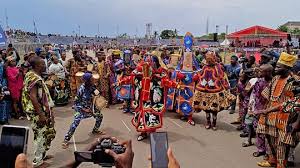
The grand finale on May 2 will take place at Liberty Stadium, where Yoruba indigenes from within and outside Oyo State are expected to gather to celebrate the rich cultural heritage and entertainment value of the Egungun tradition. Fuji music performances, cultural exhibitions, and the famous Amala Fiesta are among the features that have drawn large crowds in previous editions.
The Olubadan of Ibadanland, Oba Rashidi Adewolu Ladoja, Arusa I, will serve as Royal Father and Chairman of the festival,a role he accepted after a formal invitation from the Ministry’s management team. Officials noted that significant improvements have been made ahead of the 2026 edition to address concerns raised by the Olubadan during the 2025 festival.
Rooted in Tradition, Reaching for the World
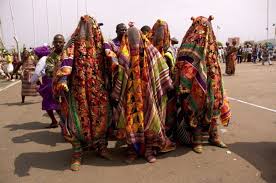
The Egungun masquerade occupies a singular place in Yoruba cosmology. It is not merely a costume or a performance, it is believed to be an embodied manifestation of ancestral spirits, a bridge between the living and those who came before. Acting General Manager of the Oyo State Council for Arts and Culture, Mr. S.A. Agboola, has described the festival as a unifying cultural event, noting that Egungun stands alongside Sango in traditional worship and community participation.
What distinguishes the World Egungun Festival from other cultural events is how deliberately it has been positioned at the intersection of tradition, tourism, and economic development. Commissioner Olatubosun has explained that the renewed prominence of the festival has attracted international attention, including from Brazil, as members of the African diaspora reconnect with the authentic custodians of the tradition in Oyo State.
That diaspora connection is not a peripheral footnote. Descendants of enslaved Yoruba people carried the Egungun tradition to Brazil centuries ago, where it has survived and evolved in remarkable ways. Their increasing engagement with Ibadan, with the land and the living custodians of a practice their ancestors preserved under extraordinary circumstances, gives the festival a dimension that few cultural events anywhere in the world can match.
Stakeholders at the Table
One of the most significant aspects of the 2026 festival preparations has been the breadth of community engagement that preceded it. Commissioner Olatubosun led the Ministry’s management team in a stakeholders’ briefing and interactive session ahead of the festival, with attendance from over thirty groups and associations, including representatives of Araba Ile Ibadan, Jagunjagun Ile Ibadan, Baales, the Egede tribe, artisans, traders, and other traditional bodies.
The Ijo Oje Parapo Welfare Association, the custodians and practitioners of the Egungun tradition across Oyo State’s local government areas, were central to these consultations. They called for greater organization, cleanliness, and discipline in the presentation of masquerades. Crucially, they also requested formal representation on the festival’s planning committee. That request was approved.
The Commissioner further advised the association to establish a formidable youth body under the National Council for Isese Youth Organisation, to ensure sustainability and the structured participation of younger generations. It is a long-term play, an acknowledgement that the festival’s future depends not just on this edition, but on the generation that will carry it forward.
The UNESCO Conversation
Perhaps the most consequential ambition surrounding the 2026 festival is the quiet but persistent effort to secure UNESCO recognition for the Egungun tradition. Officials noted that UNESCO is particularly interested in community-based festivals, and that sustained efforts are being made to ensure the World Egungun Festival is enlisted for global recognition. Commissioner Olatubosun has expressed optimism that this goal is achievable within six years, provided the festival maintains its momentum and authenticity.
UNESCO inscription on the Representative List of Intangible Cultural Heritage of Humanity would be transformative, not just symbolically, but economically and institutionally. It would bring international visibility, funding opportunities, and a level of protection for the tradition that no domestic policy alone can guarantee.
What Ibadan Stands to Gain
The economic stakes are real. Cultural tourism, when rooted in genuine community ownership rather than extractive spectacle, circulates wealth in ways that reach informal traders, artisans, transport workers, and hospitality providers, the backbone of any city’s economy.
Commissioner Olatubosun has been direct about the ambition: Ibadan should become a major tourist destination and a cultural hub that the world will continually reckon with. It is a bold aspiration for a city that already holds the distinction of being the largest city by landmass in sub-Saharan Africa, a city with history, infrastructure, and now, increasingly, a cultural identity it is prepared to export.
The 2026 World Egungun Festival takes place on May 1 and 2 at Liberty Stadium, Ibadan. The event is organised by the Oyo State Ministry of Culture and Tourism in partnership with the Adayeba Culture-Tourism Foundation, the Sahara Centre, the Institute of African Studies (University of Ibadan), and the Ijo Oje Parapo Worldwide Welfare Association.









Leave a comment