

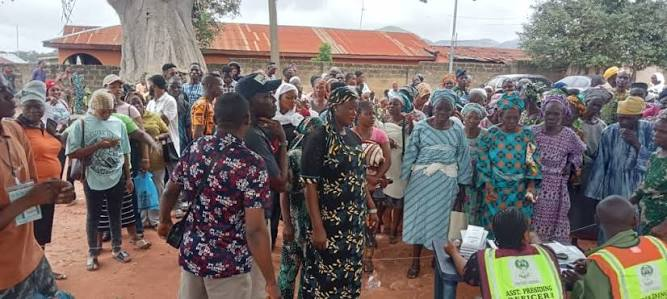
A profound sense of national pride brought the oldest generation out to the polling zones during the weekend gubernatorial race. However, their physical sacrifices clashed directly with widespread automated system breakdowns across several rural communities. While many younger individuals stayed away from the queues, senior citizens overcome delays that heavily threatened to sideline their historic participation. From total fingerprint scanning errors to mismatched face identification profiles, these aged individuals faced extensive waiting times. Yet, their deep commitment to exercising their civic rights remained entirely unshaken. Indeed, senior citizens overcome delays through sheer patience, proving that elder generations value democratic continuity.
For instance, 86-year-old Alli Sanni hired a commercial motorcycle early in the morning to reach his assigned voting center. He had been an active participant in democratic exercises since the pre-independence era of the late 1950s. Despite severe physical mobility challenges and weak limbs, he insisted on performing his civic responsibility. Sanni explained that he keeps returning to the ballot to secure high-quality governance for his grandchildren. However, severe technology issues heavily slowed down his experience. The Bimodal Voter Accreditation System completely failed to read his biometric identity details. Consequently, election officials told the aging voter to wait indefinitely until the hardware function stabilized. Thus, senior citizens overcome delays only after enduring hours of systemic friction at the lines.
Similarly, severe biometric validation device errors disrupted voting exercises within other parts of the sub-national terrain. In Ikere Ekiti, 91-year-old Mathew Omotayo arrived at his center early in the morning. Unfortunately, system operators blocked his path because his physical face differed from his old database profile. Meanwhile, 120-year-old Mary Ajangbala faced similar identity verification issues in Iyin Ekiti. The automated validation cameras failed to capture her aged facial features properly. Therefore, these senior citizens overcome delays by waiting in the sun until ad hoc staff manually cleared their profiles. Additionally, local Muslim women practicing purdah faced unique administrative wait times. Officials had to create specialized private setups to process their identification safely without forcing them to remove religious veils publicly.
Nevertheless, these elderly individuals urged younger generations to remain highly resilient despite systemic processing flaws. Chief Joel Adewale, a 71-year-old community leader, declared that skipping elections out of simple frustration is unpatriotic. He firmly believes that persistent voting remains the ultimate tool to elect competent leaders. Furthermore, 80-year-old Michael Fakiyesi echoed this perspective by arriving early to ensure his voice mattered. Ultimately, as senior citizens overcome delays, their endurance provides a powerful lesson in patriotism. Their deep faith in democratic progress shines a brilliant light for the entire nation to follow.











Leave a comment