

By Chibuzor Alli
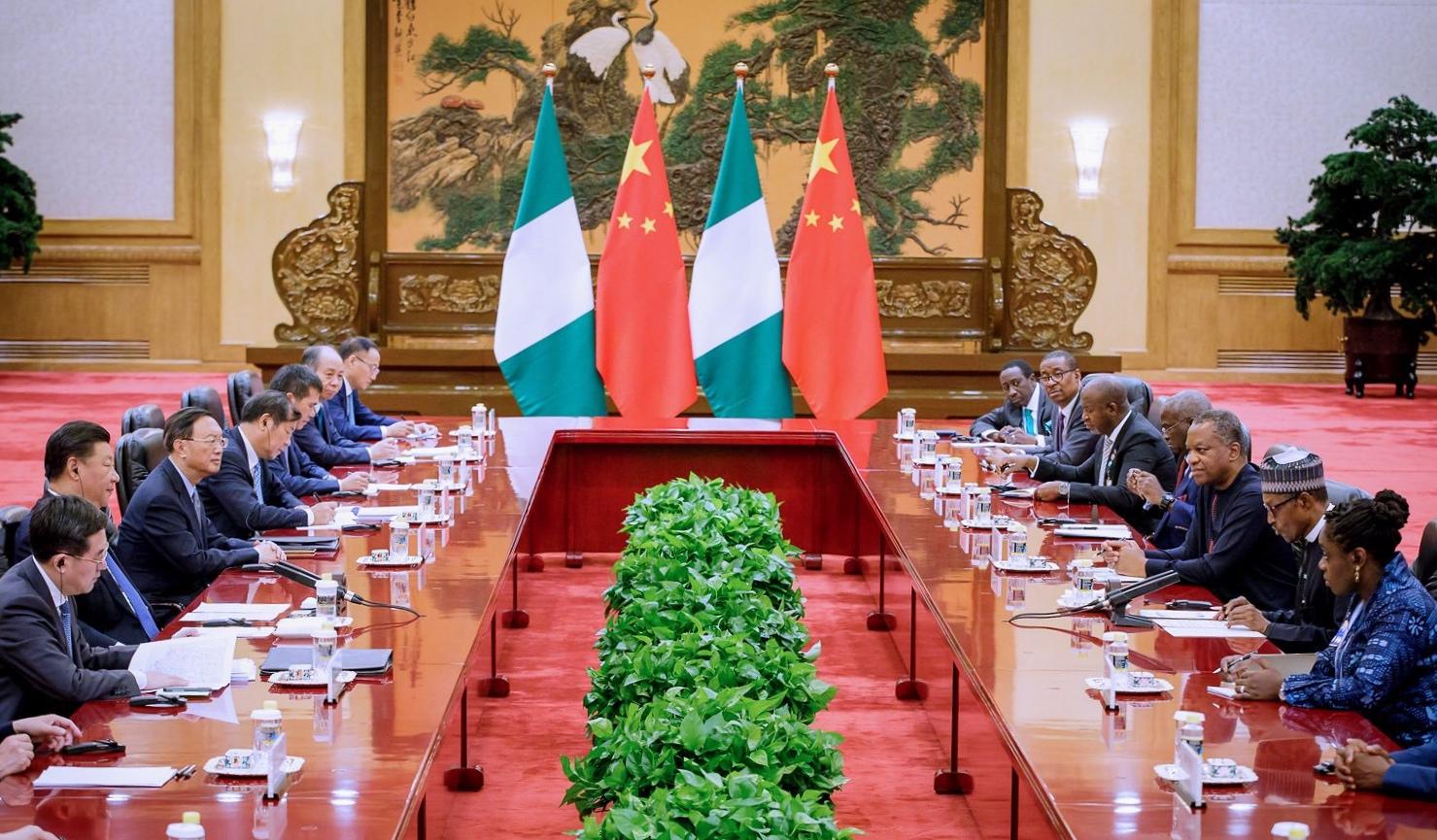
China accounts for the bulk of Nigeria’s loans from foreign governments, holding $5.67bn of the country’s $6.68bn bilateral external debt, as Nigeria’s total external obligations climbed to $145.02bn in 2025.
The figures, contained in the World Bank’s International Debt Report 2026, place China far ahead of other bilateral creditors, with France ranking second at $774m, while other foreign governments collectively account for $237m.
The report, published on Friday, showed that Nigeria’s external debt stock increased by 6.6 per cent from $136.05bn in 2024 to $145.02bn at the end of 2025.
China’s share represents approximately 85 per cent of Nigeria’s bilateral debt, highlighting the concentration of the country’s government-to-government borrowing among foreign creditors.
Bilateral loans are financing arrangements between two governments, either directly or through government-backed institutions. They differ from multilateral loans obtained from international financial institutions such as the World Bank and the International Monetary Fund.
A breakdown of Nigeria’s public and publicly guaranteed external debt showed that multilateral institutions held the largest share at $31.37bn, followed by private creditors with $24.35bn and bilateral lenders with $6.68bn.
Within the multilateral category, the World Bank’s International Development Association accounted for $18.53bn, while the International Monetary Fund’s Special Drawing Rights allocations represented $5.52bn. Other multilateral institutions held approximately $7.32bn.
The World Bank’s data also showed that Nigeria’s external debt had increased substantially over the past decade, rising from $83.21bn in 2015 to $145.02bn in 2025, representing an increase of approximately 74.3 per cent.
The country’s external obligations comprise $62.4bn in public and publicly guaranteed debt, $54.48bn in private nonguaranteed borrowing and $28.14bn in short-term external debt.
While public and publicly guaranteed debt covers direct government obligations and loans backed by government guarantees, private nonguaranteed debt represents foreign borrowing by private-sector entities without sovereign guarantees.
Short-term external debt generally covers obligations with an original maturity of one year or less.
The latest figures come as the Federal Government seeks legislative approval to raise an additional $7.7bn through external financing to support the implementation of the 2026 budget.
President Bola Tinubu’s request, conveyed in a letter read by Senate President Godswill Akpabio during plenary on Wednesday, seeks approval to raise $7.707bn, equivalent to approximately N10.79tn at the budget exchange rate of N1,400 to the dollar.
The proposed external borrowing forms part of the N29.2tn new borrowing provision in the 2026 Appropriation Act, comprising N18.4tn in domestic financing and N10.79tn in external borrowing.
On the country’s capacity to meet its external obligations, the World Bank reported that Nigeria’s external debt-to-exports ratio stood at 212 per cent in 2025, while its external debt-to-Gross National Income ratio was 51 per cent.
The debt service-to-exports ratio reached 19 per cent, while debt service-to-GNI stood at five per cent, reflecting the burden of external debt repayments relative to export earnings and national income.
The report further showed that Nigeria’s average interest rate on new external loan commitments from official creditors was 1.9 per cent, significantly below the 9.6 per cent recorded for private creditors.
Commenting on the broader debt situation facing developing economies, the World Bank Group Chief Statistician and Director of Development Data, Haishan Fu, warned that increased access to private lending was also exposing countries to higher borrowing costs.
“The return of private lending to low- and middle-income countries is welcome, but these countries are borrowing more, paying more, and in many cases leaving less for long-term development,” Fu stated.
“Managing debt responsibly means giving everyone, including future generations, a chance to thrive.”












Leave a comment