

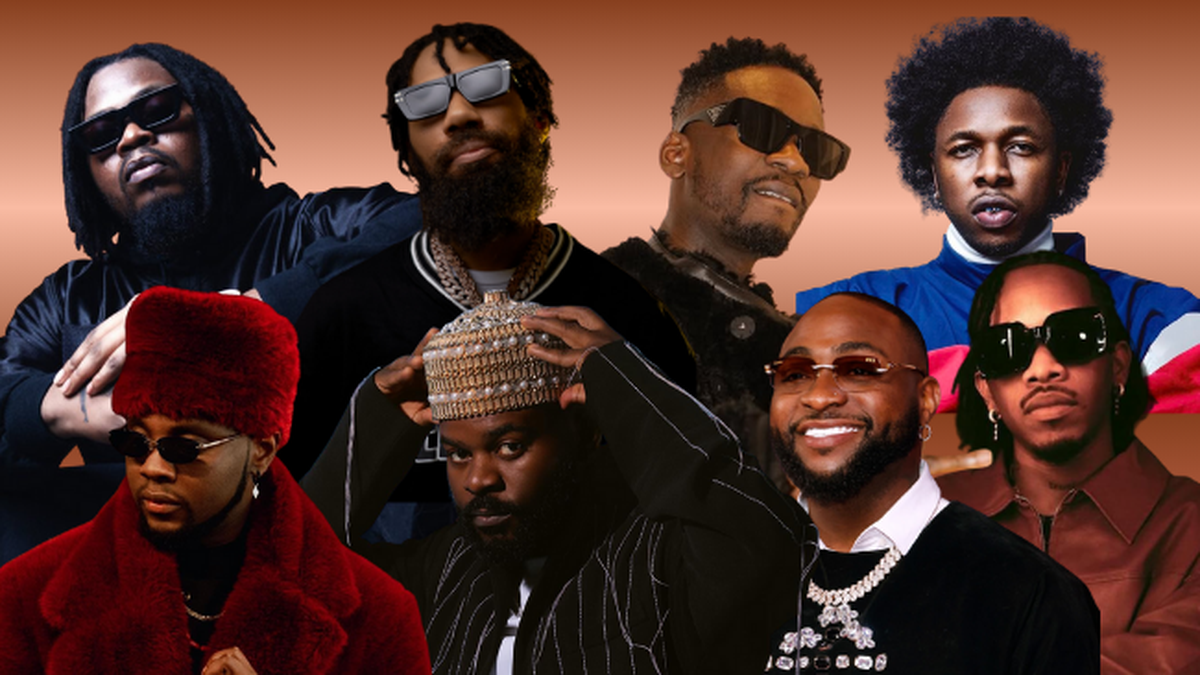
The idea of “2026 as the new 2016” started as a lighthearted internet joke, driven by Gen Z’s love for nostalgia and the visual similarity between both years. But recently, it has evolved into something more meaningful. Across fashion pages, music blogs, and celebrity feeds, references to 2016 are everywhere, suggesting a collective longing for a time perceived as simpler and more organic before algorithm-heavy platforms reshaped how culture is consumed.
Afrobeats has been central to this conversation. Artists, DJs, and industry insiders have been revisiting that period, sharing throwback photos, stories, and milestones. This renewed attention raises important questions about 2016’s role in shaping Afrobeats and what it says about the genre’s current state.
One of the defining changes around that time was a shift in sound. Before 2016, Afrobeats leaned heavily on energetic, percussion-driven production. By 2015, however, softer and more melodic styles were beginning to emerge. Tracks like Olamide’s “Melo Melo” and the global success of Wizkid’s “Ojuelegba” remix hinted at a new direction.
That shift fully materialised in 2016 with the arrival of Mr Eazi and his self-defined “Banku Music.” Blending Ghanaian highlife influences with Nigerian Afropop, the sound introduced a more relaxed, groove-driven approach. Songs like “Leg Over” and the “Bankulize” remix helped cement his place, while his influence extended beyond music, he also popularised the phrase “Detty December,” now widely used to describe the festive return of Nigerians abroad.
Other artists quickly tapped into this evolving sound. Runtown’s “Mad Over You” became a standout hit, showing that the Banku style could be adapted for mainstream Nigerian audiences. This period also laid the groundwork for what would later be called the “pon pon” sound—a softer, minimalist take on Afrobeats that dominated the late 2010s.
At the same time, Afrobeats was gaining global traction. Earlier crossover attempts by artists like D’banj and P-Square had limited success, but they paved the way for future breakthroughs. The turning point came when Wizkid collaborated with Drake and Skepta on the “Ojuelegba” remix, followed by Drake’s global hit “One Dance,” which featured Wizkid and Kyla. The song topped charts worldwide and confirmed Afrobeats’ international potential.
This success triggered a rush from global record labels eager to sign Nigerian artists. Wizkid and Davido were among the early beneficiaries. However, these deals came with challenges. Some labels pushed for more Westernised production, believing the original Afrobeats sound was too complex for global audiences. Davido later reflected on this period, describing his early international project under Sony as creatively unfulfilling.
Against this backdrop, the simplicity and fluidity of Banku Music offered a solution. It struck a balance between local authenticity and global accessibility, influencing a generation of artists. By 2017, hits like Tekno’s “Pana,” Wizkid’s “Manya,” and Davido’s “If” and “Fall” demonstrated how far the genre had evolved.
Looking back, 2016 stands out as a turning point both creatively and commercially. It was the year Afrobeats found a formula that could travel globally without losing its identity.
Today, the renewed focus on 2016 reflects more than nostalgia. It points to a sense of stagnation in the current scene, where the global success of Afrobeats has become concentrated among a few major stars. At the same time, a new wave of underground artists is beginning to challenge the status quo, experimenting with fresh sounds and ideas the likes of Igwe Aka, Zaylevelten, Mavo, Luwa Mp4, Artsalghul,Ar4, and Monochrome. The parallels between 2016 and 2026 go beyond nostalgia, they signal another potential turning point. Just like a decade ago, Afrobeats may be on the verge of reinvention.
image credit: pluse Nigeria









Leave a comment